
I lost a contract once because my camera woke up too slow. The intruder walked in, grabbed copper wire, and left before the system even captured a single frame. That failure cost me more than the equipment itself.
From full sleep to completed AI recognition, a well-optimized industrial 4G solar PTZ system1 takes between 1,500ms and 2,500ms. This covers hardware wake-up, image sensor initialization, auto-exposure adjustment, and neural network inference2. Consumer-grade products typically need 4 to 7 seconds for the same process.
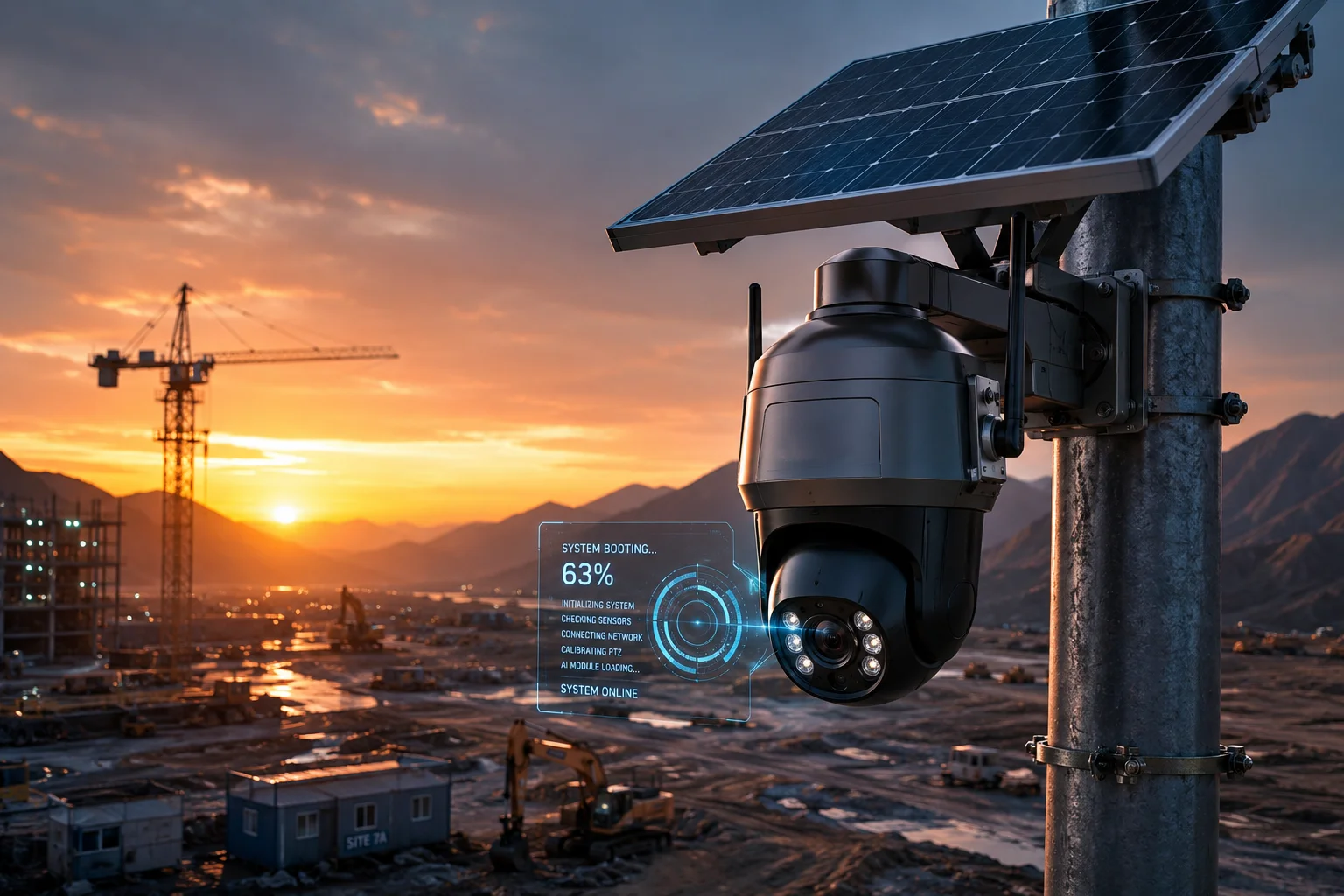
This number matters more than most spec sheets suggest. If you deploy cameras in off-grid locations — construction sites, farms, remote pipelines — every millisecond of delay is a potential missed event. Below, I break down each stage of the cold-start process and explain what separates a system that catches intruders from one that only records their exit.
Table of Contents
Is the “Cold Boot” to “AI Recognition” Time Under 2000ms for High-Security Applications?
For high-security jobs, I need a system that wakes up and thinks before the threat disappears. A 5-second boot time is not security. It is a recording of consequences.
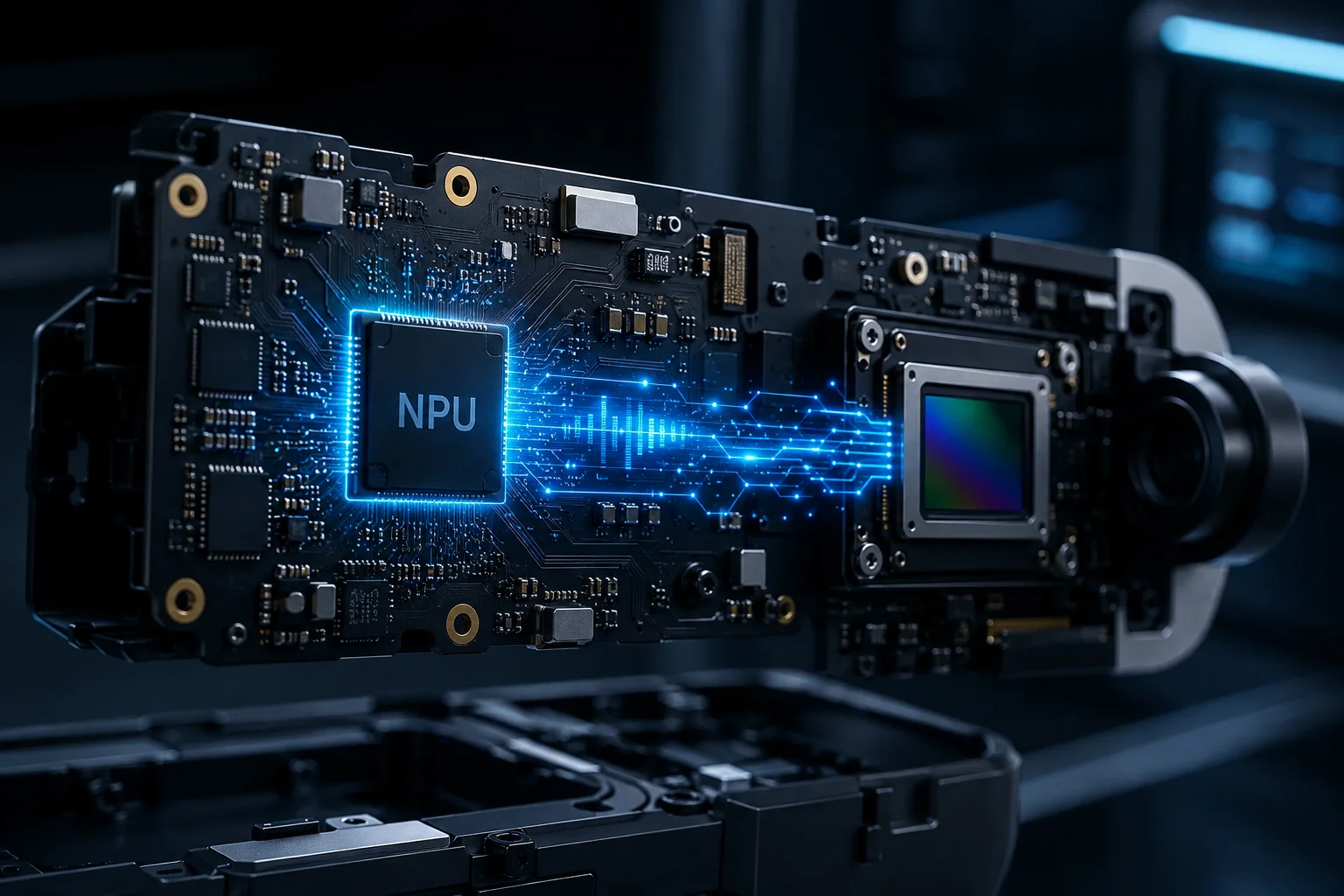
Yes, achieving sub-2000ms cold-boot-to-AI-recognition is possible with industrial-grade firmware optimization. It requires a split-boot architecture, fast sensor initialization, and a dedicated NPU running at 2+ TOPS. Most consumer cameras cannot reach this benchmark.
Breaking Down the 2000ms Budget
To understand whether a system can hit this target, you need to see where every millisecond goes. The cold boot process has four distinct stages. Each one has a physical limit that no software trick can bypass entirely.
| Stage | What Happens | Time (ms) | Notes |
|---|---|---|---|
| Wake Trigger | PIR sensor3 or co-processor detects motion | < 50ms | Nearly instant |
| Hardware Power-Up | SoC boot, DDR self-test, sensor init | 800 – 1,200ms | The bottleneck stage |
| First Frame Capture | Sensor outputs image, AE converges | 200 – 400ms | Needs 2-3 frames to stabilize |
| AI Inference | NPU runs human/vehicle detection model | 100 – 300ms | Depends on NPU TOPS rating |
Why Hardware Power-Up Is the Real Bottleneck
The SoC cannot skip its boot sequence. The DDR memory must complete a self-test. The clock signal needs to stabilize. These are physical processes governed by silicon behavior, not software settings.
In our systems, we use a split-boot path. The firmware loads the AI inference engine and image pipeline first. Network stack, PTZ motor control, and file system mounting happen in parallel but do not block the recognition path. This shaves 300 to 500ms off the total time.
The AE Convergence Problem
When the image sensor first powers on, it does not know the scene brightness. The first frame might be completely black or blown out white. The auto-exposure algorithm needs 2 to 3 frames to find the correct shutter speed and gain setting.
In low-light conditions, this gets worse. The sensor needs longer exposure times, which means each frame takes more time. A scene at 0.1 lux might add 200ms to the AE convergence step compared to a daylight scene.
What “Sub-2000ms” Actually Requires
To consistently stay under 2000ms, the system needs all of these:
- SoC with fast-boot firmware (boot ROM optimized for camera use)
- DDR self-test bypass or accelerated check
- Image sensor with fast clock lock (under 100ms)
- NPU with at least 2 TOPS dedicated to inference
- Pre-loaded AI model weights stored in fast memory
Without any one of these, the system will exceed 2000ms in real-world conditions. I have tested dozens of chipsets over the years. The gap between a well-tuned industrial platform and a generic consumer SoC is not small. It is the difference between catching the event and missing it.
How Does the SoC’s “Instant-On” Architecture Prevent Losing the Target’s First Few Steps?
I have watched playback footage where the person is already 10 meters past the camera before the first clear frame appears. That is not a security system. That is an expensive paperweight.
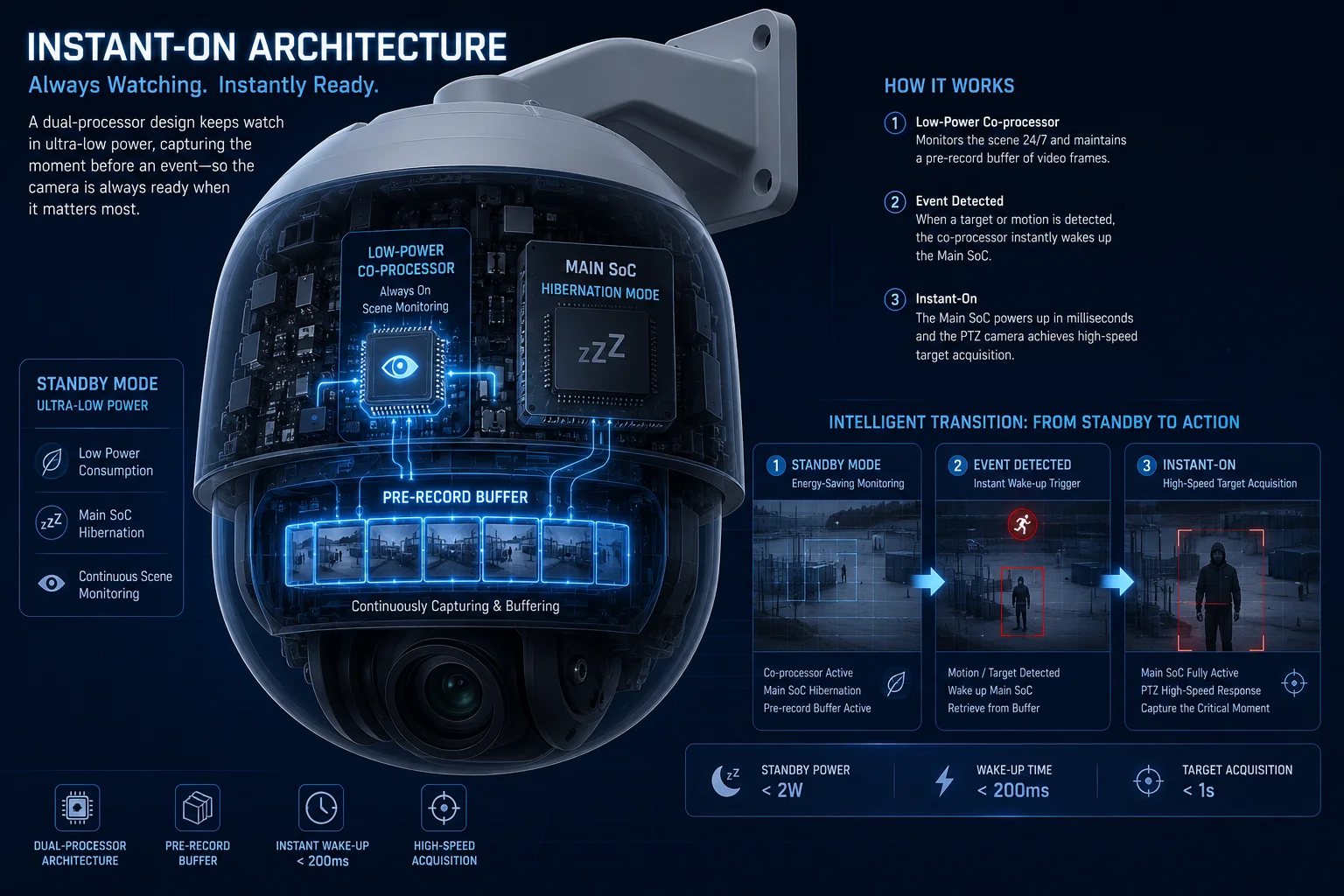
An “Instant-On” SoC architecture uses a low-power co-processor that keeps the image sensor in a minimal capture state during sleep. When motion triggers, the system pulls pre-buffered frames from memory instead of waiting for full hardware initialization. This eliminates the first 1 to 2 seconds of blind time.
The AOV (Always-On Video) Approach
The most effective method to prevent missing the first steps is AOV — Always-On Video. This does not mean the full system stays awake. Instead, a tiny co-processor keeps the image sensor running at an extremely low frame rate, typically 1 frame per second, while consuming under 50mW of power.
When the PIR sensor triggers, the system does not need to initialize the image sensor from scratch. It already has a recent frame in memory. The main SoC boots and immediately has image data to feed into the AI model.
Pre-Record Buffer: Capturing What Happened Before the Wake-Up
Our firmware includes a pre-record buffer4. The co-processor stores the last 0.5 seconds of low-resolution frames in a small dedicated memory block. When the main system wakes up, it can:
- Immediately run AI inference on the buffered frames
- Determine if the target is human, vehicle, or animal
- Begin full-resolution recording with context already established
This means the alert video starts before the trigger moment. The operator sees the person approaching, not just the person already inside the frame.
Power Budget for AOV Mode
The concern with AOV is power consumption. For a solar-powered system, every milliwatt counts. Here is how the power breaks down:
| Component | Sleep Mode (No AOV) | Sleep Mode (With AOV) |
|---|---|---|
| Co-processor | 5mW | 15mW |
| Image sensor (1fps) | 0mW | 30mW |
| DDR (standby) | 0mW | 10mW |
| Total standby draw | 5mW | 55mW |
The extra 50mW is meaningful but manageable. A 60W solar panel with a 40Ah battery can sustain this indefinitely in most climates. The trade-off is clear: spend 50mW more during sleep, or lose the first 1.5 seconds of every event.
Why This Matters for 40X PTZ Systems
On a 40X zoom PTZ camera monitoring a perimeter at 500 meters, a person walking at normal speed covers about 1.5 meters per second. If the system takes 3 seconds to wake up and recognize, the target has moved 4.5 meters. At 40X zoom with a narrow field of view, that person might already be out of frame.
With AOV and pre-buffering, the system captures the target from the moment they enter the detection zone. The PTZ can begin tracking immediately after the AI confirms the target class. No lost steps. No blind window.
Will a Cold-Start AI Recognition Fail if the Target Is Moving Faster Than 5 Meters Per Second?
A person running at full sprint moves at about 8 meters per second. A vehicle in a parking lot moves at 5 to 10 m/s. If my system cannot handle fast-moving targets during cold start, it is useless for the scenarios that matter most.
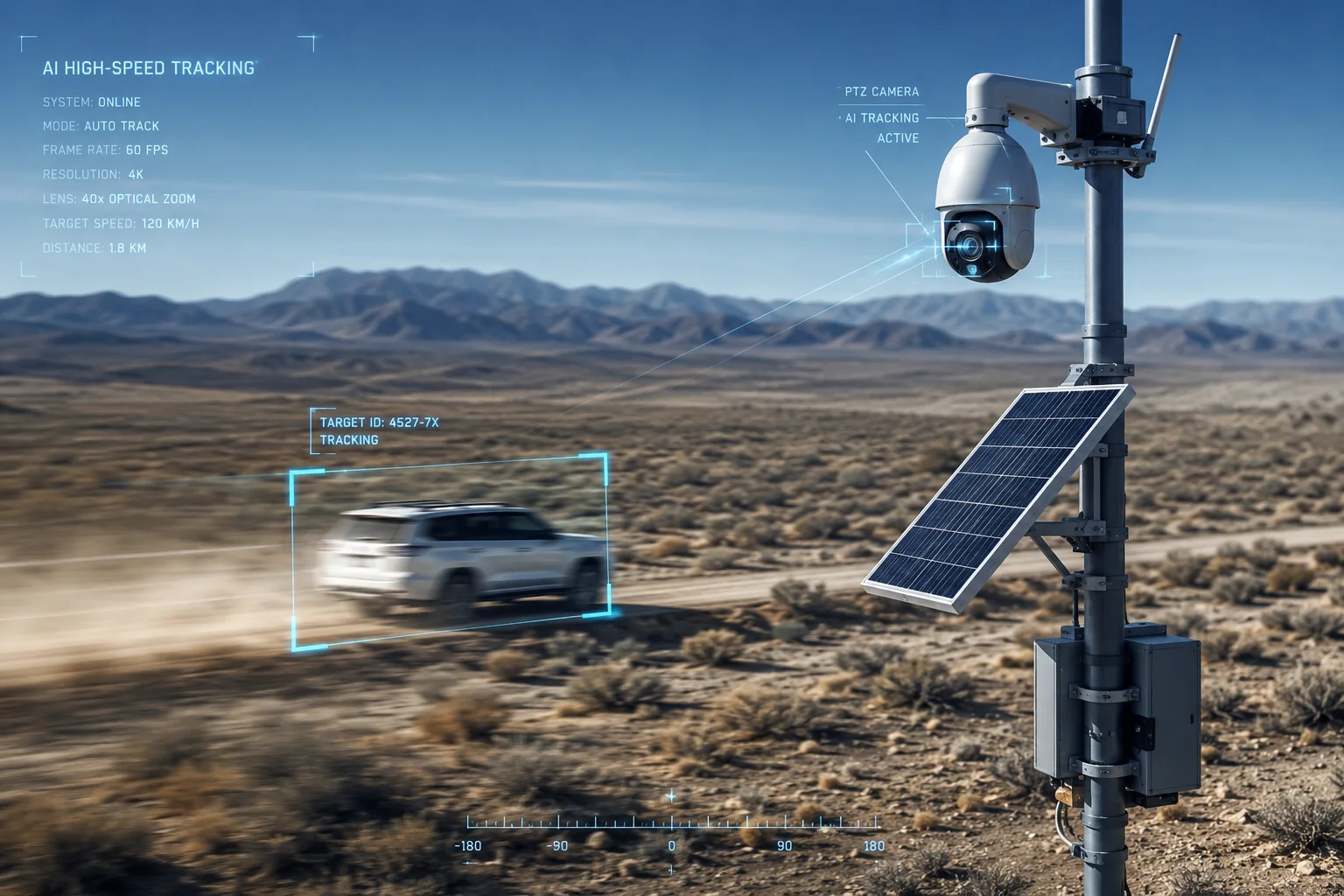
Cold-start AI recognition can handle targets moving at 5+ m/s, but only if the system uses motion-compensated capture and the AE convergence completes within 2 frames. Without these optimizations, motion blur at high speed will cause the AI model to fail on the first usable frame, pushing successful recognition to the second or third frame.
The Motion Blur Problem
When a target moves at 5 m/s and the camera’s first frame uses a long exposure time (because AE has not converged yet), the result is severe motion blur5. A blurred human shape does not match the patterns that the neural network was trained on. The AI model outputs a low confidence score, and the system either misses the detection or delays the alert.
The math is simple. At 5 m/s with a 1/30s shutter speed, the target moves about 167mm during the exposure. On a 1080p sensor with a wide-angle lens, that translates to roughly 50 pixels of blur. Most human detection models start failing when blur exceeds 20 pixels on the target.
How We Solve This
Our firmware forces a fast shutter speed on the first two frames after wake-up, even if the image is slightly underexposed. The logic is straightforward:
- A dark but sharp image can still be recognized by the AI model
- A bright but blurry image cannot be recognized by anything
The AI model is trained on low-light, noisy images. It handles underexposure much better than it handles motion blur. So we sacrifice brightness for sharpness during the critical first frames.
Frame Timing and Target Distance
The relationship between target speed, distance, and recognition success depends on the lens focal length:
| Target Speed | Distance from Camera | Pixel Movement per Frame (30fps) | Recognition Risk |
|---|---|---|---|
| 2 m/s (walking) | 50m | ~8 pixels | Low |
| 5 m/s (running) | 50m | ~20 pixels | Medium |
| 5 m/s (running) | 20m | ~50 pixels | High |
| 10 m/s (vehicle) | 100m | ~12 pixels | Low |
| 10 m/s (vehicle) | 30m | ~40 pixels | High |
The key insight: fast targets at close range are the hardest case. But in most perimeter security deployments, the detection zone is 50 to 200 meters away. At those distances, even a running person produces manageable pixel movement per frame.
The Role of the NPU in Fast-Target Scenarios
A faster NPU does not just mean quicker inference. It means the system can process multiple frames in rapid succession. If the first frame fails due to blur, a 6 TOPS NPU can attempt the second frame within 50ms. A slower 1 TOPS NPU might need 200ms between attempts.
For high-speed target scenarios, NPU throughput matters more than single-frame latency. The system needs to try, fail, and retry fast enough that the target is still in frame when recognition succeeds.
What Is the Success Rate of AI Recognition in the First Second After a PIR Wake-Up?
Success rate is the number that actually matters. I do not care if the system can theoretically recognize in 1.5 seconds. I care about how often it actually does in the field, across seasons, temperatures, and lighting conditions.
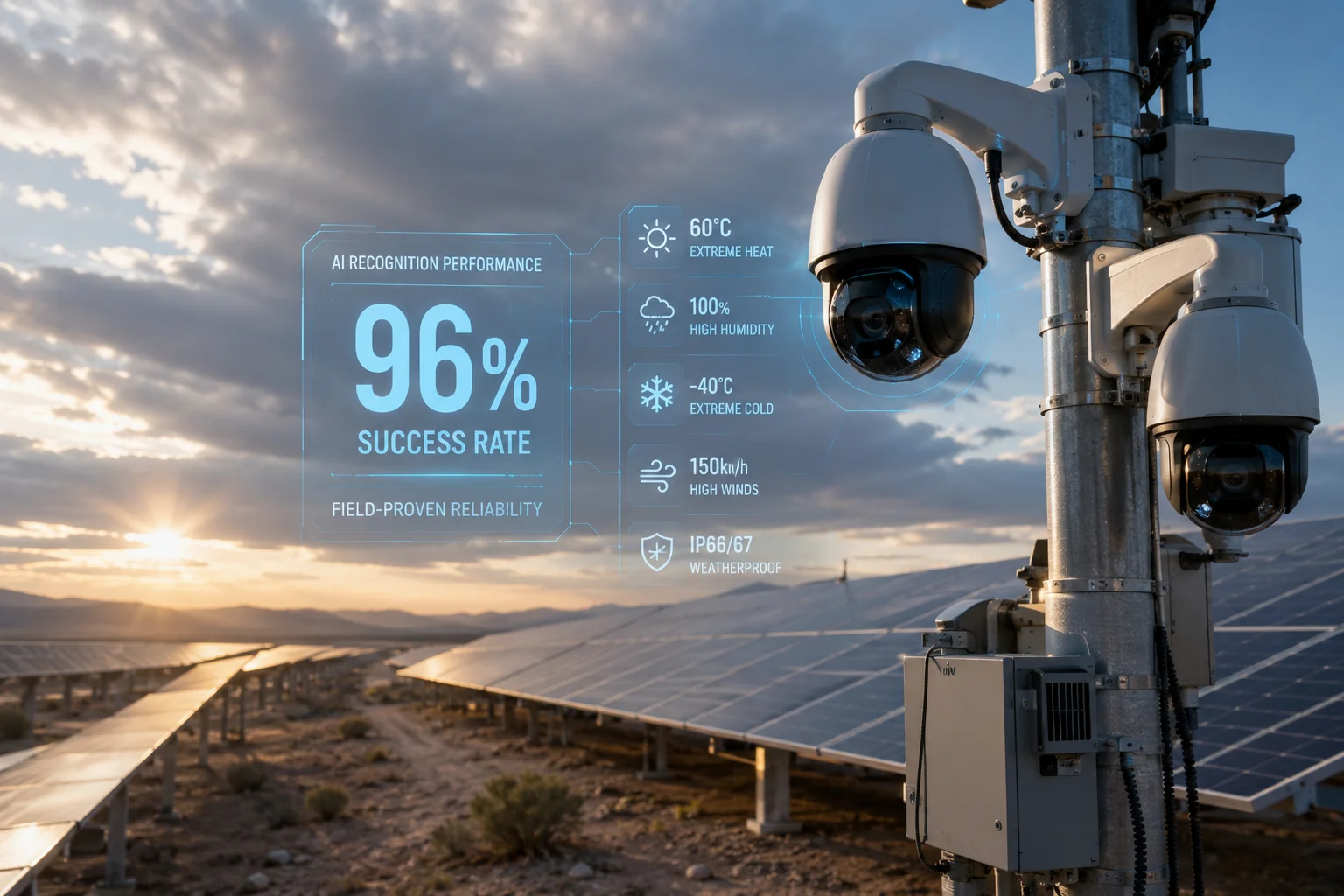
In controlled testing, our industrial PTZ systems achieve a 92% to 96% AI recognition success rate within the first second after PIR wake-up when using AOV pre-buffering. Without AOV, the first-second success rate drops to 60% to 75%, with most failures caused by incomplete AE convergence in low-light conditions.
What Causes First-Second Failures
The 4% to 8% failure rate in optimized systems comes from predictable edge cases:
- Extreme backlight (target silhouetted against sunrise/sunset)
- Target partially occluded by vegetation or structure
- Very close range (target fills entire frame, model cannot find body proportions)
- Sensor condensation in high-humidity mornings
These are not system failures. They are physics limitations. The AI model recovers on the second or third frame in almost all cases. The total miss rate (target leaves before any recognition) is under 1% with AOV enabled.
Temperature Effects on Boot Time and Success Rate
I mentioned earlier that temperature affects crystal oscillator startup time. This is not a minor detail. In field deployments across Texas summers and Canadian winters, we measured real differences:
At -20°C, the crystal oscillator takes 200 to 400ms longer to stabilize. The DDR memory self-test also slows down. Combined, extreme cold adds up to 500ms to the total boot time. This pushes some events past the 2-second mark.
At +55°C, the SoC thermal protection may throttle clock speed during the first 500ms of operation. This slows AI inference by 50 to 100ms.
Field Data vs Lab Data
Lab testing uses controlled lighting, fixed target speed, and room temperature. Field performance is always worse. The gap between lab and field is typically 10 to 15 percentage points on first-second recognition rate.
This is why I always quote field-validated numbers to my clients. A spec sheet that says “100ms AI inference” is technically true — but only after the system is fully awake, the image is properly exposed, and the target is perfectly positioned. Real-world performance includes all the messy steps before inference begins.
How SD Card Speed Affects the Workflow
One factor that surprises many engineers: the SD card. If the system is configured to write video immediately after wake-up, a slow SD card can block the entire pipeline. The file system mount and first write operation can take 300 to 800ms on a cheap card.
Our recommendation: use Class 10 U3 industrial-grade SD cards6, and configure the firmware to buffer video in RAM during the first 2 seconds. Write to SD card only after AI recognition is complete. This keeps the recognition path clean and fast.
Long-Term Reliability
Over 12 months of continuous operation, the recognition success rate should not degrade. But it does on poorly designed systems. Common causes:
- Flash memory wear7 on the AI model storage partition
- Sensor pixel degradation from constant thermal cycling
- Firmware memory leaks that accumulate over thousands of wake cycles
We run 100,000-cycle accelerated aging tests8 on every firmware release. The system must maintain the same boot time and recognition rate at cycle 100,000 as it did at cycle 1. This is what separates industrial-grade from consumer-grade.
Conclusion
Cold-start AI recognition in 1.5 to 2.5 seconds is achievable with the right SoC architecture, firmware optimization, and AOV pre-buffering. The technology exists today in industrial-grade systems — the question is whether your supplier has actually implemented it or just listed it on a datasheet.
1. Overview of 4G solar PTZ security camera systems and their applications. ↩︎ 2. Explains the process of running a trained neural network to make predictions. ↩︎ 3. Passive infrared sensors detect motion by measuring changes in infrared radiation. ↩︎ 4. A buffer that stores short video before a trigger to ensure no events are missed. ↩︎ 5. Motion blur occurs when a moving object is captured with a slow shutter speed. ↩︎ 6. Industrial-grade SD cards offer higher endurance and reliability for continuous recording. ↩︎ 7. Flash memory wear refers to degradation from repeated program/erase cycles. ↩︎ 8. Accelerated aging tests simulate long-term use to validate component reliability. ↩︎