
I see tiny shakes turn into big trouble at 40X zoom. A small wind push or motor step can ruin focus, blur details, and hurt AI tracking fast.
Mechanical damping1 helps me block those shakes before they reach the image. It uses suspension, preload, and friction control to absorb energy, reduce backlash, and keep the PTZ head steady under zoom.
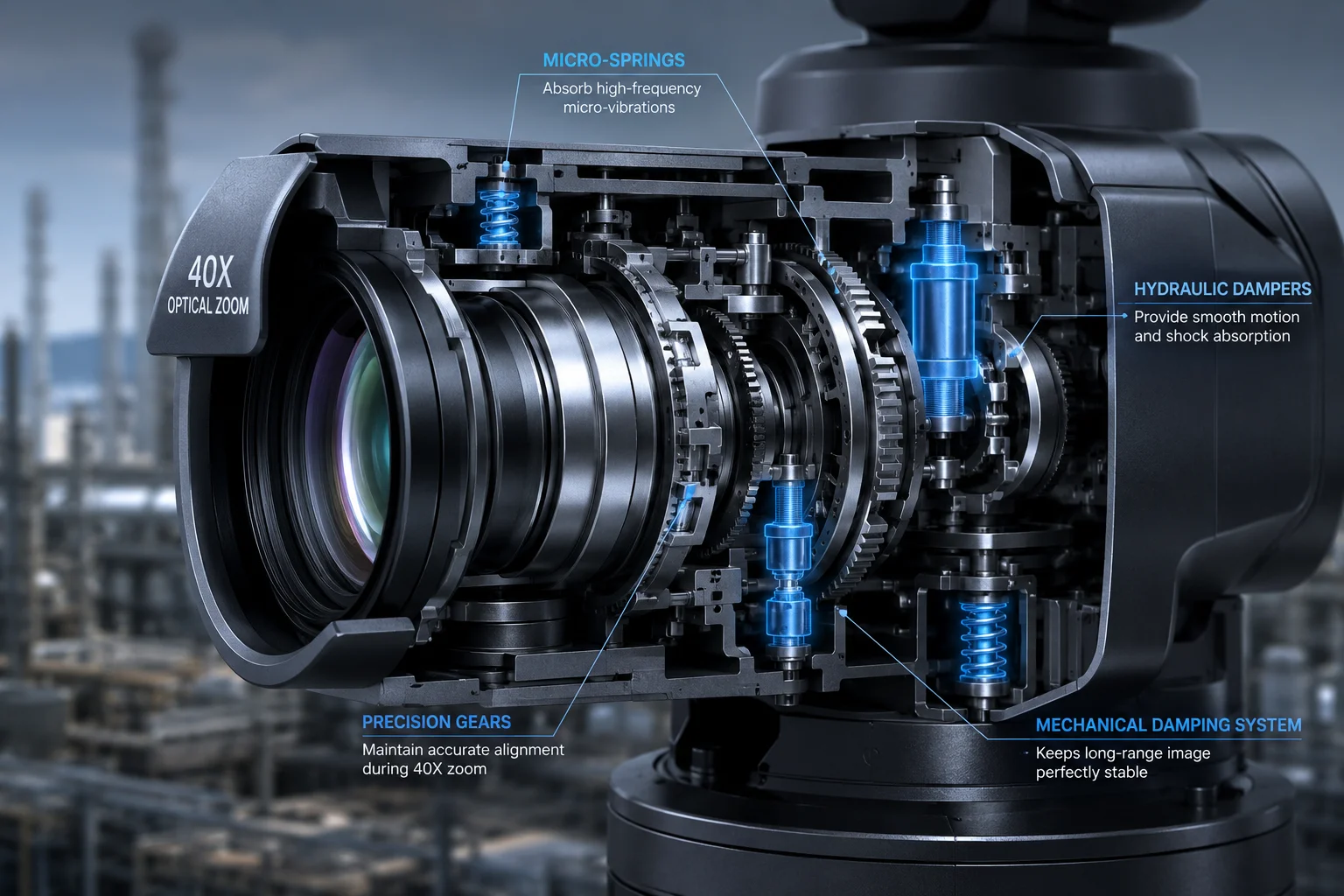 40X zoom mechanical damping stability
When I work with long-range PTZ systems, I treat stability as a core feature, not an extra. A camera can have sharp optics, but without strong damping, the whole system can still fail in the field.
Table of Contents
Can the damping system filter out the “Shake” caused by internal motor steps or external wind?
I know this problem very well. A camera can look stable on a desk, but once I mount it on a pole, every motor step and every wind hit can show up in the video.
Yes, I can reduce both kinds of shake with mechanical damping, but I cannot think of it as one single part. I need a full chain of control, from the motor drive to the gear train to the mount, because each part adds or removes vibration.
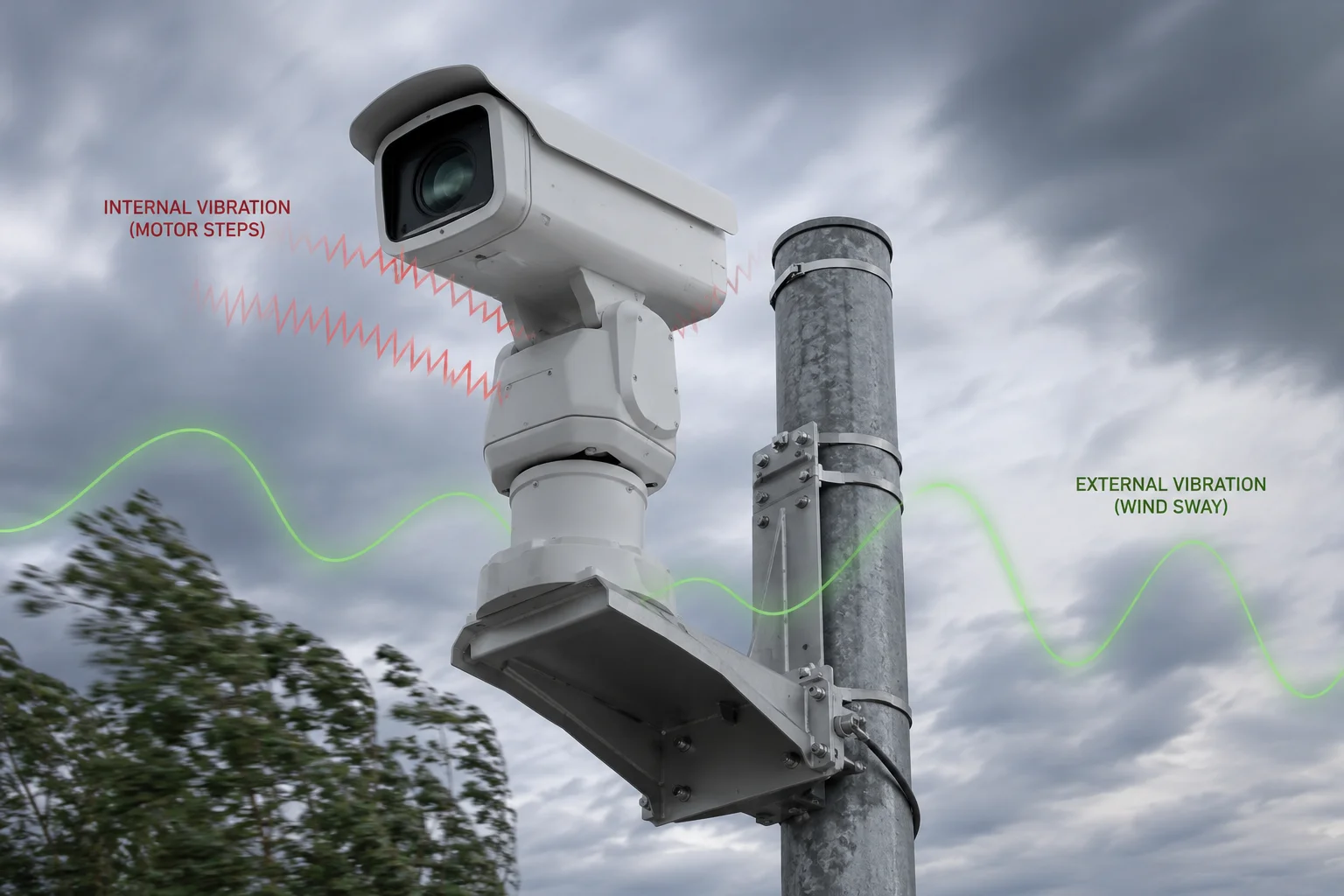 Motor step and wind vibration control
When I design or choose a PTZ system, I first separate the vibration sources. Internal motor steps5 usually create short, sharp pulses. External wind usually creates slower pushes and sway. I do not use the same fix for both. For motor steps, I want smooth motion, low backlash, and good preload2 in the gearbox. For wind, I want stiff mounting, better balance, and a body that can absorb low-frequency motion without ringing. I also pay attention to the mass of the moving module. If the optical block is too light, it can react too fast to tiny drive changes. If it is too heavy, it can lag and feel unstable. The best result comes from balance. I want the system to move only when I tell it to move, and I want it to ignore small noise. That is why damping grease3, elastic pads, and a zero-backlash gear path matter so much. They do not remove all motion. They shape it. They turn ugly shake into small, slow, controlled movement that the image pipeline can handle. In real projects, that difference can decide whether the camera captures a plate number or misses it completely.
Main vibration sources I see in 40X systems
| Source | Typical pattern | Main risk | Best control method |
|---|---|---|---|
| Motor steps | Short pulse, fast jitter | Frame jump and micro-blur | Preload, damping grease, smooth drive |
| Gear backlash | Small dead zone | Sudden image shift | Zero-backlash gearbox |
| Wind load | Slow sway, repeated push | Tracking drift | Strong bracket, stiff pole, balanced body |
| Structure resonance | Repeated ringing | Amplified shake | Mass tuning, damping material |
What I focus on first
- I check the gearbox gap.
- I check the mount stiffness.
- I check the weight balance of the PTZ head.
- I check how the motor starts and stops.
- I test the camera in wind, not only indoors.
Does the camera use electronic stabilization (EIS) in conjunction with mechanical damping?
I do not see EIS as a replacement for mechanical damping. I see it as a partner. If I rely on software alone, I often lose field of view8, and I can still get blur when the shake is too strong.
Yes, I use EIS4 together with damping when the system supports it. Mechanical damping handles the physical shake first. EIS then trims the leftover motion in the image. That gives me a cleaner result than either method alone.
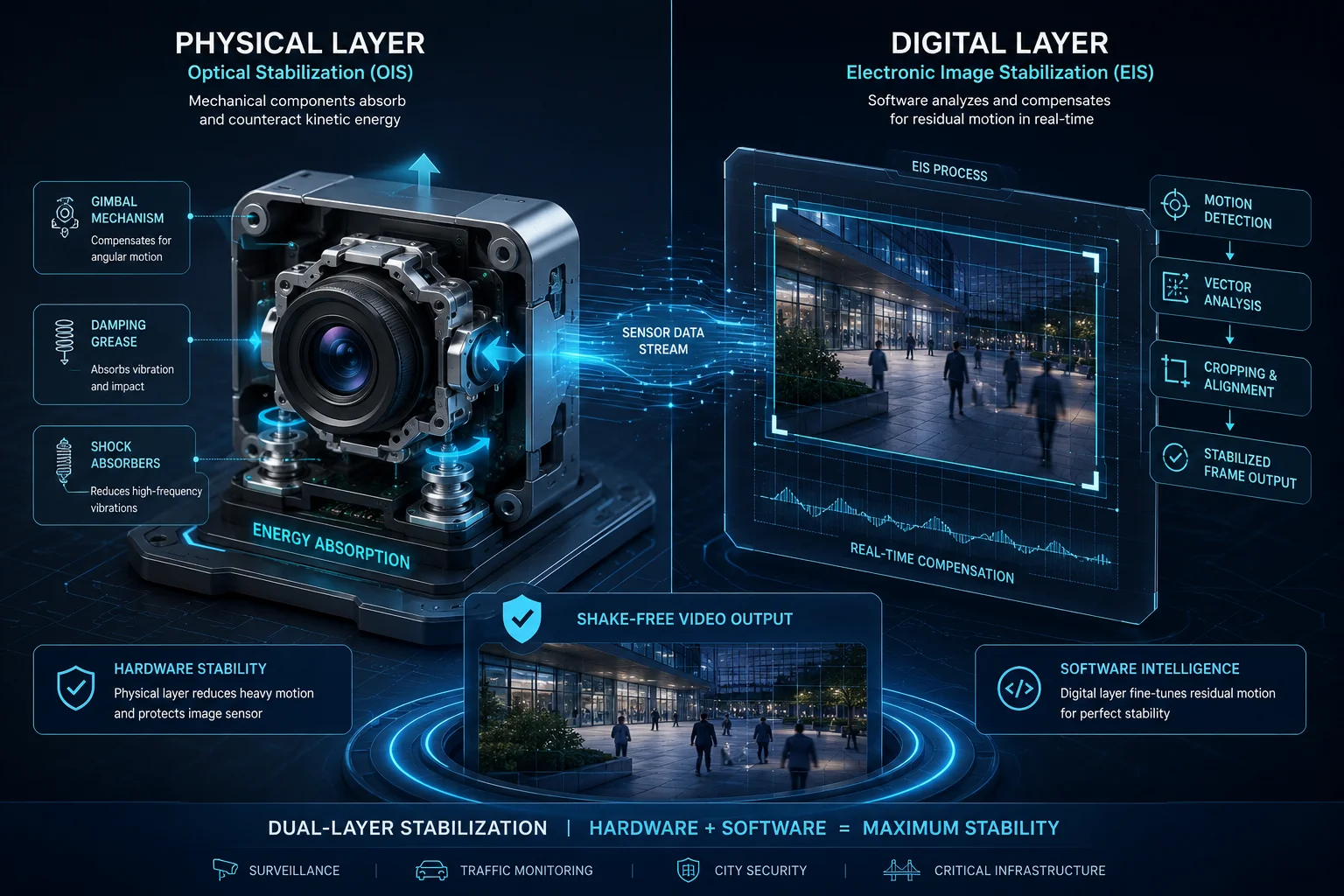 EIS and mechanical damping cooperation
I like to think about the two layers as a filter chain. Mechanical damping deals with energy before the image is made. It reduces the force that enters the lens module and sensor area. EIS works after the sensor sees motion. It shifts or crops the frame to hide small movement. This is useful, but I stay careful. EIS cannot fully save a bad mechanical design. If the camera shakes too much, EIS may crop too hard, create edge loss, or make the video feel unstable. That is why I always want the physical system to do the hard work first. In my B2B projects, this matters a lot because many buyers want stable tracking, good VMS6 output, and clear details at long range. A system that depends only on software often looks good in marketing, but it can fail in wind, on poles, or on large open sites. I also pay attention to latency. If the camera uses EIS and tracking at the same time, the control loop must stay fast and clean. If the response is late, the camera can overshoot the target. So I want the camera to keep the image steady at the source, then let EIS polish the result. That combination gives me the best chance of clean zoom footage in real jobs.
Mechanical damping vs. EIS
| Method | Where it works | What it fixes | What it cannot fix well |
|---|---|---|---|
| Mechanical damping | Before image capture | Motor shake, wind shake, resonance | Very large physical motion |
| EIS | In image processing | Small residual jitter | Heavy shake, big sway, fast shock |
| Together | Full chain | Better overall stability | Still needs good mount and tuning |
My practical view
- I use damping to reduce the problem.
- I use EIS to clean the leftover motion.
- I never let EIS hide a weak mechanical design.
- I test both at full zoom, because wide view tests can be misleading.
How steady is the 4K image when the camera is fully zoomed in and tracking a fast target?
I know this is where many systems fail. A camera can look fine at 1X or 5X, but at full zoom, every tiny flaw grows. If the target moves fast, the pan and tilt movement can also expose lag, overshoot, and blur.
At full zoom, I expect the 4K image to stay steady only if the optics, drive system, damping, and tracking logic all work together. A strong camera should keep detail clear while it follows the target, but the result depends on speed, distance, wind, and how good the mechanical base is.
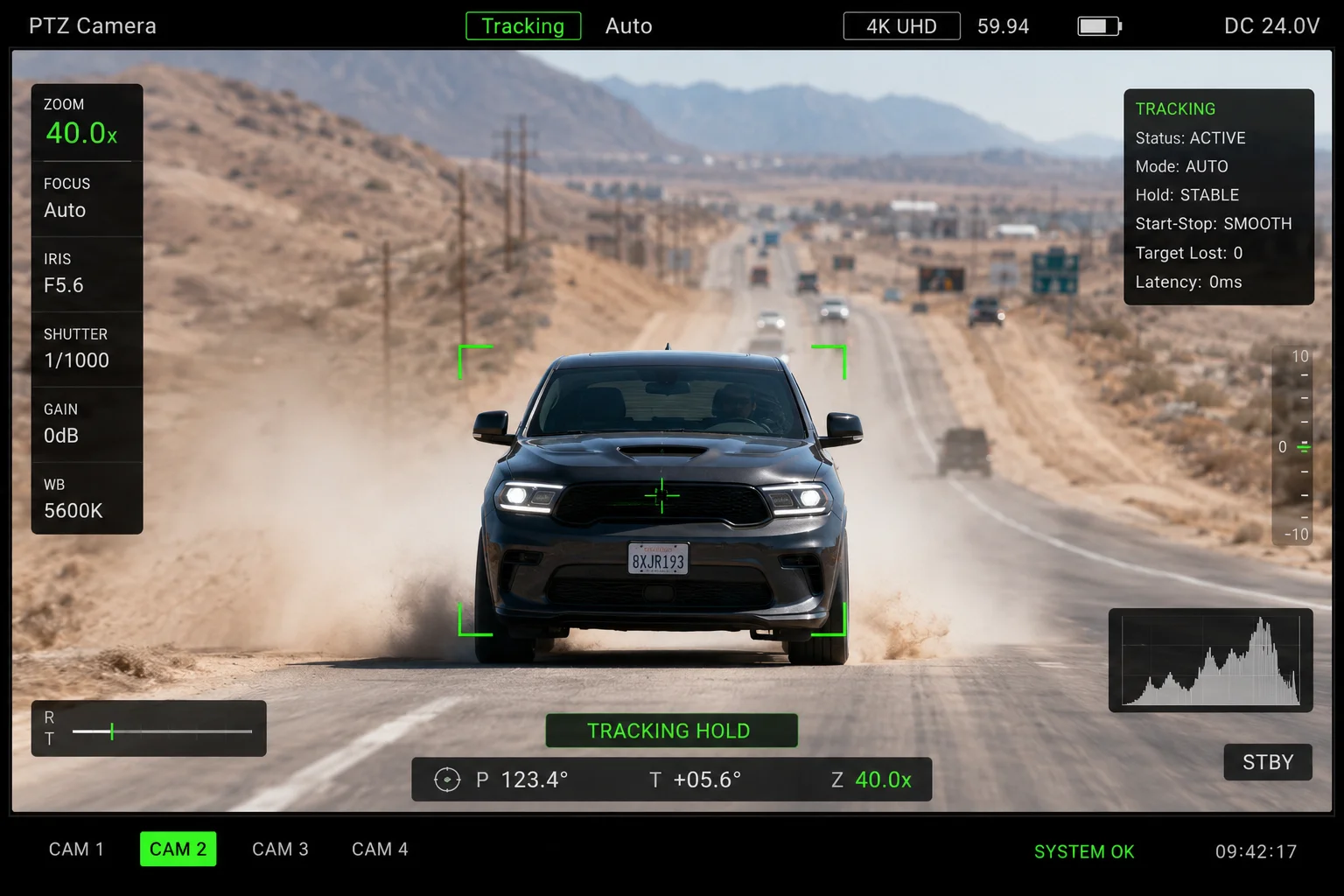 4K full zoom fast target tracking
When I test this kind of camera, I care about three things. First, I care about start-stop smoothness. If the PTZ head jerks when tracking begins, the image will jump. Second, I care about follow accuracy. If the camera keeps overshooting, the target will move in and out of the center, and the image will look nervous. Third, I care about hold stability. Once the target slows down or pauses, the camera should settle fast without a wobble. Full zoom makes all of this harder because the field of view becomes very narrow. A tiny shake that would be invisible at wide angle can take over the frame at 40X. That is why I always want a camera with good damping, strong motor control, and clean tracking logic. I also care about the mount and pole. If the base moves, the best internal design still loses. In real project work, I often tell buyers that a 4K label does not mean much by itself. What matters is how much usable detail stays in the frame after the camera tracks a moving person, a vehicle, or a machine. If I cannot read the target cleanly at the end of the move, then the system is not ready for field use. So I judge stability by the final image, not the spec sheet.
What I test at full zoom
| Test item | What I watch | Good result | Bad result |
|---|---|---|---|
| Start of tracking | First frame after motion begins | Smooth move, no jerk | Sudden jump |
| Mid-track motion | Target in motion | Clean follow, low blur | Hunting or lag |
| Stop point | When target slows or stops | Fast settle, no wobble | Ringing or bounce |
| Long hold | Staying on target | Stable center frame | Slow drift |
My field checklist
- I test with a real moving vehicle if I can.
- I test in wind, not only in still air.
- I test after long zoom, not only in short zoom.
- I check if the VMS can keep the frame clean.
- I compare tracking with and without EIS.
Can I see a comparison video of “Damped” vs. “Non-damped” stability at 40X magnification?
I always want side-by-side proof before I trust a long-range PTZ camera. A spec sheet can say a lot, but a real comparison video tells me much more.
Yes, a comparison video is very useful because it shows how much mechanical damping changes the result at 40X. In a damped system, I expect less jitter, less ring, and faster settle time7. In a non-damped system, I expect more shake, more overshoot, and more image stress.
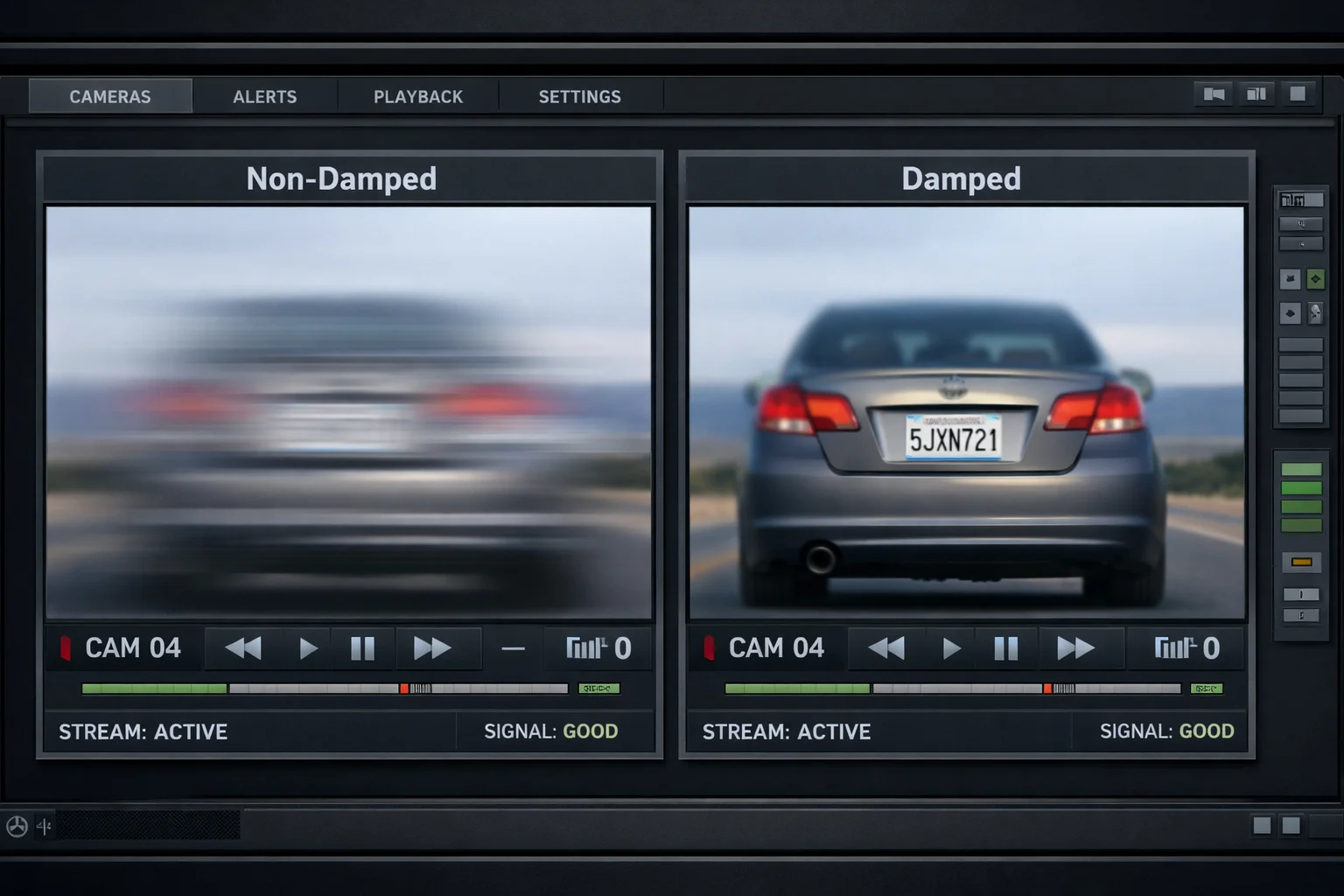 Damped vs non-damped comparison
When I ask for a comparison video, I want the same scene, the same pole, the same wind, and the same target speed. If the test is not controlled, the result does not help me. I also want the camera to start from the same zoom level and track the same path. That way I can judge the real value of damping. I often look at the edges of the frame first, because shake is easier to spot there. Then I look at the center detail, because that tells me if the target is still readable. If the damped version keeps plate text sharper, face shape clearer, or vehicle markings easier to see, then I know the mechanical design is doing real work. For buyers like David Miller, this kind of proof matters a lot. They need lower service cost, fewer field returns, and fewer complaints from end users. A clean video comparison also helps with internal sales. It gives a simple story: one camera shakes, the other stays under control. That is easy to explain to an installer, a distributor, or a system integrator. I would always rather show real footage than make big promises. In this market, stable video sells because stable video saves time, money, and trouble.
What I want in a fair comparison video
| Test rule | Why it matters |
|---|---|
| Same mount and same pole | Keeps the setup fair |
| Same wind condition | Shows real vibration control |
| Same zoom level | Makes 40X results honest |
| Same target movement | Lets me compare tracking quality |
| Same recording format | Avoids fake visual differences |
What I look for frame by frame
- I look for edge shake.
- I look for focus pumping.
- I look for target drift.
- I look for settle time after a stop.
- I look for plate or text clarity under motion.
Conclusion
Mechanical damping is the base, EIS is the helper, and real 40X stability only comes when both work with strong mounting and clean tracking control.
1. Understand the fundamentals of mechanical damping and its role in vibration control. ↩︎ 2. Learn how preload eliminates play in gear systems and improves stability. ↩︎ 3. Find out how specialized damping greases absorb vibration and reduce resonance. ↩︎ 4. Understand electronic image stabilization and its limitations when paired with mechanical damping. ↩︎ 5. Learn how motor step behavior influences micro-vibrations in precision motion systems. ↩︎ 6. Learn how Video Management Systems integrate with PTZ cameras and stabilization features. ↩︎ 7. Measure how quickly a PTZ system stabilizes after a movement, critical for 40X zoom. ↩︎ 8. Understand how field of view changes with zoom and why EIS can crop it. ↩︎