
I watched a client lose three days of border surveillance footage because his PWM controller couldn’t keep the battery alive through a cloudy Texas winter week. That one failure cost more than ten MPPT controllers.
MPPT controllers convert excess solar panel voltage into usable charging current, harvesting 15–30% more energy than PWM controllers. For 24/7 off-grid PTZ camera systems, this extra energy is the difference between staying online and going dark during winter or overcast conditions.
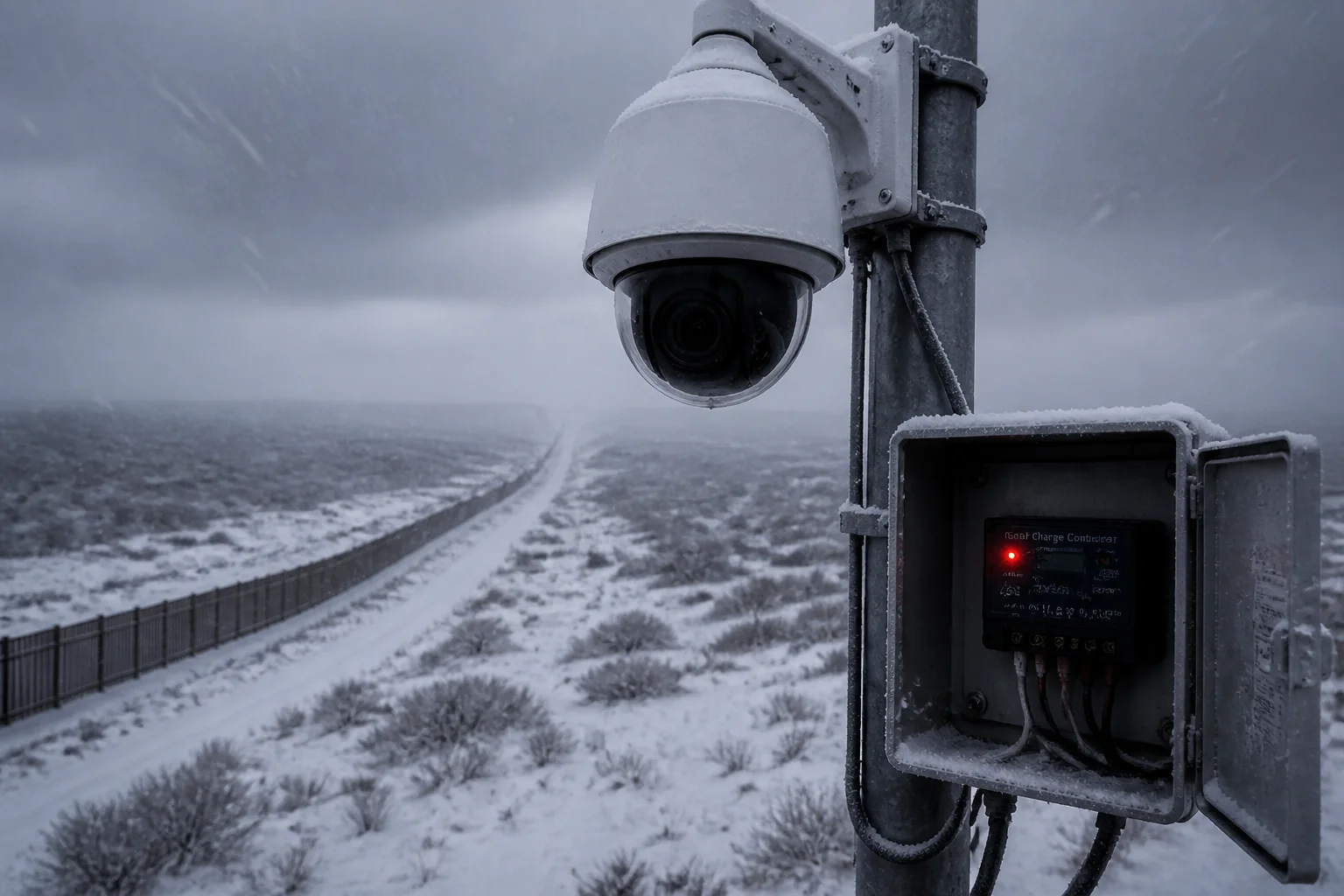
Below, I break down the specific gains you get from MPPT in real off-grid PTZ deployments. I cover winter efficiency, battery lifespan, remote monitoring, and why PWM systems fail when you need them most.
Table of Contents
How Much Extra Charging Efficiency Can I Gain with an MPPT Controller in Winter?
Winter is when off-grid systems die. I have seen too many projects fail because the integrator picked a cheap PWM controller and assumed summer performance would carry through December.
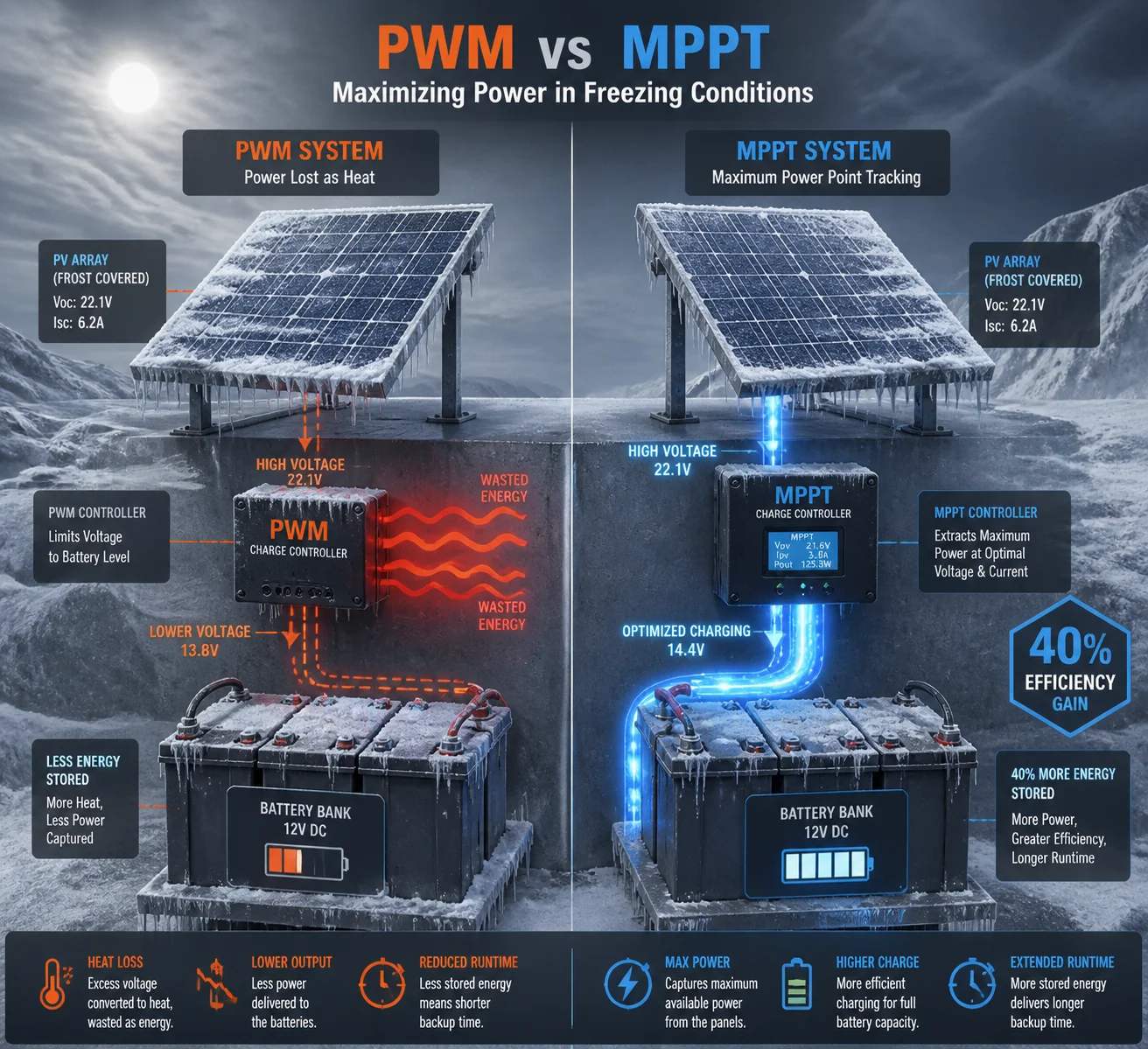
In cold weather, MPPT controllers deliver 20–40% more energy than PWM units. Solar panels produce higher voltage in low temperatures, and MPPT captures that extra voltage by converting it into additional charging current. PWM simply wastes it.
Why Cold Weather Makes the Gap Bigger
Here is the thing most people miss. Solar panels are rated at 25°C (77°F). When the temperature drops to 0°C or below, the panel’s open-circuit voltage (Voc) rises significantly. This is due to the solar panel voltage temperature coefficient 4. A 100W panel rated at 18V might output 21V or even 22V on a freezing morning.
With a PWM controller, the panel voltage gets pulled down to match the battery voltage — around 12.5V to 14.4V. All that extra voltage above the battery level? Gone. Wasted as heat. You paid for a 100W panel, but you are only using 65–70W of it.
With an MPPT controller 1, the story changes completely. The MPPT unit lets the panel operate at its natural high-voltage sweet spot (say, 21V). Then its internal DC-DC converter steps that voltage down and pushes more amps into the battery. You get to use nearly all 100W. A detailed MPPT vs PWM efficiency comparison at 0°C 5 shows the gap widens in cold weather.
Real Numbers from the Field
| Condition | PWM Output (approx.) | MPPT Output (approx.) | MPPT Advantage |
|---|---|---|---|
| Summer, 30°C, full sun | ~75W from 100W panel | ~90W from 100W panel | +20% |
| Winter, 0°C, full sun | ~65W from 100W panel | ~92W from 100W panel | +40% |
| Cloudy day, any season | ~30W from 100W panel | ~42W from 100W panel | +30–40% |
These numbers matter a lot for PTZ systems. A 4K PTZ camera with 4G transmission, laser IR, and a heater can pull 30–80W around the clock. In winter, you have maybe 4–5 hours of usable sunlight. Every watt counts.
What This Means for System Sizing
Because MPPT squeezes more energy from the same panel, you can often use a smaller panel array and still meet your power budget. Or you can keep the same panel size and gain a bigger safety margin for bad weather days.
I always tell clients: if you are deploying in Canada, northern Europe, or even the northern US states, do not even think about PWM. The math does not work. You will either oversize your panel array to compensate (spending more money), or you will face downtime. Neither option makes sense when an MPPT controller solves the problem directly.
The Morning and Evening Bonus
MPPT also outperforms PWM during the low-light hours of early morning and late evening. During these times, the panel voltage is still relatively high, but the current is low. PWM cannot do anything useful with this combination. MPPT can. It converts that high voltage into a trickle of current that keeps your battery topped off. Over a full day, these extra minutes of charging add up — especially in winter when every hour of daylight is precious.
Does the MPPT Controller Extend the Overall Lifespan of My Lithium Battery Bank?
I have replaced lithium battery banks at remote sites. The truck rental, the technician’s time, the lost surveillance data — one battery replacement at a border site can cost $1,500 or more. Anything that extends battery life pays for itself fast.
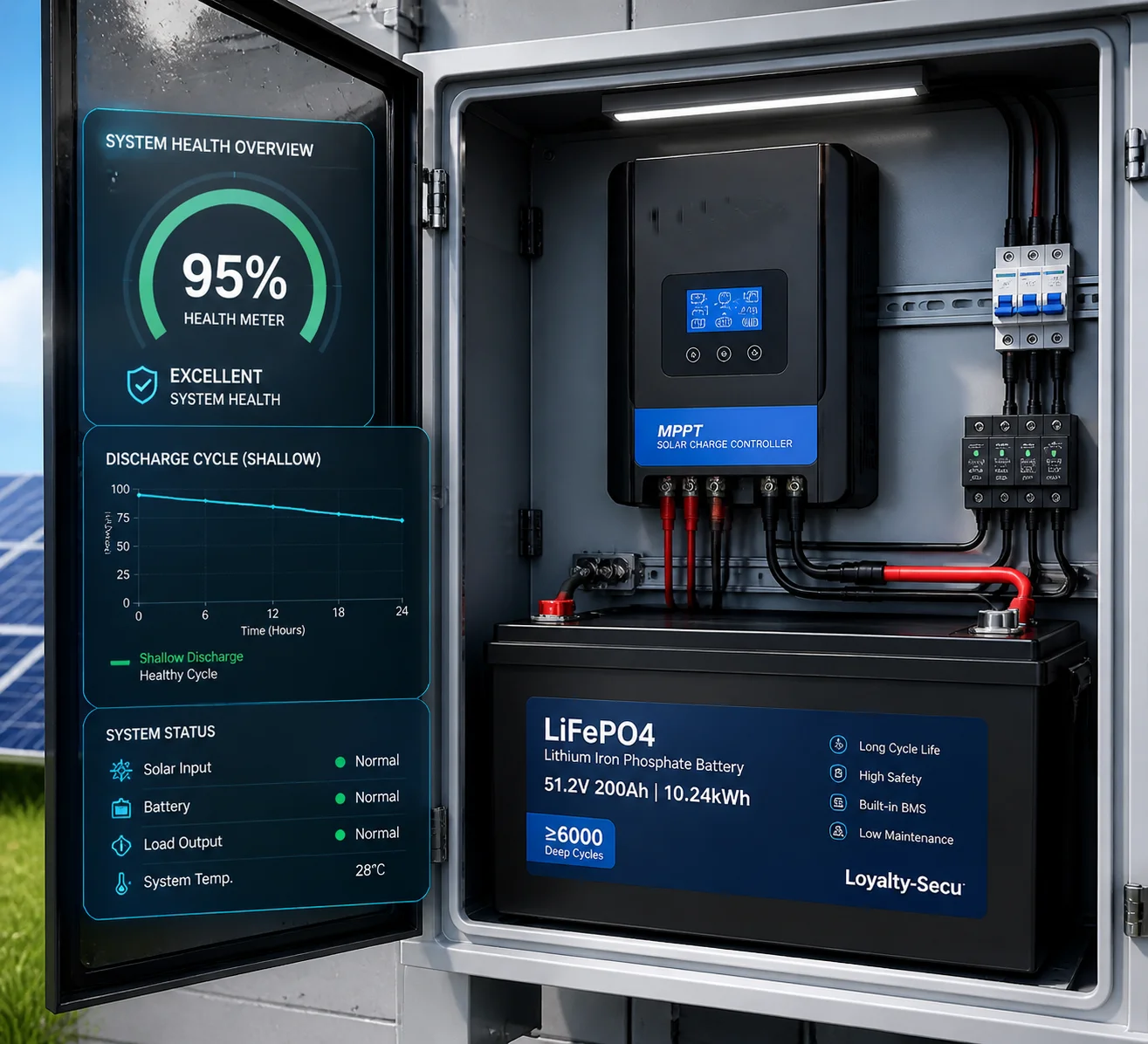
Yes. MPPT controllers extend lithium battery lifespan by keeping batteries fuller each day, reducing deep discharge cycles, and providing precise multi-stage charging. This can add 1–2 years of useful life to your battery bank compared to PWM-managed systems.
How Charging Efficiency Connects to Battery Health
The link between charging efficiency and battery life is direct. Here is the chain of cause and effect:
- MPPT harvests more solar energy each day.
- The battery reaches a higher state of charge (SoC) before sunset.
- The camera draws power overnight, but the battery does not drop as low.
- Lower depth of discharge (DoD) each cycle = longer battery life.
Lithium batteries have a well-documented relationship between DoD and cycle life. A lithium iron phosphate (LiFePO₄) 2 battery cycled to 50% DoD might last 4,000+ cycles. The same battery cycled to 80% DoD might only last 2,000 cycles. That is a massive difference.
Multi-Stage Charging: MPPT Does It Better
Good MPPT controllers use a three-stage charging profile:
- Bulk stage: Maximum current flows into the battery until it reaches a target voltage.
- Absorption charging stage 6: Voltage is held constant while current tapers off, filling the last 10–20% of capacity gently.
- Float stage: A low maintenance voltage keeps the battery topped off without overcharging.
PWM controllers also claim multi-stage charging, but their ability to execute it is limited. Because PWM cannot boost current from excess voltage, the bulk stage takes longer, and the battery may never reach full absorption before the sun goes down. Over weeks and months, this means the battery is chronically undercharged — a condition that accelerates degradation in all battery chemistries.
The Cost of One Battery Replacement
| Cost Item | Typical Amount (USD) |
|---|---|
| New LiFePO₄ battery bank (100Ah, 12V) | $400–$800 |
| Technician labor (remote site, 1 day) | $300–$600 |
| Vehicle / travel to remote site | $200–$500 |
| Lost surveillance data / downtime | Hard to quantify, but real |
| Total per replacement | $900–$1,900+ |
An MPPT controller typically costs $80–$200 more than a comparable PWM unit. If it extends your battery life by even one year, the return on investment is obvious. For clients like David who manage dozens of remote sites, this saving multiplies quickly.
Heat Management Matters Too
MPPT controllers run cooler during charging because they operate more efficiently. Less wasted energy means less heat inside the control box. Heat is the enemy of both electronics and batteries. A cooler operating environment inside the solar power box helps everything last longer — the controller, the battery, and the camera’s power supply board.
Can I Monitor the Real-Time Solar Harvesting Data Through the Camera’s App?
I get this question a lot from system integrators. They want one app, one dashboard, one place to check everything. And honestly, that is the right way to think about it.
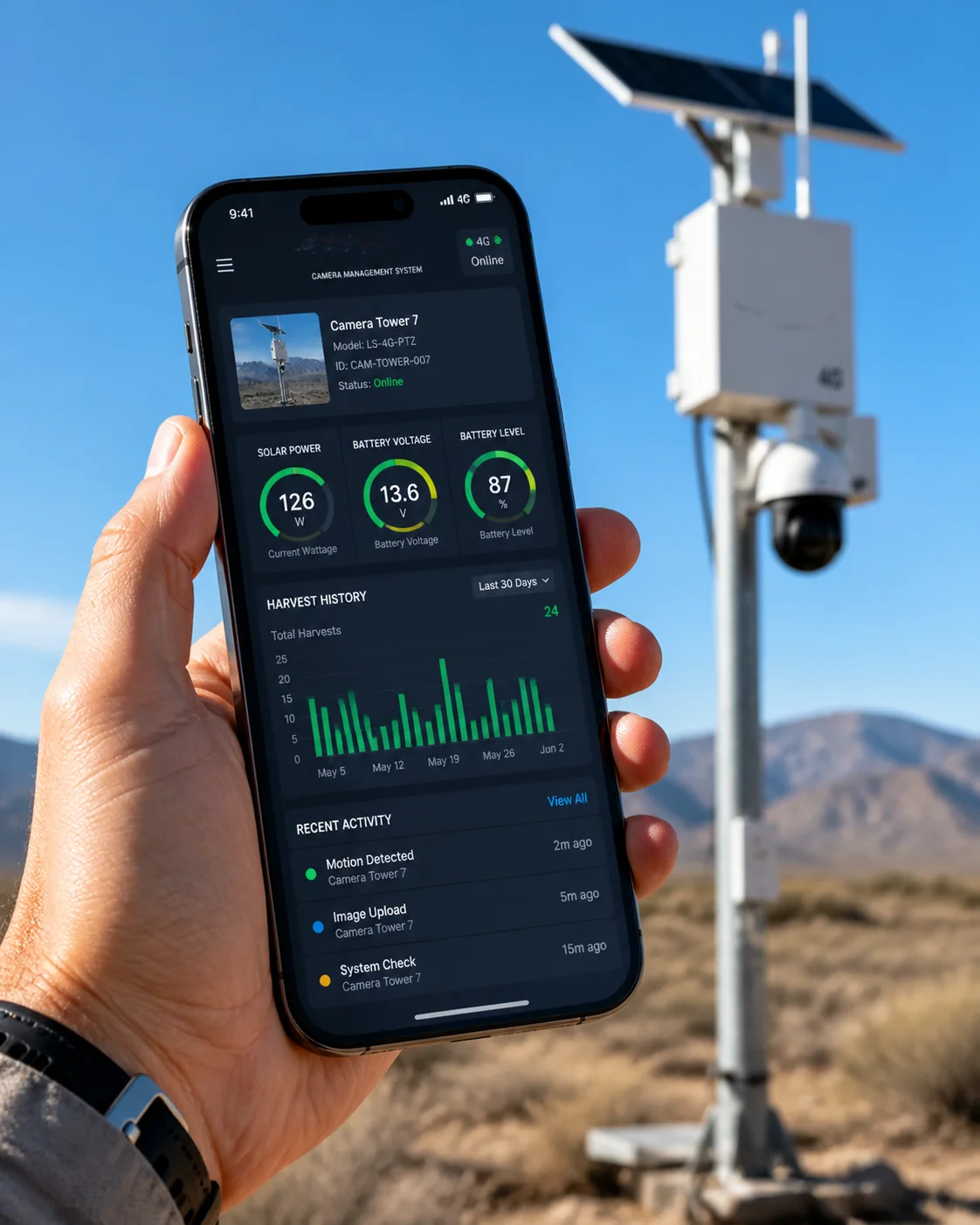
Many modern MPPT controllers support remote monitoring through RS485, Bluetooth, or Wi-Fi interfaces. When integrated into a well-designed solar PTZ system, you can view real-time solar input, battery voltage, load current, and charging status directly through the camera’s management app or a connected platform.
Why Remote Monitoring Changes the Game
For off-grid PTZ deployments, you cannot just walk up to the pole and check the battery meter. Your sites might be 50 miles from the nearest road. Remote monitoring is not a luxury — it is a basic operational requirement.
A good MPPT controller with communication capability gives you:
- Real-time solar panel output (voltage, current, watts)
- Battery state of charge (percentage and voltage)
- Daily energy harvested (watt-hours)
- Load consumption (how much the camera is drawing)
- Alerts for low battery, overcharge, or controller faults
How Integration Works in Practice
At Loyalty-Secu, we design our solar PTZ systems so the MPPT controller communicates with the camera’s main board. The data gets transmitted over the same 4G connection the camera uses for video. This means you do not need a separate SIM card or a separate monitoring platform for the power system.
Here is what a typical integrated monitoring setup looks like:
| Component | Role | Communication |
|---|---|---|
| MPPT Controller | Manages charging, reports power data | RS485 communication protocol 7 to camera main board |
| Camera Main Board | Aggregates video + power data | 4G LTE to cloud platform |
| Cloud Platform / App | Displays video feed + power status | Web browser or mobile app |
This integration is something PWM controllers rarely support. Most cheap PWM units have no communication interface at all. You get zero visibility into your power system’s health. The first sign of trouble is when the camera goes offline — and by then, the battery may already be damaged from deep discharge.
What to Ask Your Supplier
If you are sourcing solar PTZ systems from China, put this in your specification document:
- “The MPPT controller must support RS485 or equivalent communication with the camera’s main board.”
- “The system must display real-time solar input power, battery SoC, and daily energy harvest through the camera’s management platform.”
- “Low-battery and fault alerts must be pushed to the operator automatically.”
If a supplier cannot meet these requirements, they are probably using a generic PWM controller with no monitoring capability. That is a red flag. You deserve full visibility into every watt your system produces and consumes.
Predictive Maintenance Becomes Possible
With historical data from the MPPT controller, you can spot trends before they become problems. If daily energy harvest drops 20% over a month, maybe the panel is dirty or shaded by new vegetation. If the battery voltage at dawn keeps dropping week over week, the battery may be aging and needs replacement soon — but on your schedule, not as an emergency. This is called remote site predictive maintenance using solar trend data 10.
This kind of predictive maintenance is impossible with a blind PWM system. You are flying without instruments.
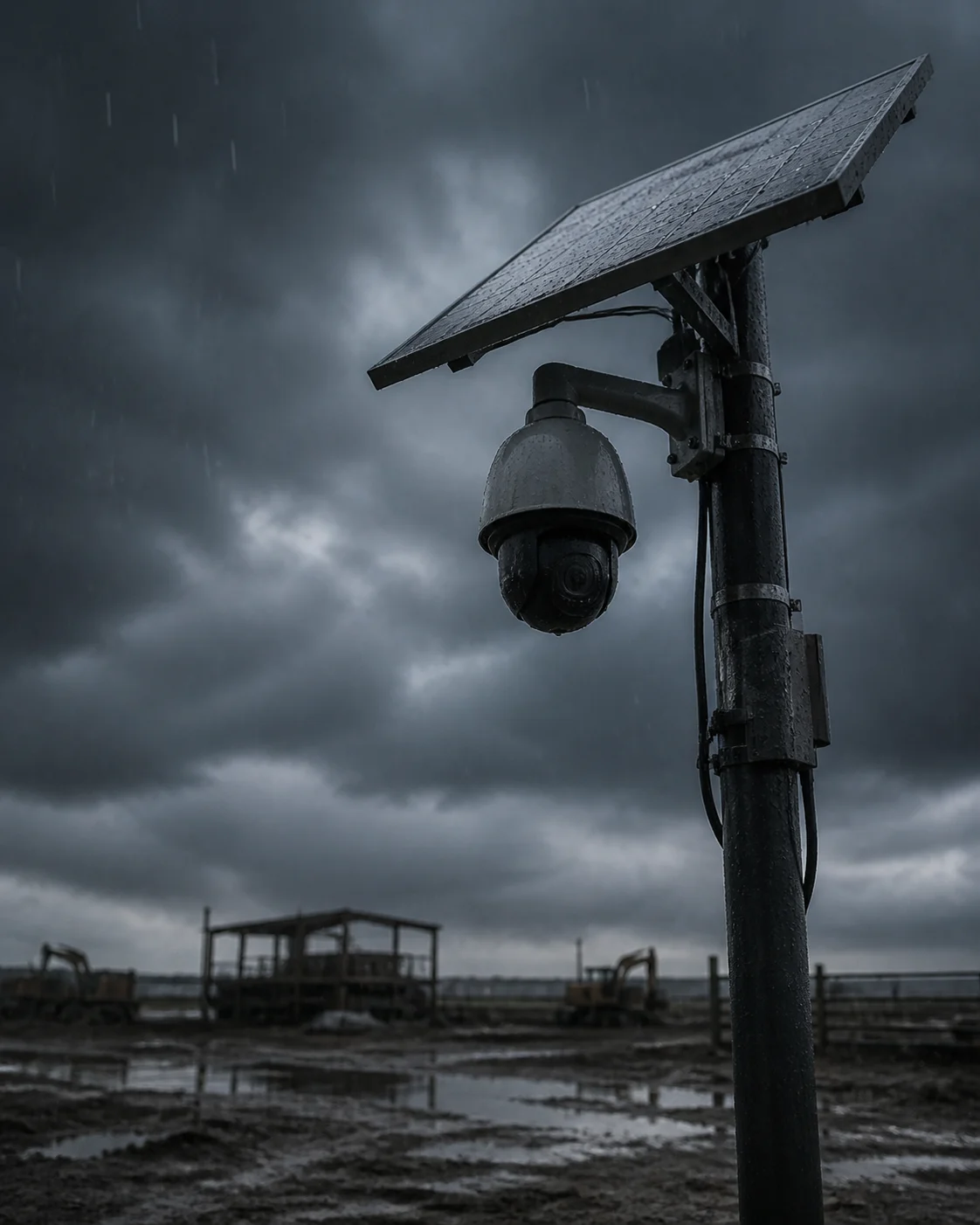
Why Does My PWM System Fail to Keep the Camera Online During Cold, Overcast Weeks?
I hear this complaint every winter. An integrator calls and says: “The system worked fine all summer. Now it is December and the camera drops offline every other day.” The answer is almost always the same — a PWM controller that cannot keep up.
PWM systems fail in cold, overcast conditions because they waste the extra voltage that solar panels produce in low temperatures, and they cannot extract enough power from weak sunlight to keep high-draw PTZ cameras running. The battery drains faster than it charges, and the system shuts down.
The Perfect Storm: Three Problems at Once
Cold, overcast weeks create a triple threat for PWM-based systems. Let me walk through each one.
Problem 1: Wasted Voltage in Cold Weather
As I explained earlier, cold temperatures push panel voltage up. A panel rated at 18V Vmp might produce 21–22V in freezing weather. PWM 3 clamps this down to battery voltage (around 12.5–14.4V). You lose 30–40% of available power right there.
MPPT would convert that 22V into more charging current. PWM just throws it away.
Problem 2: Low Light Means Low Current
On overcast days, the panel’s current output drops dramatically. A 100W panel might only produce 1–2 amps instead of its rated 5.5 amps. The voltage stays relatively high, but the current is tiny.
PWM needs current to charge the battery. It cannot do anything useful with voltage alone. So on a cloudy winter day, a PWM system might push only 15–25W into the battery.
MPPT, on the other hand, takes that high-voltage, low-current output and converts it. The result is a lower voltage but slightly higher current reaching the battery. It is not a miracle — you cannot create energy from nothing — but the conversion efficiency means you capture 30–40% more of what little energy is available. This is especially important when calculating daily solar harvest for December at 45°N 8.
Problem 3: PTZ Cameras Are Hungry
A basic bullet camera might draw 8–12W. A PTZ camera with 38X zoom, laser IR, 4G modem, and a heater can draw 40–80W. That is a huge difference.
In summer, even a PWM system can keep up because there are 8–10 hours of strong sunlight. The math works out. But in winter, you might get only 3–4 hours of weak sunlight. If your PWM system is only pushing 20W into the battery during those hours, you collect maybe 60–80Wh per day. Your camera consumes 40W × 24h = 960Wh per day. The deficit is enormous.
With MPPT, you might collect 90–120Wh from the same panel in the same conditions. Still not enough for 24/7 operation from a single small panel — but combined with a properly sized battery bank and panel array, the system stays alive. The MPPT advantage is what keeps you above the survival line through battery deep-discharge prevention with MPPT low-temp cutoff 9.
Why “It Worked in Summer” Is Not a Valid Test
Summer testing hides PWM’s weaknesses. Long days, strong sun, warm temperatures — everything works in PWM’s favor. The real test is the worst week of the year: short days, heavy clouds, freezing temperatures. If your system cannot survive that week, it is not reliable.
I always recommend that clients ask their supplier for a winter energy budget calculation. This calculation should show:
- Expected daily solar harvest in the worst month (using local irradiance data)
- Daily camera power consumption (including heater and all accessories)
- Battery reserve capacity (how many days the system can run with zero sun)
- Controller type and its expected efficiency under low-light, low-temperature conditions
If the supplier only shows you summer numbers, push back. Ask for December data. That is where the truth lives.
The Hidden Cost of Downtime
When a PWM system fails in winter, the consequences go beyond lost footage:
- The battery may deep-discharge below safe levels, causing permanent capacity loss.
- The camera may cold-boot repeatedly as the battery voltage fluctuates around the cutoff threshold, stressing the electronics.
- You lose trust with your end client, who is paying for 24/7 surveillance.
- You send a technician to a remote site in bad weather to swap batteries or add panels — an expensive and dangerous trip.
All of this is avoidable with an MPPT controller and proper system design from the start.
Conclusion
MPPT is not optional for serious off-grid PTZ systems. It harvests more energy, protects your batteries, enables remote monitoring, and keeps your cameras online when it matters most. The small extra cost pays for itself many times over.
1. Maximum Power Point Tracking (MPPT) algorithm for solar. ↩︎ 2. LiFePO₄ depth of discharge vs cycle life chart. ↩︎ 3. Pulse Width Modulation (PWM) solar charge controller physics. ↩︎ 4. Solar panel voltage temperature coefficient (Voc). ↩︎ 5. MPPT vs PWM efficiency comparison at 0°C. ↩︎ 6. Absorption charging stage for lithium battery longevity. ↩︎ 7. RS485 communication protocol for solar controller data. ↩︎ 8. Daily solar harvest calculation for December at 45°N. ↩︎ 9. Battery deep-discharge prevention with MPPT low-temp cutoff. ↩︎ 10. Remote site predictive maintenance using solar trend data. ↩︎