
I have seen too many outdoor PTZ cameras fail — not because of the camera itself, but because water crept into a cheap RJ45 connector.
Aviation-grade waterproof plugs use metal housings, threaded locking, and IP67/IP68 seals to block water, dust, and corrosion for years. Standard pigtails rely on plastic clips and thin rubber sleeves that degrade within 12–24 months outdoors. The durability gap is massive: aviation connectors last 5–10× longer in harsh weather, cutting your truck-roll costs to nearly zero.
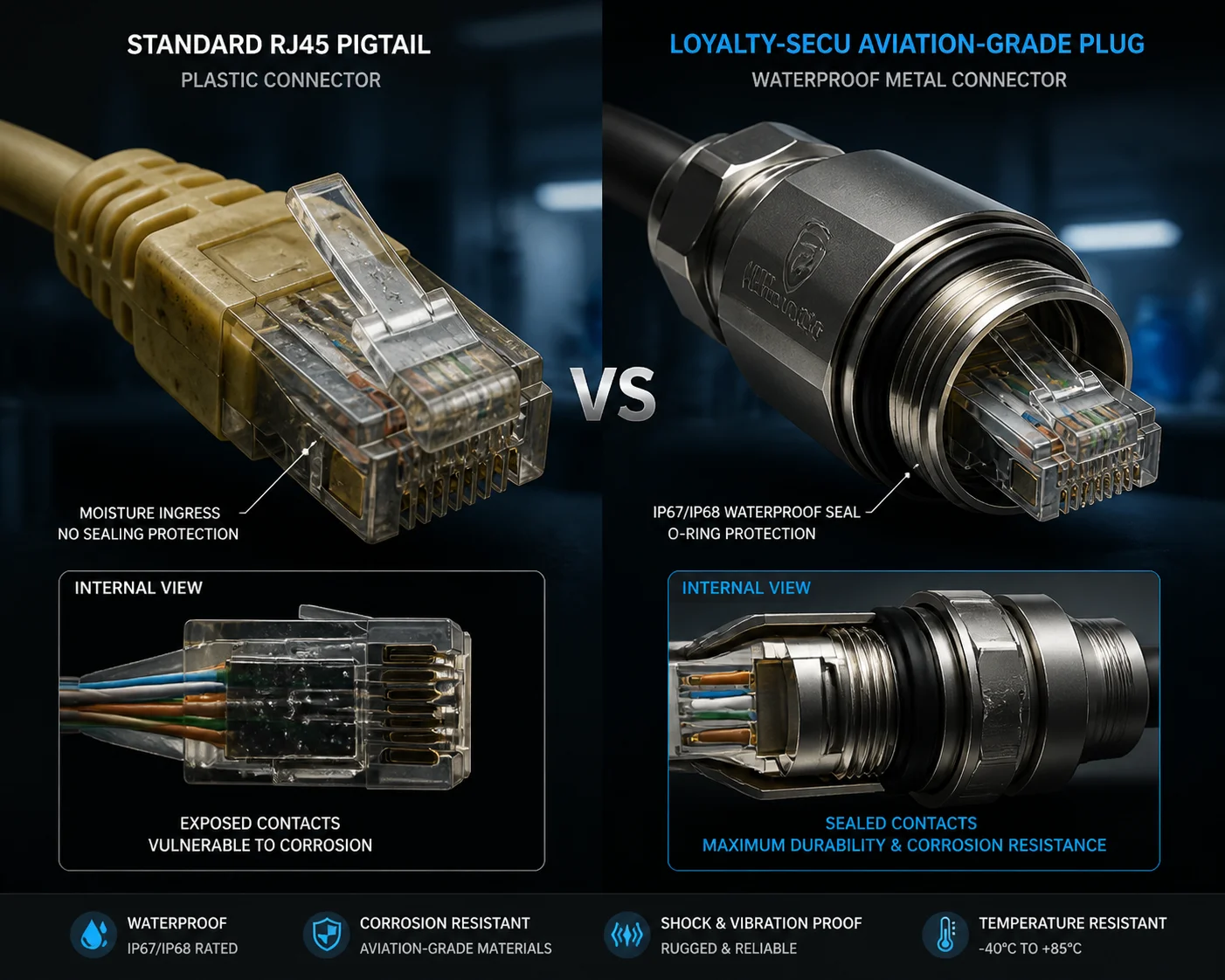
Below, I break down four specific questions I hear from integrators like David every week. Each one digs into a real failure mode — UV cracking, pole-top installation, contact oxidation, and field termination. Let’s get into it.
Table of Contents
Will the Standard Pigtail Cable Crack or Degrade After 3 Years of Exposure to UV and Rain?
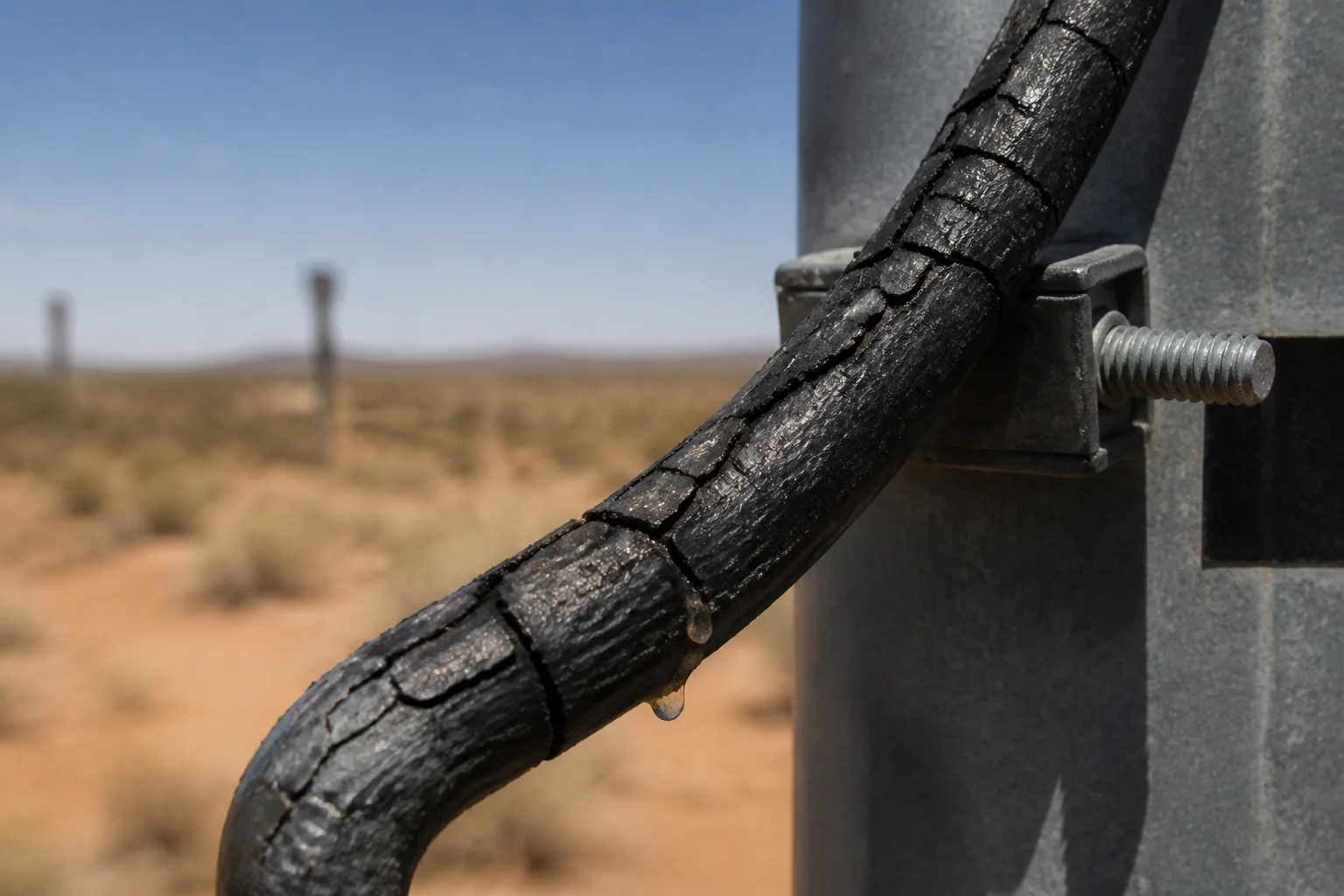
I once pulled down a PTZ camera after just two years in West Texas sun. The pigtail jacket crumbled in my hand like dried clay.
Yes, standard PVC pigtail cables will crack and degrade well before the 3-year mark in direct UV and rain exposure. PVC loses its plasticizer under UV radiation, turning brittle within 12–18 months. Once the jacket cracks, rainwater wicks into the conductor bundle through capillary action, and corrosion begins immediately.
Why PVC Fails Outdoors
Standard pigtails ship with PVC (polyvinyl chloride) 1 outer jackets. PVC is cheap and flexible at room temperature. But it has a well-known weakness: UV radiation effects on polymers 2 break down the chemical plasticizers that keep PVC soft. Without those plasticizers, the material becomes rigid and cracks. This process speeds up in hot climates. In places like Texas, Arizona, or the Middle East, surface temperatures on a sun-facing pole can exceed 70°C. At that temperature, PVC degradation accelerates dramatically.
Rain makes the problem worse. Water does not need a big hole to get inside a cable. Even a hairline crack allows moisture to travel along the copper conductors through capillary action in cables 3. Once moisture reaches the RJ45 connector or the DC power jack, you get oxidation on the pins. Oxidized pins mean intermittent video loss, PoE negotiation failures, or complete signal dropout.
What Aviation-Grade Cables Use Instead
Aviation-grade connectors typically pair with cables jacketed in TPU (thermoplastic polyurethane) 4 or silicone-based compounds. These materials resist UV far better than PVC. They also stay flexible across a wide temperature range.
| Property | PVC Pigtail | Aviation-Grade Cable (TPU/Silicone) |
|---|---|---|
| UV Resistance | Poor — cracks in 12–18 months | Excellent — rated for 5+ years direct sun |
| Operating Temp Range | -10°C to +60°C | -40°C to +85°C |
| Flexibility After Aging | Becomes brittle | Stays flexible |
| Water Ingress Risk | High after jacket cracks | Very low — no cracking pathway |
| Typical Replacement Cycle | 1–3 years | 7–10+ years |
The Hidden Cost of Cracked Pigtails
A cracked pigtail does not just kill one camera. It creates a service call. For a remote site — a farm, a border checkpoint, a solar-powered tower — that service call can cost $500–$1,500 in labor and travel alone. The pigtail itself costs $2. This is why I always tell integrators: the connector is the cheapest part of your system, but it controls the most expensive outcome.
How Does an Integrated Aviation Connector Simplify the Installation on a Tall Utility Pole?
I have watched technicians spend 45 minutes on a lift bucket trying to crimp an RJ45 in the wind. That is 45 minutes of rented equipment time and safety risk.
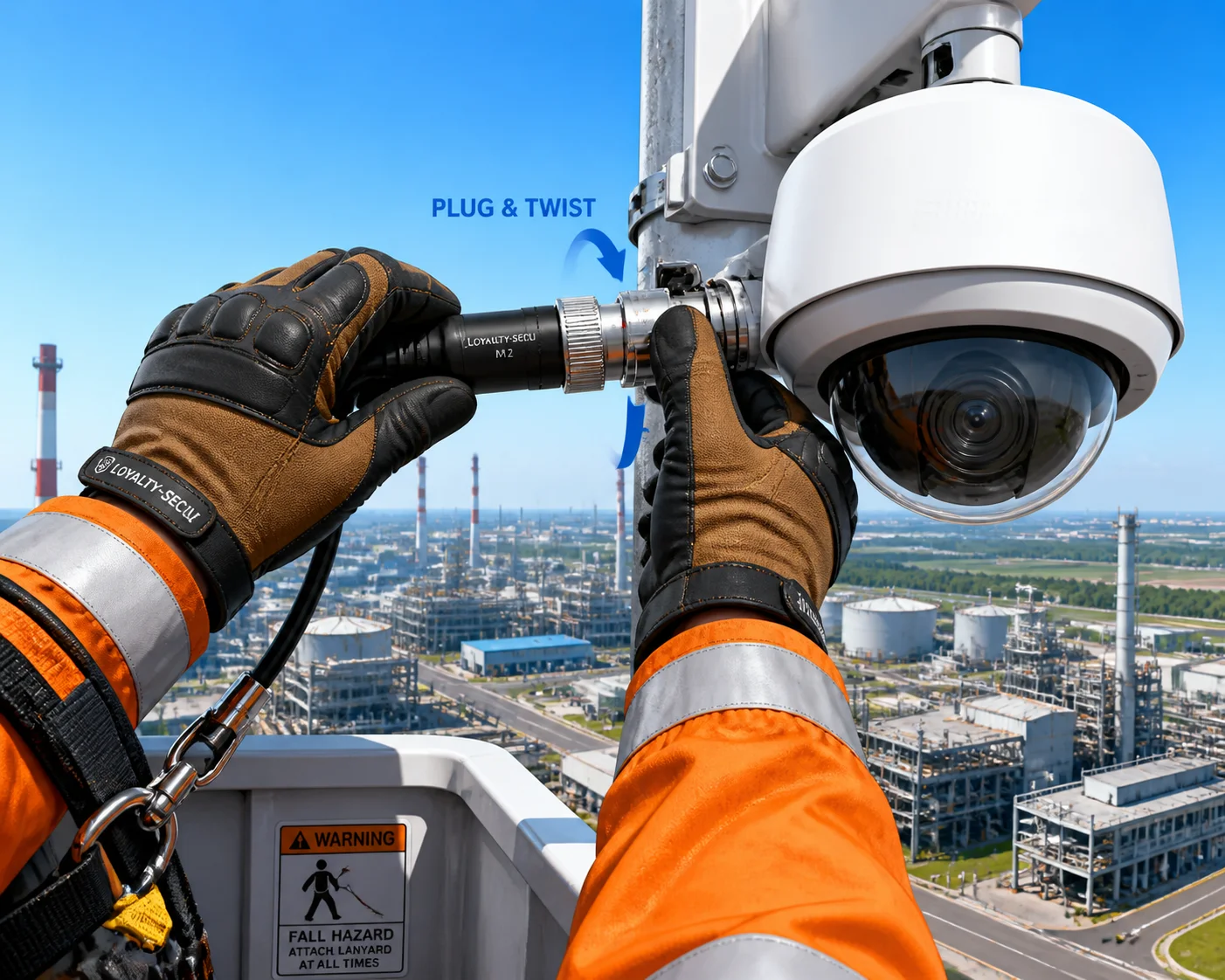
An integrated aviation connector turns a multi-step wiring job into a simple plug-and-twist action. The technician on the pole just aligns the keyed plug, pushes it in, and tightens the locking ring. No crimping tool, no waterproof tape wrapping, no junction box assembly. Total connection time drops from 30–45 minutes to under 2 minutes.
The Standard Pigtail Installation Problem
When you install a PTZ camera with standard pigtails on a tall pole, here is what actually happens:
- The technician climbs the pole or rides a bucket truck up.
- They mount the camera bracket.
- They pull the network cable through conduit to the camera location.
- They strip the cable, arrange the 8 wires in the correct order, and crimp an RJ45 plug — while wearing gloves, in wind, possibly in rain.
- They plug the RJ45 into the camera’s pigtail.
- They wrap the connection with waterproof tape or stuff it into a small junction box.
- They seal the junction box with silicone or butyl tape.
- They repeat for the power connector if the camera is not PoE.
Every one of those steps is a potential failure point. A bad crimp means a return trip. A poorly sealed junction box means water entry in six months. And every extra minute on the pole costs money and increases fall risk.
How Aviation Connectors Change the Workflow
With an integrated aviation connector, the camera has a sealed M12 circular connector 5 or multi-pin circular socket built into its housing. The cable comes pre-terminated with the matching aviation plug on one end. The installation becomes:
- Mount the camera.
- Plug in the aviation connector.
- Twist the locking ring until it clicks or reaches the torque stop.
- Done.
No tools needed at the connection point. No junction box. No tape. No crimp.
Time and Cost Comparison
| Task | Standard Pigtail | Aviation Connector |
|---|---|---|
| Cable Termination at Camera | 15–25 min (crimp + test) | 0 min (pre-terminated) |
| Waterproofing the Joint | 10–15 min (tape/box/sealant) | 0 min (built-in IP67/68 seal) |
| Tools Required on Pole | Crimp tool, cable tester, tape, sealant | None |
| Risk of First-Time Failure | Moderate (bad crimp, poor seal) | Very low (keyed, foolproof) |
| Total Connection Time | 30–45 min | 1–2 min |
Why This Matters for Integrators
If you are deploying 50 cameras across a large site — say a solar farm or a pipeline corridor — the time savings add up fast. At 30 minutes saved per camera, that is 25 hours of labor saved. At $75/hour for a two-person crew plus a bucket truck, you are looking at roughly $3,750 in direct labor savings on a single project. And you eliminate the biggest source of warranty callbacks: bad field-made connections.
At Loyalty-Secu, we offer our 4G solar PTZ systems with optional integrated M12 industrial connectors. The upfront cost increase is small — a few dollars per unit. But the field labor savings and the reduction in year-one failures make it a clear win for any integrator doing volume deployments.
Is the Connector’s Gold-Plating Thick Enough to Prevent Oxidation in High-Sulfur Air?
I got a call from a client near a petrochemical plant in Houston. His cameras were only eight months old, but the RJ45 pins had turned black. Signal was dropping every few hours.
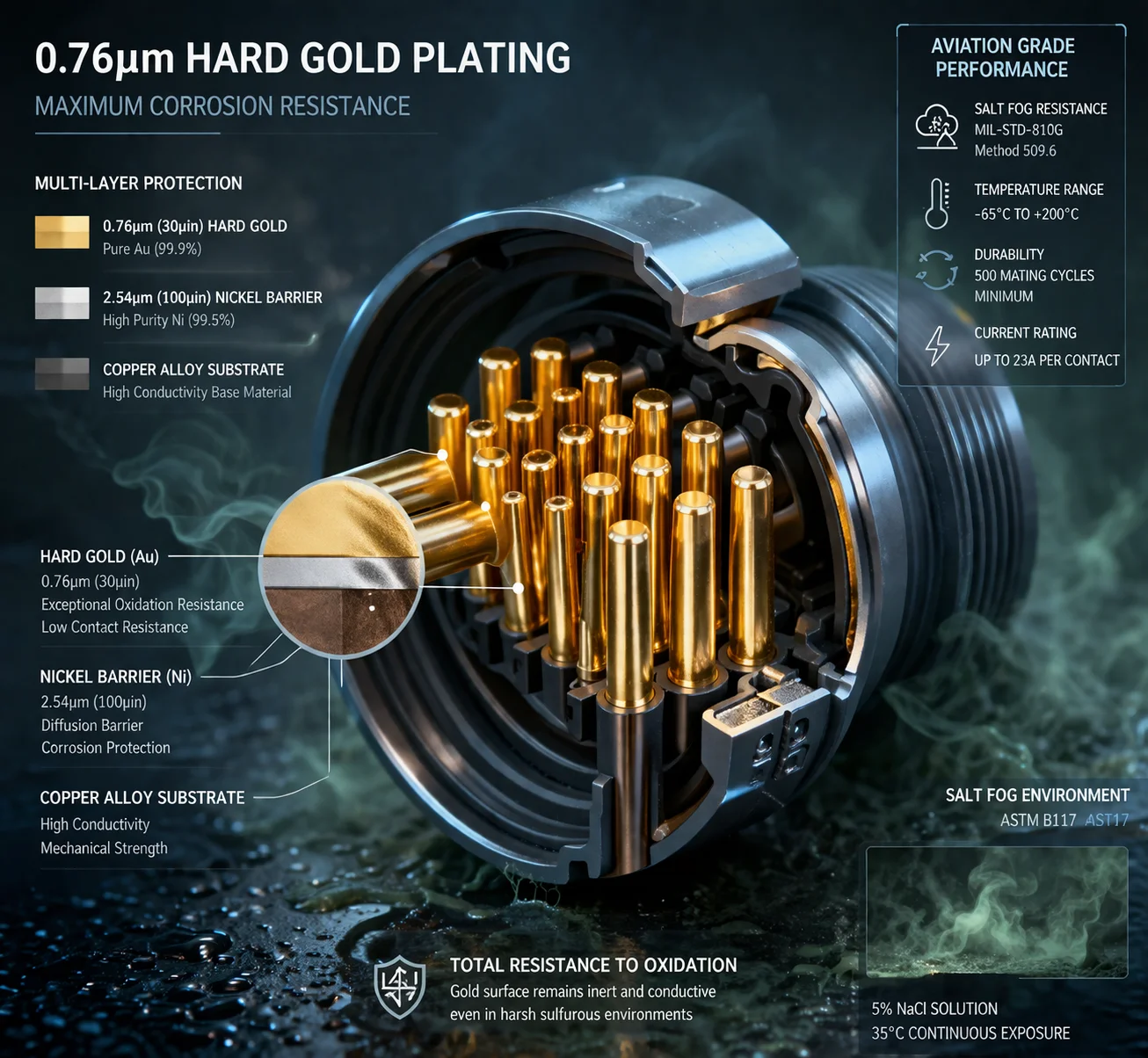
It depends on the plating thickness. Standard pigtail connectors use flash gold plating — typically 0.05–0.1 µm — which wears through quickly in sulfur-rich or salt-laden air. Aviation-grade connectors use hard gold plating at 0.5–1.5 µm or thicker, which resists hydrogen sulfide (H₂S) and salt fog corrosion for years. The difference is 10× or more in plating thickness, and it directly determines contact reliability in polluted environments.
Understanding Why Thin Gold Fails
Gold itself does not corrode. That is why it is used on electrical contacts. But “”gold-plated”” does not mean “”gold-proof.”” The protection depends entirely on how thick the gold layer is and what is underneath it.
Standard RJ45 connectors and cheap DC jacks use what the industry calls flash gold — a gold layer so thin (0.05–0.1 µm) that it is really just a cosmetic coating. Under that thin gold, there is usually nickel, then copper or brass. In clean indoor air, flash gold works fine. But outdoors, especially near:
- Coastal areas (salt fog)
- Petrochemical zones (hydrogen sulfide exposure effects 6)
- Agricultural operations (ammonia, fertilizer off-gassing)
- Volcanic regions (sulfur compounds)
…the thin gold layer develops micro-pores. Corrosive gases penetrate through these pores and attack the nickel and copper underneath. The result is a dark, crusty layer on the contact surface that increases electrical resistance. You see it as intermittent packet loss, PoE drops, or complete link failure.
What “”Aviation-Grade”” Gold Plating Looks Like
Aviation and industrial circular connectors (M12, M16, MIL-spec) specify hard gold plating with a minimum thickness of 0.5 µm, often 0.76 µm or more. Some connectors designed for extreme environments go up to 1.27 µm or even 2.54 µm.
This thicker gold layer does two things:
- Fewer pores. A thicker layer has far fewer micro-pores per square millimeter, so corrosive gases cannot reach the base metal.
- Longer wear life. Every time you plug and unplug a connector, you scrape off a tiny amount of gold. Thicker plating survives hundreds or thousands of mating cycles.
The Nickel Barrier Layer
Good aviation connectors also use a nickel underplate of 1.27–2.54 µm between the gold and the base copper. This nickel layer acts as a diffusion barrier. Even if the gold wears thin in one spot, the nickel prevents copper from migrating to the surface and forming copper oxide (which is a poor conductor).
Real-World Corrosion Resistance
In salt spray testing standards (ASTM B117) 7, a standard RJ45 with flash gold shows visible corrosion within 24–48 hours. A properly plated M12 aviation connector with 0.76 µm hard gold over nickel typically passes 500+ hours of continuous salt fog with no measurable increase in contact resistance.
For integrators working in the Gulf Coast, the Middle East, or Southeast Asian coastal cities, this is not a nice-to-have. It is the difference between a system that runs for five years and one that starts failing in the first winter.
Can I Get a Field-Terminable Waterproof Connector to Avoid Cutting the Original Factory Cable?
I had a project where the cable run was 85 meters — too long for the pre-made cable, too short to justify a custom order. I needed to terminate on-site without destroying the factory-sealed end.
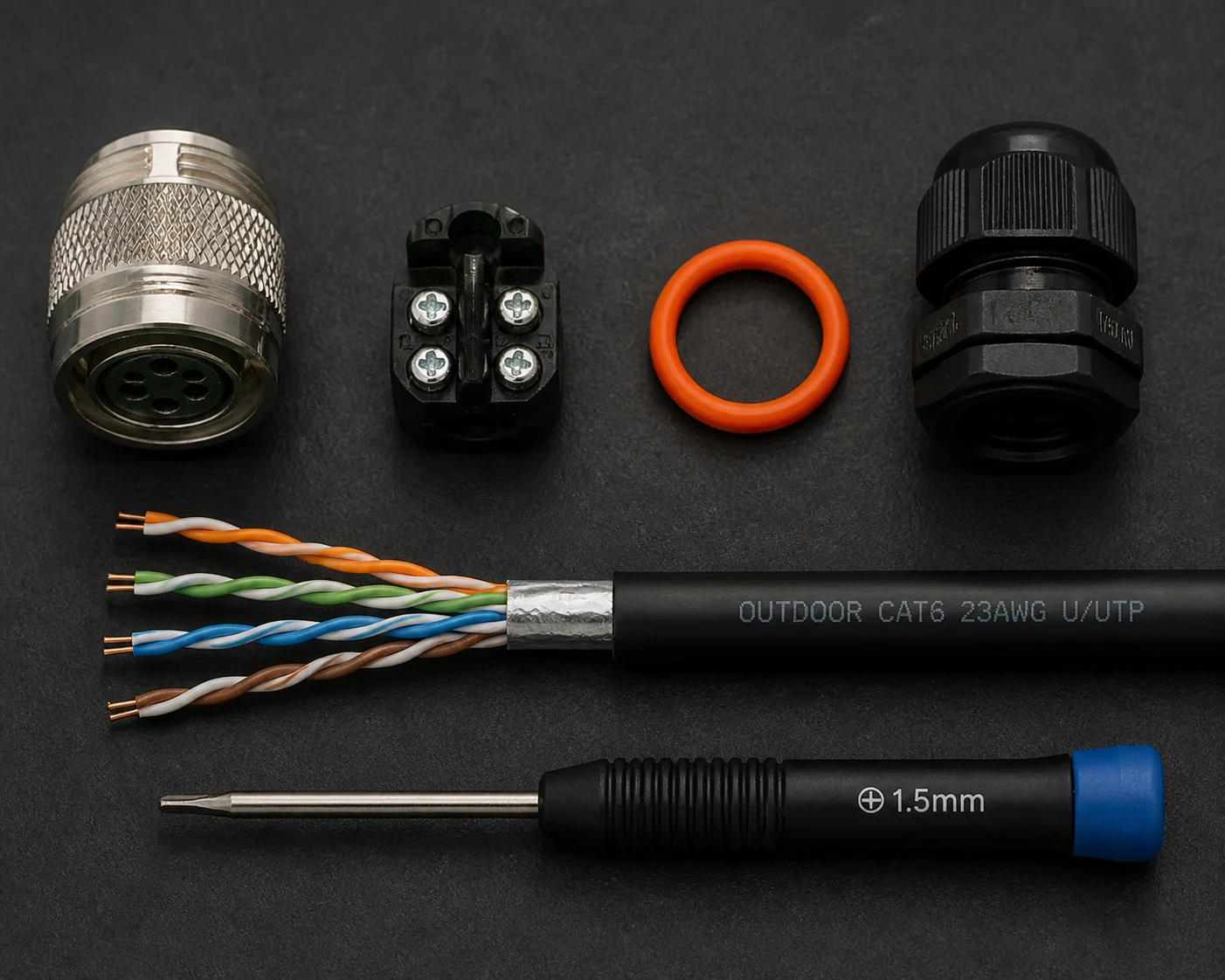
Yes, field-terminable waterproof connectors exist and are widely used in industrial applications. These connectors let you attach an IP67-rated aviation plug to a standard Cat5e/Cat6 cable on-site, using a small screwdriver or IDC (insulation displacement contact) tool. You do not need to cut or modify the camera’s original factory cable — you simply plug the field-assembled connector into the camera’s aviation socket.
How Field-Terminable Connectors Work
A field-terminable M12 or circular connector comes as a kit. Inside the kit, you typically find:
- The metal or high-strength nylon connector body with internal threads
- A set of screw terminals or insulation displacement contact (IDC) 8
- An O-ring or compression gland for the cable entry
- A locking nut or collet to clamp the cable jacket
The process is straightforward:
- Strip the outer jacket of your Cat5e/Cat6 cable by about 25–30 mm.
- Untwist the pairs and insert each conductor into the correct screw terminal or IDC slot.
- Tighten the screws or press down the IDC caps.
- Slide the cable through the compression gland.
- Screw the connector body together.
- Tighten the cable gland to seal around the cable jacket.
The whole process takes about 5–10 minutes with basic tools. No soldering. No special crimp die. And when you are done, you have a fully sealed IP67 waterproof rating standard 9 connection that matches the camera’s factory socket.
Why This Matters for Custom Cable Runs
In real-world deployments, cable lengths are never perfect. Pre-made cables come in fixed lengths — 10 m, 20 m, 30 m, 50 m. But your pole might be 37 meters from the switch. With a standard pigtail setup, you either:
- Buy a 50 m cable and coil the excess (ugly, and the coil collects water)
- Buy bulk cable and crimp your own RJ45 on-site (risky in bad weather)
- Cut a pre-made cable and splice it (voids any waterproof rating)
With a field-terminable aviation connector, you buy bulk outdoor-rated cable, cut it to the exact length you need, and terminate it on the ground in your truck before you even climb the pole. The camera end stays factory-sealed. The switch end gets a standard RJ45 in a dry enclosure. The only outdoor-exposed connection is the aviation plug — and it is IP67 or IP68 rated.
Choosing the Right Field-Terminable Connector
Not all field-terminable connectors are equal. Here is what to look for:
| Feature | Good Choice | Avoid |
|---|---|---|
| Contact Type | Screw terminal or IDC | Solder-only (hard to do in field) |
| Cable Gland Seal | Compression gland with O-ring | Simple rubber push-in (loosens over time) |
| Conductor Size Range | Accepts 24–22 AWG (standard Cat5e/Cat6) | Fixed size only |
| IP Rating When Mated | IP67 or higher | IP65 or unrated |
| Shell Material | Stainless steel or brass | Thin plastic |
| Keying/Coding | A-coded or D-coded M12 for Ethernet | Uncoded (risk of wrong mating) |
A Note on Signal Integrity
Some integrators worry that a field-terminated connector will hurt signal quality compared to a factory-molded cable. In practice, for Ethernet signal transmission standards 10, a properly made screw-terminal M12 connection introduces negligible additional resistance — typically less than 5 milliohms per contact. That is well within the Ethernet spec. For gigabit Ethernet, you want to use D-coded M12 connectors and pay closer attention to pair separation, but it is still very achievable in the field.
At Loyalty-Secu, we can supply our PTZ cameras with M12 Ethernet sockets and matching field-terminable connector kits. This gives integrators full flexibility on cable length while keeping the waterproof integrity that aviation-grade connections are known for.
Conclusion
Aviation-grade waterproof connectors outlast standard pigtails in every measurable way — water resistance, UV survival, corrosion protection, and mechanical strength. For any outdoor PTZ deployment where truck-roll costs matter, the upgrade pays for itself on the first avoided service call. Reach out to me at han.nie@loyalty-secu.com and let’s spec the right connector for your next project.
1. Overview of PVC material properties and outdoor limitations. ↩︎ 2. Explains how UV radiation degrades polymer materials. ↩︎ 3. Demonstrates how moisture travels through small cable cracks. ↩︎ 4. Details TPU properties for durability and weather resistance. ↩︎ 5. Introduction to M12 connectors used in industrial applications. ↩︎ 6. Health and corrosion effects of hydrogen sulfide exposure. ↩︎ 7. Standard method for evaluating corrosion resistance in salt spray. ↩︎ 8. Explains IDC technology used for quick field termination. ↩︎ 9. Defines IP ratings for water and dust protection levels. ↩︎ 10. Overview of Ethernet standards and signal requirements. ↩︎