
I work with solar systems in hot places, and I know heat can turn a safe battery into a real risk fast. That is why I treat thermal control as a core design rule, not an add-on.
The battery pack prevents thermal runaway1 by combining LiFePO4 chemistry2, multi-point BMS temperature checks, heat blocking materials, active charge control, and pressure relief. These layers reduce heat build-up, stop overcharge stress, and isolate failure before it spreads.
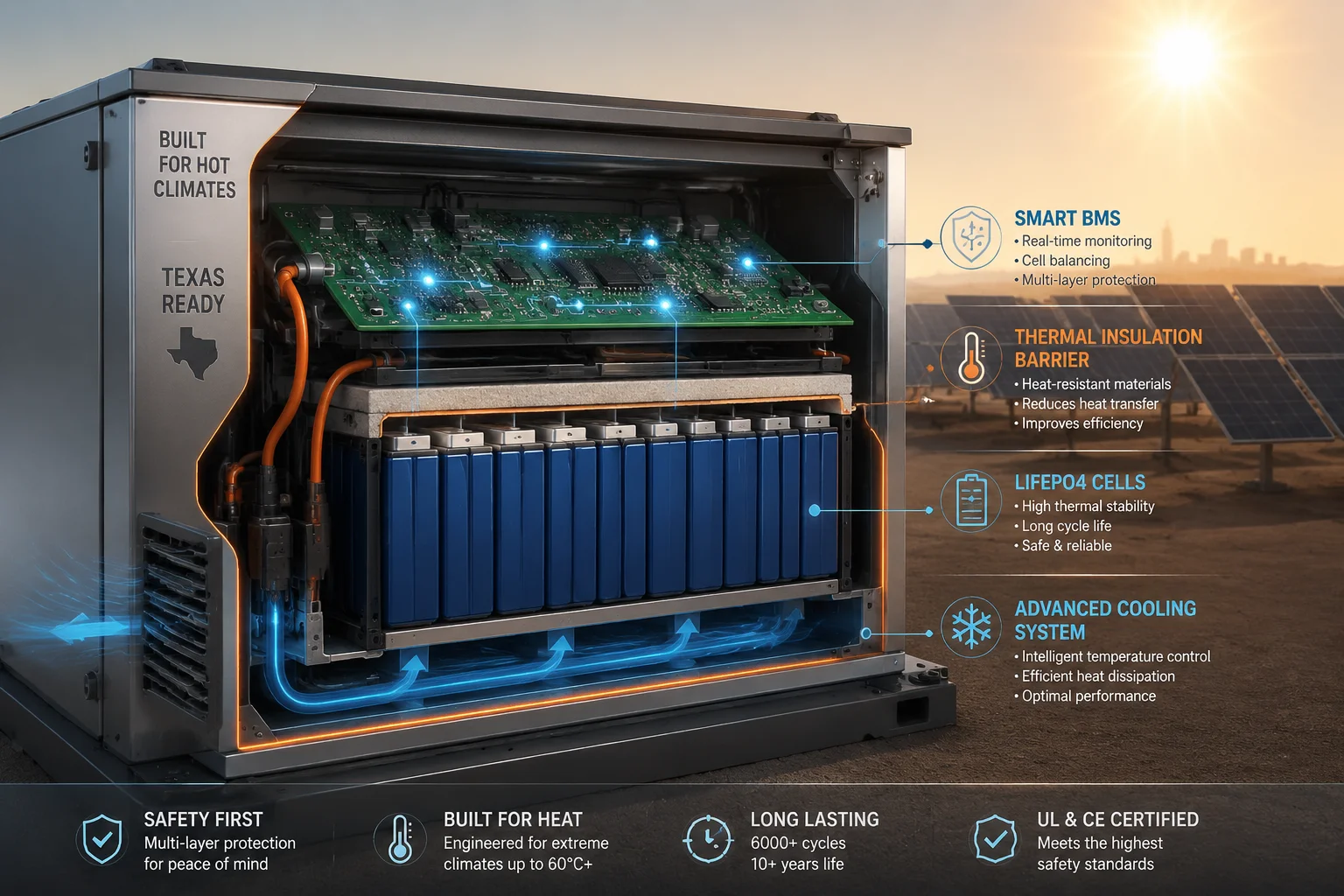
I do not want clients in Texas, Arizona, or any other hot region to guess if their system is safe. I want them to understand the full chain of protection, because safety is not one part. It is the sum of many small parts working together.
Table of Contents
Does the BMS feature multi-point temperature sensors to trigger a safety cutoff?
I have seen too many battery problems start with one hot spot that nobody noticed in time. When a system sits in a hot place, I cannot rely on one sensor alone.
Yes, the BMS3 uses multi-point temperature sensors4, and it can trigger a safety cutoff5 when the pack gets too hot. This helps the system react before cell heat becomes dangerous.
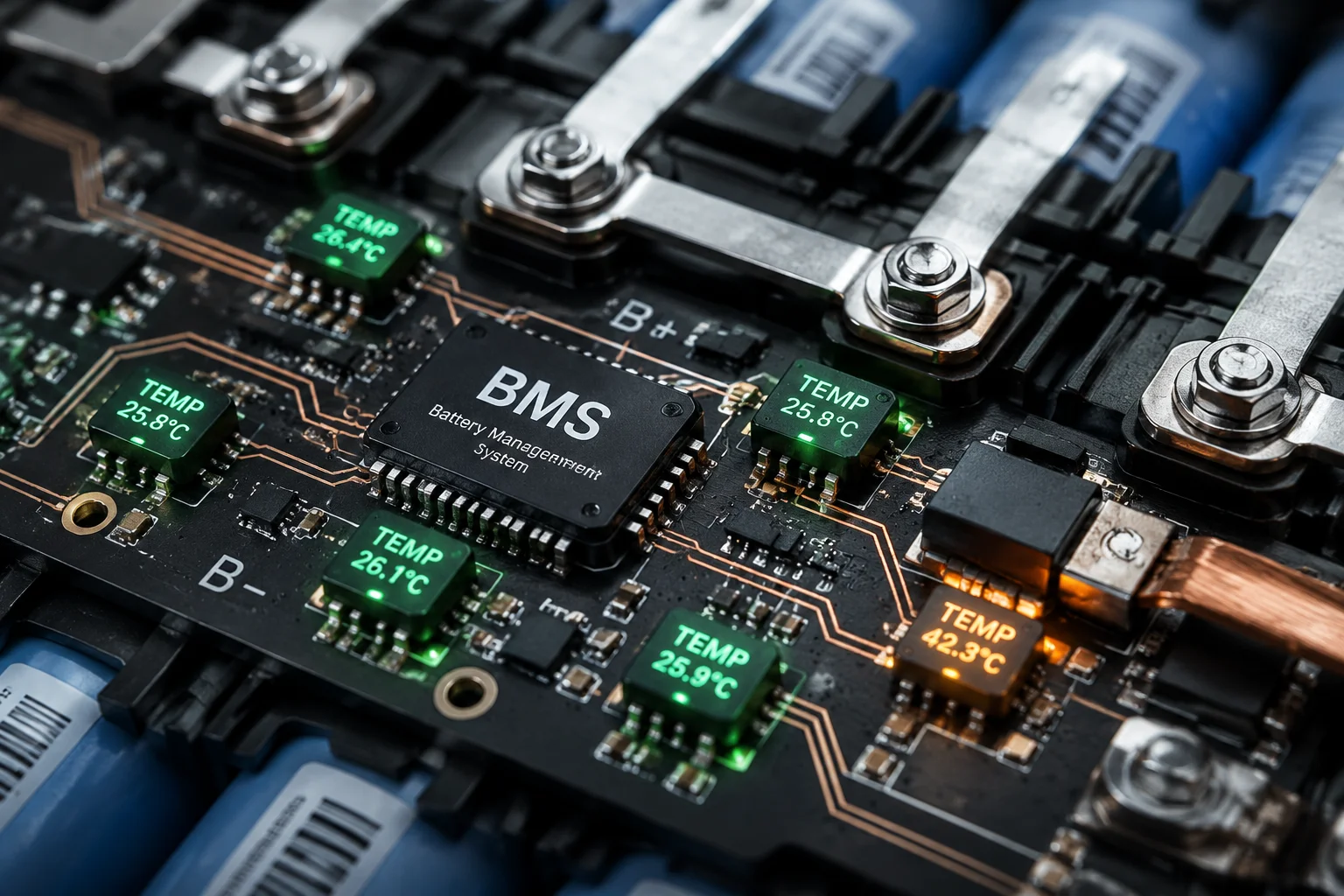
I look at the BMS as the battery’s guard. It watches the pack all the time, and it does not care if the heat comes from the sun, heavy charging, or poor airflow. It only cares about real readings from inside the pack. In a hot state like Texas, that matters a lot. A single sensor can miss a local hot point near a cell tab or a busbar. That is why I prefer multi-point sensing. It gives a better picture of the whole pack. If one point is hotter than the others, the BMS can slow charging, reduce current, or stop charging fully. This is simple, but it works. I also like that this method protects the system before the battery enters a dangerous zone. It does not wait for a problem to grow. It acts early. In my view, that early action is what turns a battery pack from “good in theory” into “safe in real life.” For installers and integrators, this also means fewer service calls and fewer surprise failures in remote sites.
How I think about sensor placement
I always care about where the sensors sit, because placement changes the value of the data. A sensor near the outer shell may show a lower number than one near the cell center. A sensor near the positive terminal may find heat faster than one far away. That is why I do not trust a system that only checks one simple point.
| Sensor point | What it watches | Why it matters |
|---|---|---|
| Cell center | Internal heat rise | Finds early thermal stress |
| Cell edge | Heat spread across the pack | Shows uneven pack behavior |
| Terminal area | Connection heating | Spots resistance and loose contact |
| BMS board area | Control unit temperature | Protects the logic circuit |
I also pay attention to what the BMS does with the data. Good sensing is not enough if the logic is weak. The BMS must compare signals, detect change speed, and decide when to cut off charge. In hot weather, the speed of heat rise matters as much as the final temperature. A pack that rises fast can be more dangerous than a pack that sits at a slightly higher level for a short time. That is why I want the control logic to watch both temperature and time.
What cutoff logic should do
I expect the BMS to use simple but firm rules:
- It should reduce charge current first.
- It should stop charging if the pack gets too hot.
- It should protect discharge too, if heat keeps rising.
- It should record the event for later review.
I like this kind of design because it gives me real control in the field. It also gives my customer a clear answer when they ask why the system stopped charging during peak summer heat. I can explain that the battery pack protected itself, and that is a good thing.
Is the battery chemistry (LiFePO4) selected specifically for its higher thermal stability?
I do not want a battery that only performs well on paper. I want one that stays stable when the weather is harsh and the load changes fast.
Yes, LiFePO4 is chosen because it offers much better thermal stability6 than common NMC chemistries7, and that makes it a safer fit for high-heat solar systems.
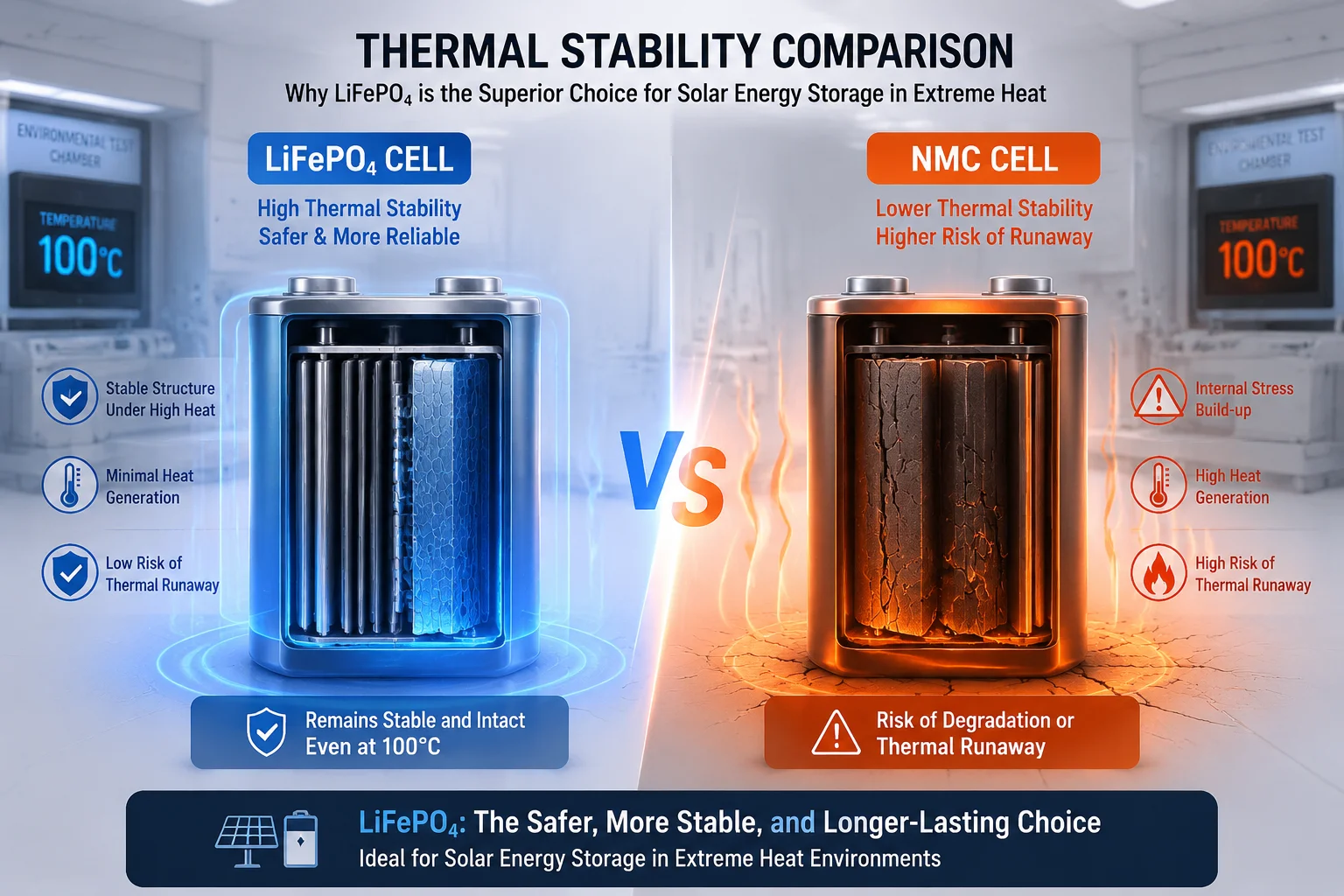
When I choose battery chemistry, I start with risk, not just capacity. LiFePO4 gives me a stronger safety base because it handles heat better and resists breakdown at high temperature. In real life, that means the pack has more room to breathe before it reaches a danger point. It also means the chemistry itself is less likely to feed a fire if something else goes wrong. I see this as a major reason why LiFePO4 is the right choice for solar storage in places like Texas. The system can sit under strong sun, cycle every day, and still keep a safer margin than many other lithium types. I also like that LiFePO4 fits the needs of commercial users. My typical buyers do not only want cheap energy storage. They want stable operation, low service cost, and fewer field failures. Chemistry matters because it sets the base for all other protections. If the base is weak, no BMS or heat shield can fully solve the problem. If the base is strong, then every other layer works better.
Why chemistry matters before electronics
I think many buyers look at the BMS first, but I start one step lower. The chemistry decides how the cell behaves under stress. If the chemistry is more stable, then the pack can tolerate heat, charge cycles, and small faults in a better way.
| Chemistry | Thermal stability | Fire risk behavior | Best use case |
|---|---|---|---|
| LiFePO4 | High | Lower chance of runaway | Solar storage, backup power |
| NMC | Medium | Higher heat sensitivity | EVs, high energy density systems |
| LCO | Lower | More fragile under heat | Small consumer devices |
I also value the way LiFePO4 supports long-term site work. My clients often manage projects in remote places. They do not want a battery that needs constant watching. They want one that can stay in service for years with fewer surprises. LiFePO4 gives me that confidence. It also helps when I build systems for harsh outdoor use, because I know the cell chemistry will not become the weak point the first time summer gets extreme.
What this means in the field
In the field, I care about three things:
- The battery should stay stable in heat.
- The battery should not release oxygen easily.
- The battery should fail in a softer way, not a violent way.
That is why I see LiFePO4 as a practical safety choice, not just a technical one. It matches the real job of a solar battery pack. The pack must store energy, handle heat, and protect the site at the same time. LiFePO4 helps me do that.
How does the internal flame-retardant padding prevent heat propagation between cells?
I have worked on systems where one failing part can damage a whole pack. That is why I do not treat cell spacing and padding as small details.
The flame-retardant padding8 slows heat transfer between cells, so one cell event does not quickly spread to the next one. It acts as a barrier and a buffer.
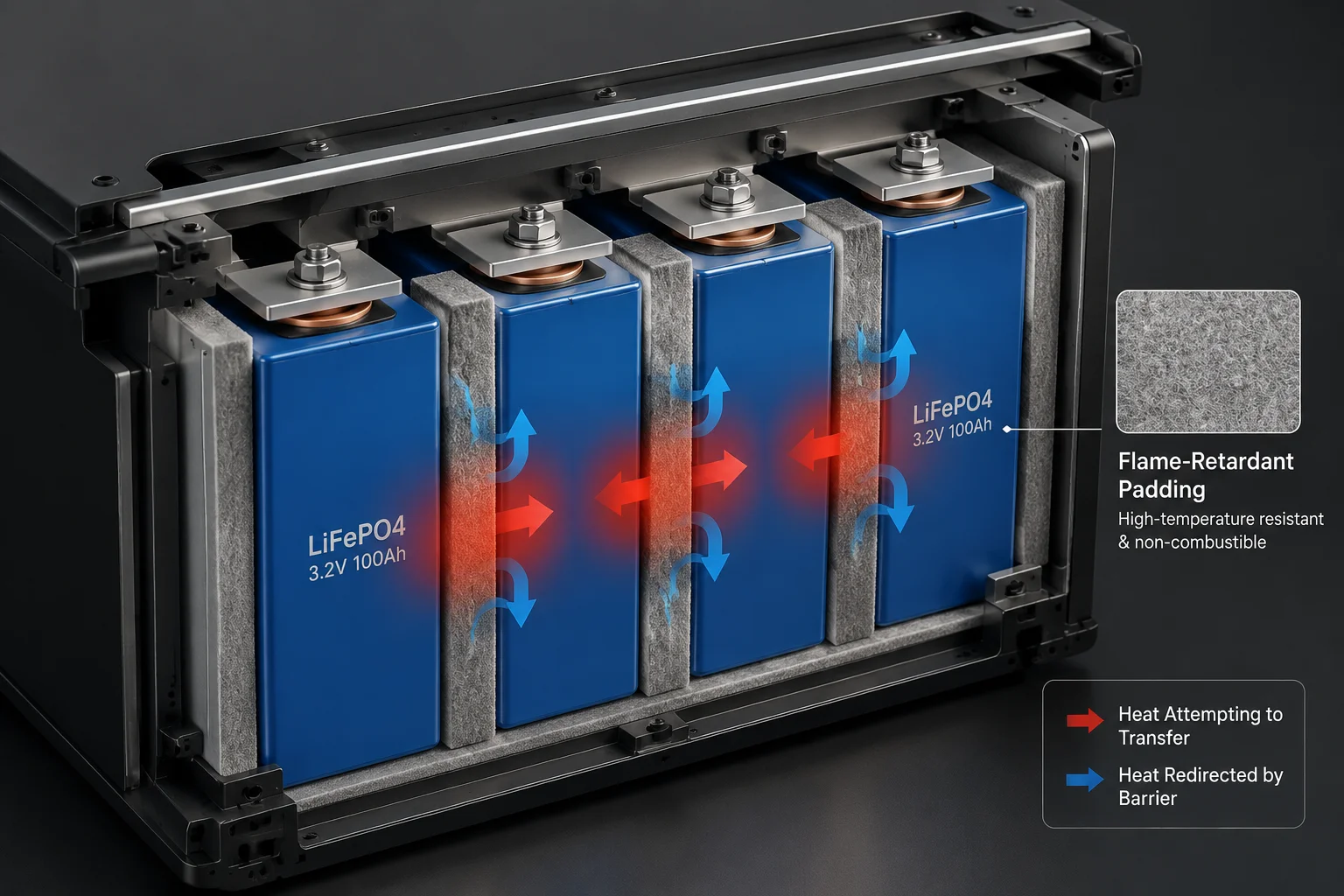
This layer matters because thermal runaway often becomes worse through chain reaction. One cell heats up, then the next cell absorbs that heat, and then the problem grows. I want to stop that chain as early as possible. Internal padding helps me do that by blocking direct heat flow and by creating distance between hot parts. In some designs, the padding also helps hold cells in place, which reduces vibration and rubbing damage during transport or outdoor use. That may sound small, but small damage can become a big issue over time. I also like materials that do two jobs at once. A good flame-retardant pad can limit flame spread, slow conduction, and support the pack structure. In a solar battery box, that is useful because the enclosure11 may face heat from the sun and heat from the cells at the same time. If one cell starts to fail, the padding gives the BMS more time to react. Time is important here. A few extra seconds can help the system shut down safely before the issue spreads.
How I break down heat propagation
I think about heat spread in a simple chain:
- A cell gets too hot.
- Heat moves into the next cell.
- The next cell also heats up.
- The pack enters a fast failure loop.
The padding breaks this chain by adding a barrier. It does not make the pack “immune,” but it makes the failure much less likely to move fast.
What good padding should do
| Function | Result | Why I care |
|---|---|---|
| Heat blocking | Slower heat transfer | Gives BMS more reaction time |
| Cell separation | Less direct contact | Lowers chain spread risk |
| Flame resistance | Better fire control | Helps limit fire growth |
| Structure support | Less movement and wear | Improves long-term stability |
I also want the padding to work with the rest of the pack, not against it. If a material traps too much heat inside normal operation, then it can create a new problem. So I want a balance. The pack should spread heat in a controlled way during normal use, but it should also block fast heat spread during a fault. That balance is hard, and that is why design quality matters.
Why this is important for remote solar sites
Remote solar sites often have one big problem: no one is there to notice a small issue early. If a battery cell starts to fail, the system must protect itself. I cannot rely on human reaction time. I need the pack to slow the event, isolate the bad cell, and buy time for the shutdown logic. That is the real value of internal flame-retardant padding.
Can I monitor the real-time internal battery temperature through the mobile app?
I know many project owners want direct access to live data because they do not want to wait for a fault report. I feel the same way when I run a site.
Yes, if the system supports app-based monitoring, I can check real-time battery temperature, state of charge9, and alarm status through the mobile app.
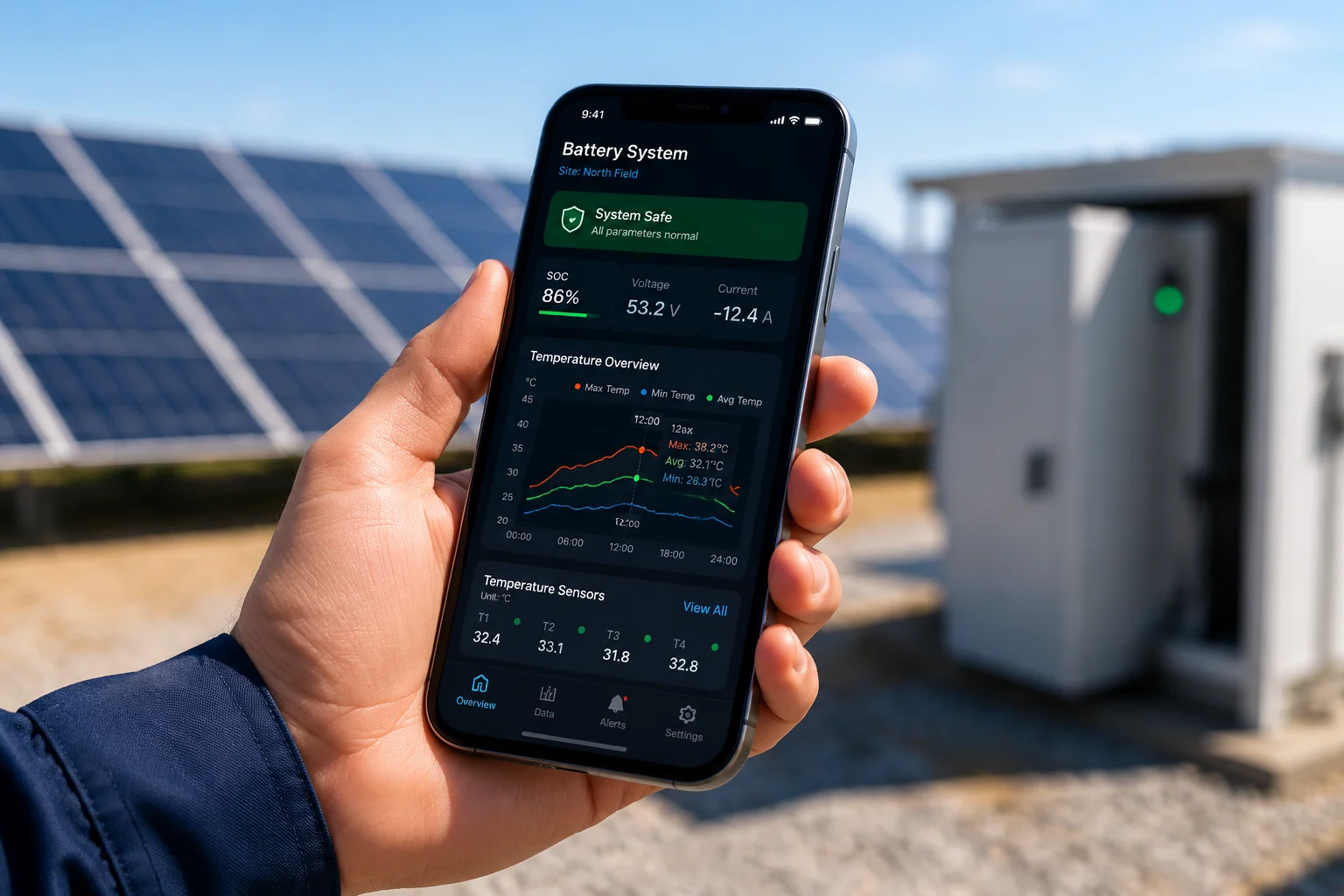
Real-time app monitoring gives me a clear view of what the battery is doing, even when I am far from the site. I can watch temperature trends, not just a single number. That matters because a stable 38°C reading is different from a fast climb from 32°C to 38°C in a short time. The trend tells me more than the snapshot. For installers, this is useful during summer testing, remote maintenance, and customer support. If a customer in Texas says the system is shutting down in the afternoon, I can ask for the log and see if the battery is running hot, if charging is too aggressive, or if the enclosure needs better airflow. I also like app data because it helps me prove system behavior to clients who want facts. Many technical buyers do not want guesses. They want logs, values, and alarms. App monitoring also helps with preventive service. I can check whether the pack is often near its upper limit and then adjust the charge settings before a failure appears. That saves time and reduces field cost. In my view, this is one of the strongest parts of a modern battery system because it turns safety from a hidden process into something I can actually see and manage.
What I want to see in the app
I want the app to show simple and useful data:
| Data point | Why it matters | Action I can take |
|---|---|---|
| Internal temperature | Shows heat stress | Adjust charge settings |
| Alarm history | Shows past events | Find repeat problems |
| Charge current | Shows input stress | Limit charging in heat |
| SOC | Shows battery fullness | Avoid 100% in hot months |
I also care about how often the app updates. Fast updates help me react faster. Slow updates can hide a problem until it gets worse. If the system sends alerts, that is even better. I want push notices for overheat warnings, charge cutoff events, and sensor errors. That way, I do not have to open the app all the time.
Why remote monitoring changes the support model
For my business, remote monitoring10 reduces guesswork. It also helps me support customers in different time zones. A buyer in North America may want quick action at night, while my team is in China. App logs and alerts help bridge that gap. They also support OEM and ODM projects, because we can tailor the display, the alarm rules, and the data export format for different clients. In the end, real-time temperature monitoring is not only a nice feature. It is part of the safety system.
Conclusion
I use layered protection, stable LiFePO4 chemistry, smart BMS control, and real-time monitoring to keep solar battery packs safe in extreme heat.
1. Learn about the chain reaction of overheating in batteries and how it can lead to fires. ↩︎ 2. Understand why lithium iron phosphate offers better thermal stability than other lithium chemistries. ↩︎ 3. Discover how a battery management system monitors and protects cells from overcharging, overheating, and other faults. ↩︎ 4. See how distributed temperature sensing helps detect hot spots early in battery packs. ↩︎ 5. Find out how a safety cutoff protects the battery by stopping charge or discharge when limits are exceeded. ↩︎ 6. Learn about material resistance to decomposition at high temperatures, critical for battery safety. ↩︎ 7. Understand the properties of lithium nickel manganese cobalt oxide batteries and why they are more heat-sensitive. ↩︎ 8. Explore materials that slow fire spread and heat transfer, often used between battery cells. ↩︎ 9. Find out how battery state of charge is measured and why it matters for safe operation in hot climates. ↩︎ 10. See how remote monitoring enables off-site oversight and early detection of battery issues. ↩︎ 11. Discover how battery enclosure design affects heat dissipation and overall system safety. ↩︎