
I have seen many outdoor systems fail because a tiny water path was ignored. I do not let a small cable gap turn into a big repair bill.
Metal cable glands1 stop moisture by squeezing the cable jacket hard, sealing the entry point, and cutting off the tiny spaces that capillary action needs. A good gland also adds strain relief and keeps the seal stable over time.
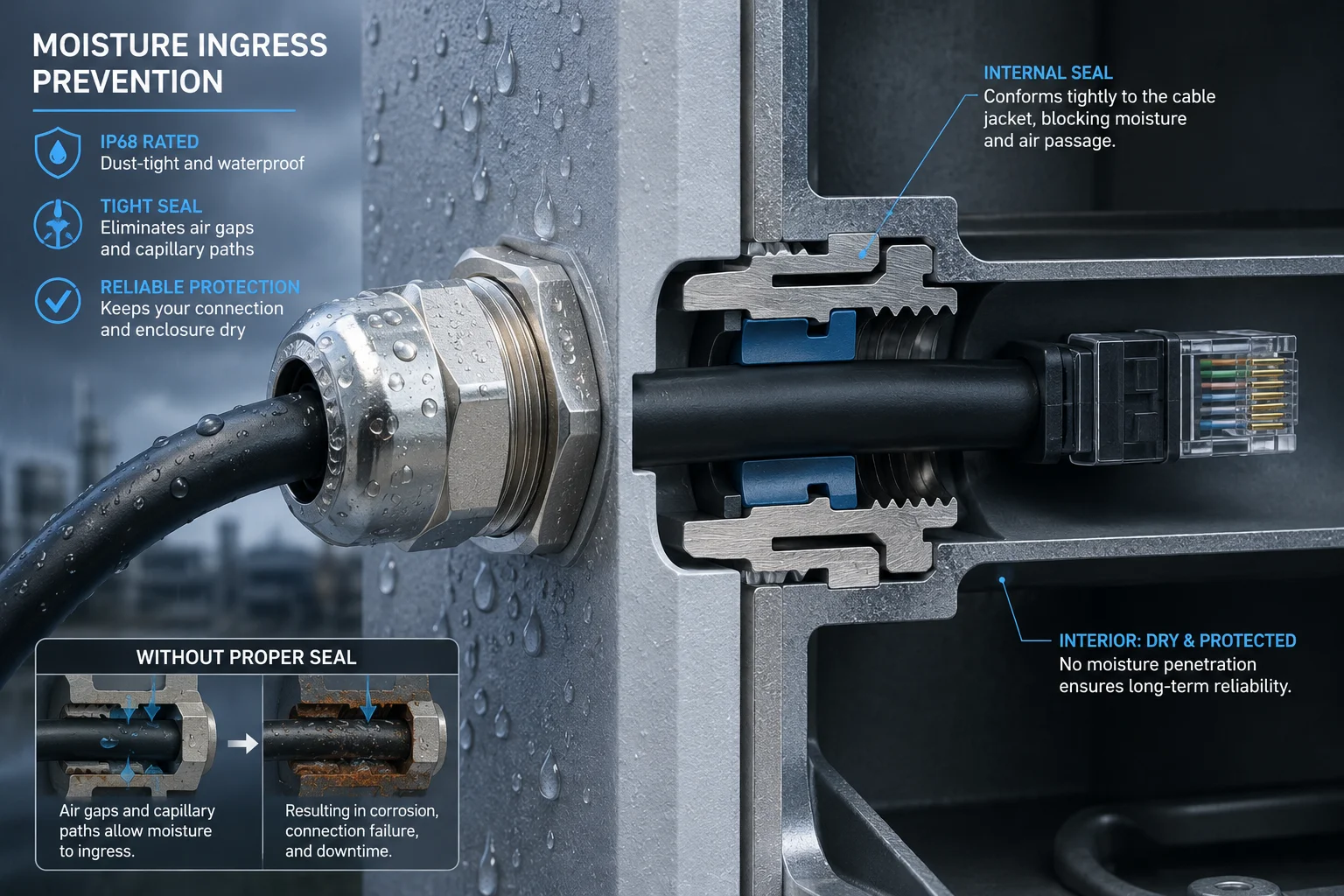 metal cable glands moisture ingress prevention
I always look at cable entry as a system, not a single part. The gland, the rubber insert, the cable size, the installation torque, and the enclosure all work together. If one part is wrong, water can still find a way in.
Table of Contents
Is the cable gland made of nickel-plated brass to resist corrosion and ensure a tight seal?
I have learned that the metal body matters as much as the seal inside. If the body rusts or loosens, I lose both protection and confidence.
A nickel-plated brass3 cable gland helps resist corrosion, hold thread strength, and keep a stable clamping force. The metal body itself does not stop water, but it supports the seal so the gland stays tight for a long time.
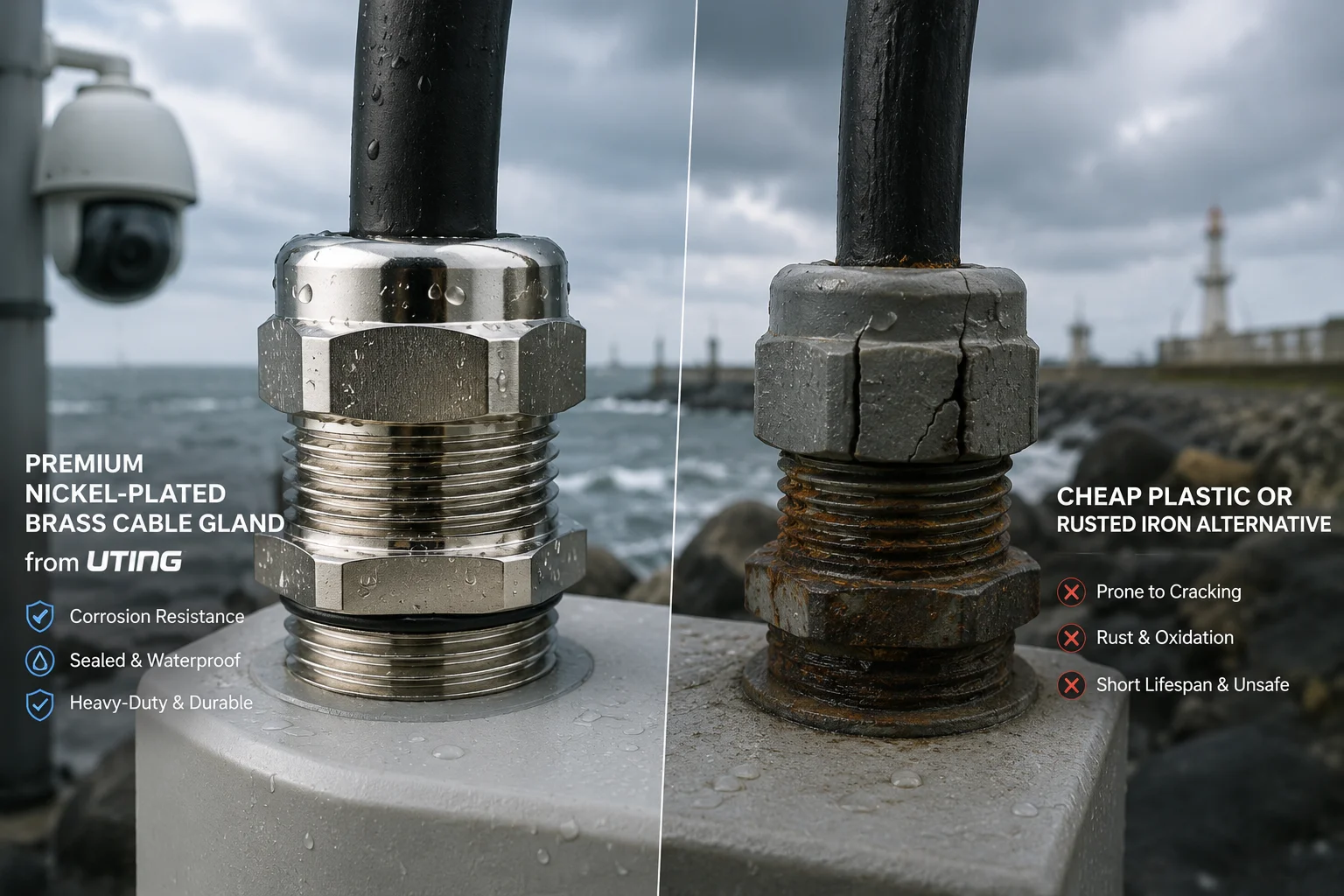 nickel plated brass cable gland corrosion resistance
I pay close attention to the body material because outdoor and marine sites punish weak hardware fast. Brass gives me good thread strength10, and nickel plating adds a harder outer layer that fights corrosion. This matters when I install equipment near rain, salt air, dust, or chemical fumes. If the threads corrode, the gland may not tighten the same way again. That creates a weak point. I do not want the seal to depend only on luck.
Why the metal body matters
I think of the gland body as the frame that holds the whole seal in place. The rubber insert does the direct sealing, but the metal body gives it pressure. That pressure must stay steady for months or years. If the body bends, wears out, or corrodes, the clamping force11 drops. Then tiny gaps can open at the cable entry. Capillary action2 only needs a narrow path, so even a small gap can become a water route.
Nickel-plated brass versus plastic
| Feature | Nickel-plated brass | Plastic |
|---|---|---|
| Thread strength | High | Lower |
| Corrosion resistance | Good | Good at first, but can age faster |
| Long-term clamping stability | Strong | Can weaken with heat and UV |
| Best use case | Industrial outdoor use | Light-duty indoor use |
I often recommend brass when the site needs long service life and fewer maintenance visits. That is especially true for my kinds of customers, because they want to reduce field repairs. A few dollars saved on a cheap gland can cost much more later. I have seen that lesson many times in real projects.
Why this matters for PTZ systems
My PTZ camera systems4 often sit in harsh places. They may face rain, sun, vibration, and temperature swings. If the gland body cannot keep its shape, the seal moves with it. That is bad for a fixed entrance point like a camera tail cable. I want the gland to hold steady pressure so the rubber insert can do its job every day. For me, nickel-plated brass is not just a material choice. It is part of the reliability plan.
How does the internal rubber grommet prevent water from ‘wicking8‘ through the cable’s outer jacket?
I treat the rubber insert as the real barrier. The metal body supports it, but the insert is what grips the cable and blocks the path.
The internal rubber grommet7 prevents wicking by compressing around the cable jacket and closing the tiny spaces where water could travel. It also breaks the continuous channel that capillary action needs, so moisture cannot move inward along the cable surface.
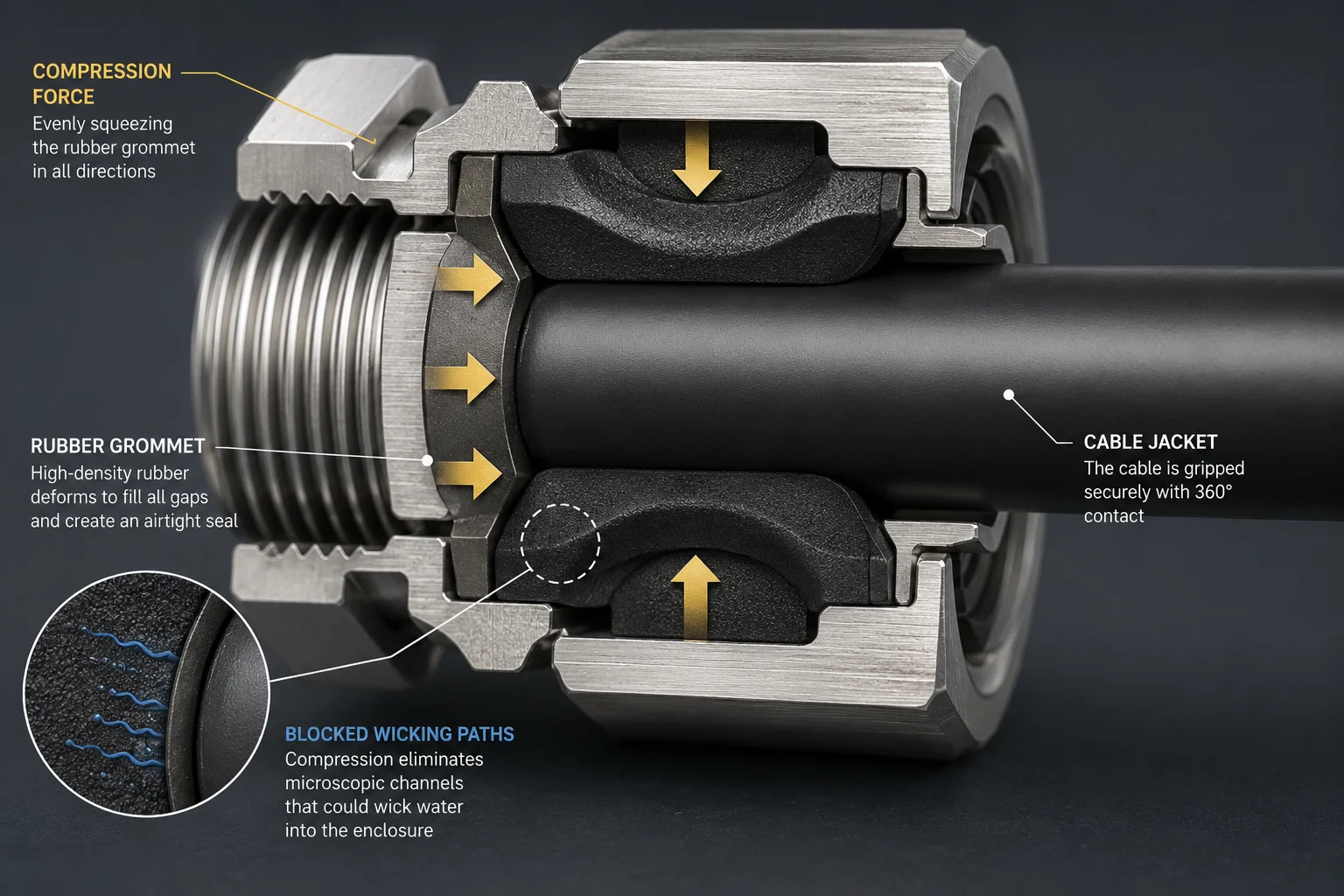 internal rubber grommet cable sealing
I focus on this part because many people think a tight-looking gland is enough. It is not. Water can move through very small spaces, even when those spaces are almost invisible. A rubber grommet works because it deforms around the cable. It does not just touch the jacket. It hugs it. That hug removes the small air gaps that water needs to travel. If the cable size is wrong, the insert cannot compress in the right way. Then the seal looks fine from the outside, but the inside path is still open.
How wicking happens
Wicking is simple in idea and annoying in practice. Water moves along tiny channels by surface tension. It can travel between strands, along a jacket edge, or through the gap between the cable and the gland insert. I do not need a big hole for a leak. I only need a tiny path. That is why the rubber insert must match the outer diameter of the cable. If the cable is too thin, the insert may not seal well. If the cable is too thick, the insert may tear or not close fully.
Why compression works
When I tighten the gland, the insert squeezes in a controlled way. The rubber pushes inward on the cable and outward against the gland body. This creates two sealing faces at the same time. The first face blocks the cable surface. The second face blocks the gland interface. This dual effect helps stop moisture from moving around the jacket and then into the enclosure.
Seal performance depends on fit
| Installation factor | Good result | Bad result |
|---|---|---|
| Cable outer diameter match | Strong compression | Weak or uneven seal |
| Tightening torque | Stable grip | Loose or damaged insert |
| Cable jacket condition | Smooth contact | Cuts, dust, or oval shape |
| Insert material quality | Long life | Faster aging or cracking |
I always check the cable jacket before I install the gland. If the jacket is nicked, dirty, or oval, the rubber insert cannot seal evenly. I also avoid over-tightening. Too much force can damage the insert or deform the cable. Too little force leaves a path open. In my work, the best seal is not the hardest squeeze. It is the right squeeze.
Why this helps in real outdoor use
In outdoor PTZ systems, the cable may move a little because of wind or vibration. A good rubber grommet still keeps contact. It gives a flexible seal that can handle small motion better than a hard part could. That is one reason I trust quality grommets in systems that must run day and night. They help stop water, dust, and even fine salt mist from creeping inward.
Can I use a double-seal cable gland for extra protection in extreme marine environments?
I would use a double-seal gland when the site is harsh and the cost of failure is high. Marine air and salt make weak seals fail faster than many people expect.
Yes, I can use a double-seal cable gland5 for extra protection in extreme marine environments. A second sealing point adds another barrier, slows moisture entry, and gives better protection if the first seal starts to age or loosen.
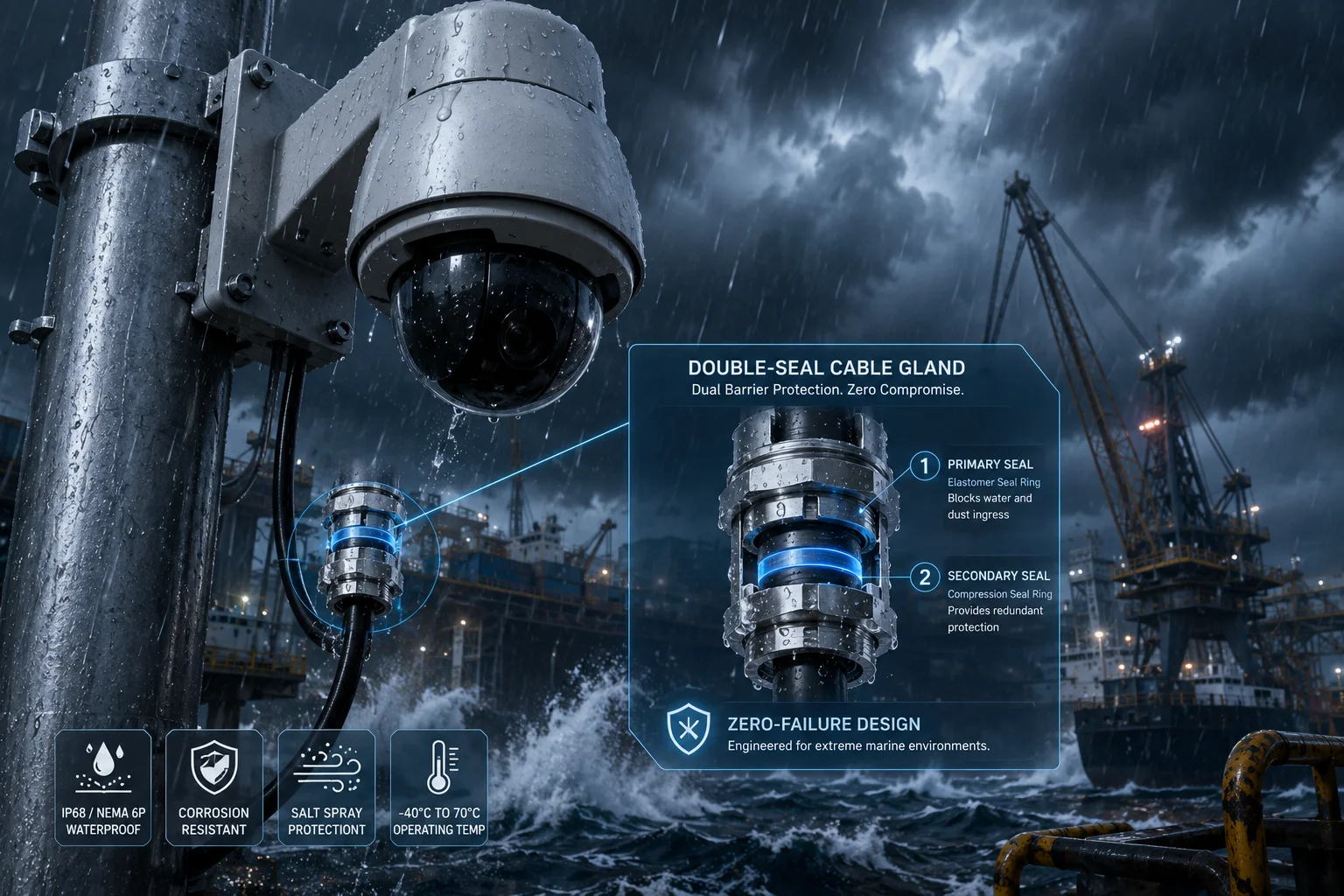 double seal cable gland marine protection
I like double-seal designs when I need extra safety margin. In marine places, salt, humidity, and temperature shifts all work against the seal. A single seal may be enough on paper, but real life is often rougher. The second seal helps me because it adds a backup layer. If one part gets small wear, the other part still has a chance to hold. I see this as a practical risk control step, not a fancy upgrade. It is useful when the site is hard to reach or expensive to service.
Why marine sites are hard on seals
Marine air carries salt. Salt can attack metal threads, dry out some materials, and speed up aging. The cable may also face constant wet and dry cycles. When that happens, the gland has to fight both water and time. I do not trust a weak sealing setup in that kind of place. I want a body that resists corrosion, a rubber insert that stays elastic, and a seal design that gives me more than one barrier.
What a double seal really adds
A double-seal gland does not mean water can never enter. That would be too simple. It means water has to cross more than one obstacle. Each obstacle adds resistance. If the first sealing point blocks most water, the second one deals with the small amount that gets past. This is useful when the cable enters a camera housing that must stay dry for a long time. It is also useful when the site sees spray, splashes, or direct washdown.
Comparison of seal options
| Seal type | Protection level | Best use case |
|---|---|---|
| Single seal | Good | Normal outdoor use |
| Double seal | Higher | Marine, washdown, or high-risk sites |
| Potting plus gland | Very high | Critical equipment with zero-failure target |
My view on when to choose double seal
I choose double seal when I know the service call will be expensive. That includes offshore work, docks, ships, and some coastal security jobs. I also use it when the camera is part of a critical system and downtime is not welcome. A double-seal design gives me more comfort, but I still need correct installation. If I leave the cable too loose or choose the wrong size, the extra seal cannot fix that mistake. I always match the gland to the real cable diameter and the real site condition. That step matters more than people think.
Does the cable gland provide enough strain relief to prevent the tail cable from being pulled out?
I care about strain relief6 because a seal is useless if the cable gets pulled loose. A leak and a pull-out problem often happen in the same bad installation.
Yes, a proper cable gland provides strain relief by gripping the cable jacket firmly and spreading pulling force across a larger area. This helps stop the tail cable from being pulled out and also protects the seal from damage caused by movement.
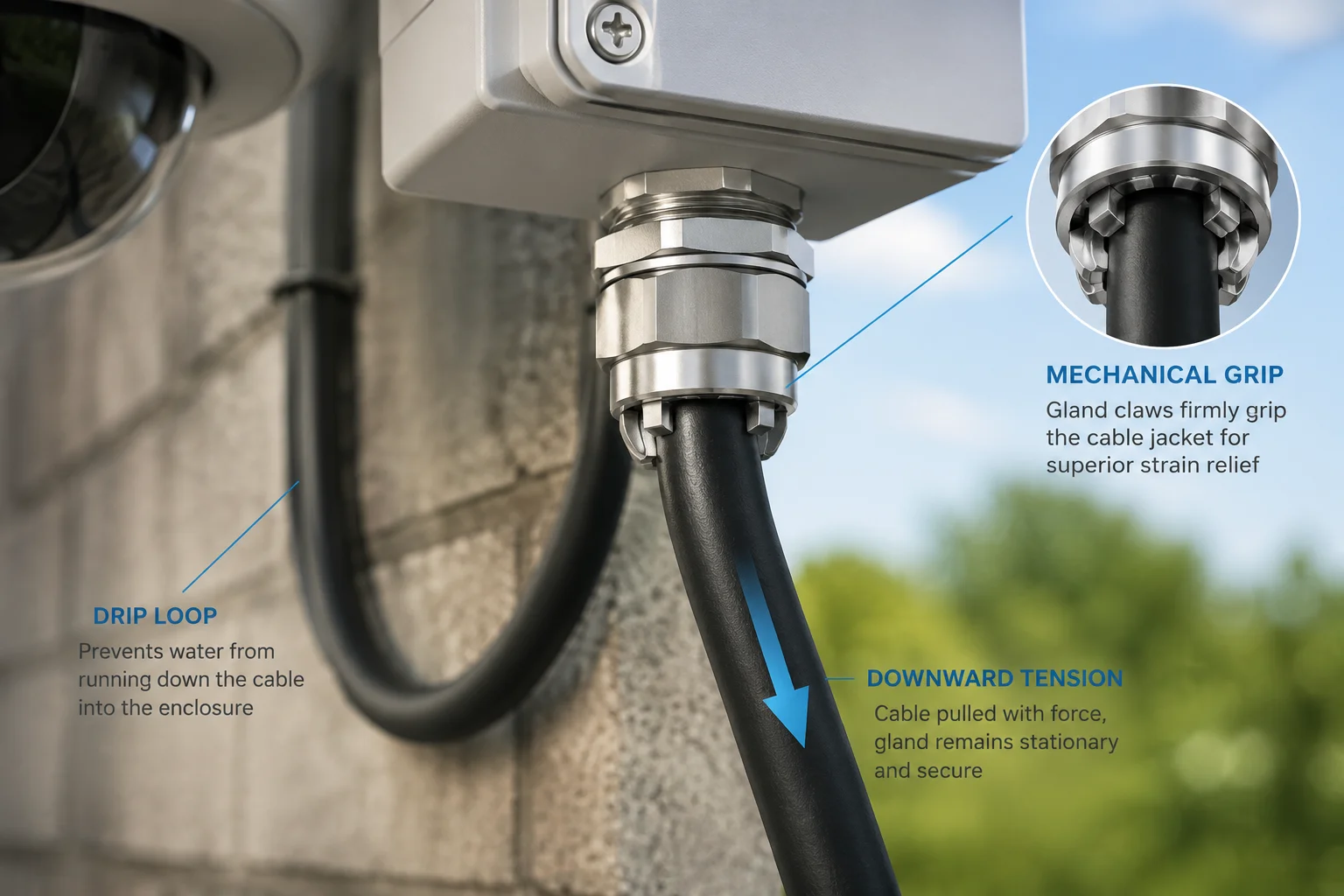 cable gland strain relief tail cable
I have seen many failures start with movement, not water. When a cable hangs with weight, gets tugged during service, or vibrates in wind, the gland must hold it in place. That is where strain relief matters. The gland should clamp the jacket hard enough to resist pull force, but not so hard that it cuts the cable. I want a stable grip that keeps the cable from shifting inside the entry point. If the cable moves back and forth, the seal can wear out faster. That wear can open a path for moisture later.
Why pull force hurts waterproofing
Pull force does more than threaten the cable connection. It also changes the seal shape. When the cable shifts, the grommet can lose even pressure. Then tiny spaces may open. Capillary action loves those spaces. So strain relief is not a separate issue from waterproofing. It is part of the same protection system. I always think about cable routing first. If I can remove tension before it reaches the gland, I improve the whole installation.
Good installation habits
I use a drip loop9 when I can, because it reduces direct water flow into the gland area. I also make sure the cable is supported before it reaches the entry point. The gland should not carry the full weight of a long hanging cable. If it does, the seal and the threads take stress they should never carry alone. I also check that the cable jacket is round and clean before tightening. A damaged jacket makes grip and seal less reliable.
Strain relief and seal life
| Condition | Impact on gland | Result |
|---|---|---|
| Cable hangs with weight | High stress on gland | Faster wear |
| Cable is supported nearby | Low stress on gland | Longer seal life |
| Frequent vibration | Insert fatigue | Possible loosening |
| Correct strain relief | Stable grip | Better long-term waterproofing |
For me, strain relief is one of the easiest ways to improve field reliability. It costs nothing if I plan it early, but it can save a lot of trouble later. I tell my team that the gland should hold the cable, not fight it. That idea keeps the cable entry dry and stable.
Conclusion
I trust metal cable glands because they block tiny water paths, hold strong under stress, and keep outdoor camera systems working longer.
1. Get an overview of metal cable gland types, applications, and selection criteria. ↩︎ 2. Understand the physics behind water movement through small spaces. ↩︎ 3. Learn about the advantages of nickel‑plated brass for corrosion resistance and thread strength. ↩︎ 4. Discover how PTZ cameras are used in outdoor surveillance and why sealing is critical. ↩︎ 5. Find out how a second sealing barrier adds extra protection in demanding environments. ↩︎ 6. See how strain relief prevents cable pull‑out and protects the seal from movement damage. ↩︎ 7. Understand how rubber grommets compress to block moisture wicking along the cable jacket. ↩︎ 8. Learn about wicking as moisture transport through capillary channels. ↩︎ 9. See how a drip loop prevents water from flowing directly into the cable entry. ↩︎ 10. Learn why thread strength is essential for maintaining clamping force over time. ↩︎ 11. See how clamping force determines the reliability of the cable seal. ↩︎