
I know how fast one weak claim can break a project. If I trust the wrong impact rating, I can face damage, delays, and angry clients later.
Yes, but only if the full camera design, including the housing, dome, and mounting structure, has been tested by a real lab under IEC 62262. IK10 means the unit can withstand 20 joules of impact without losing safe function or protection.
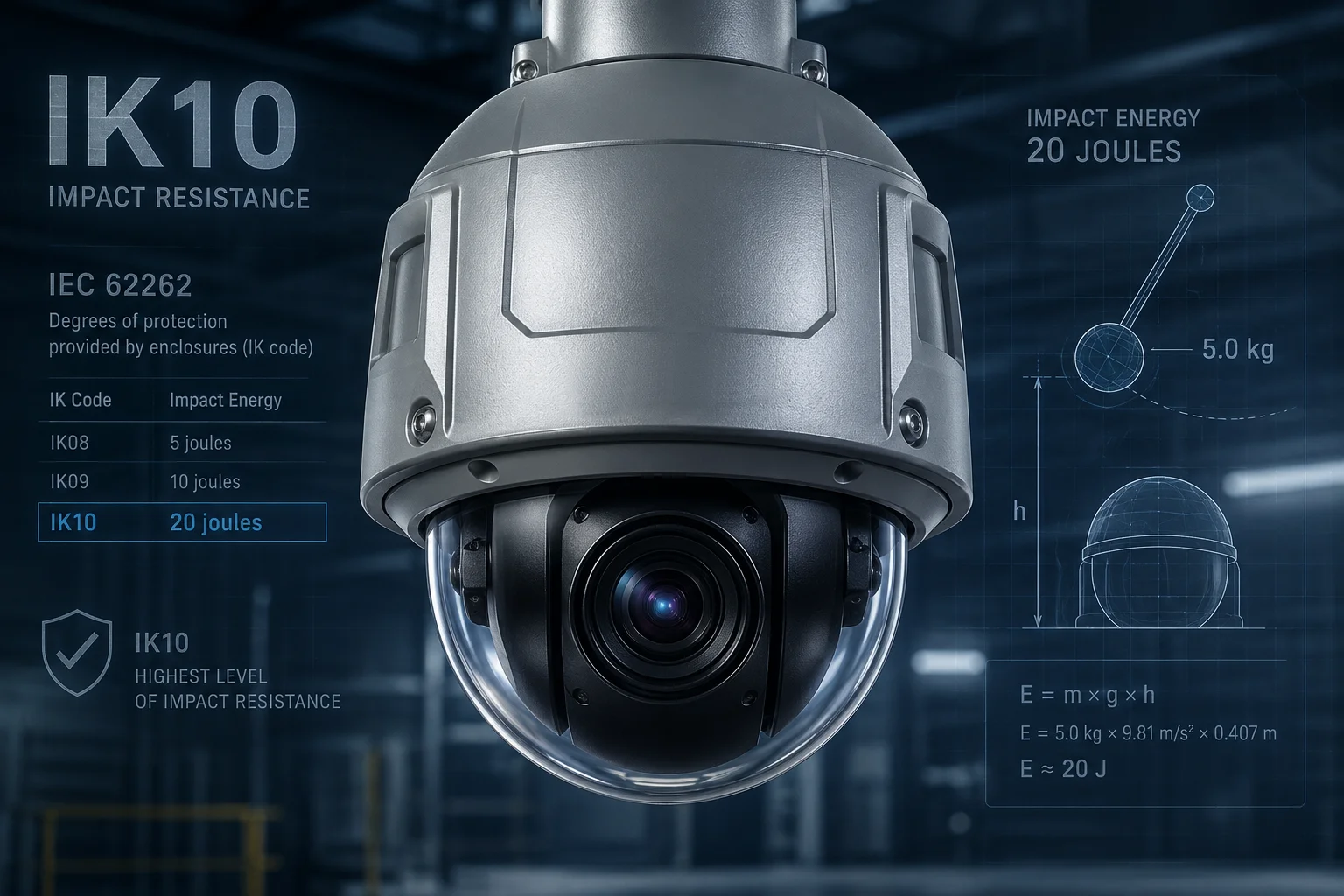
I want to look past the label and check what the rating really means in daily use. I also want to show where buyers should ask hard questions before they place a large order.
Table of Contents
Can the camera survive a 20-joule impact from a falling object or a physical attack?
I know this is the first thing that matters in the field. A spec sheet can look strong, but a real strike can tell a very different story.
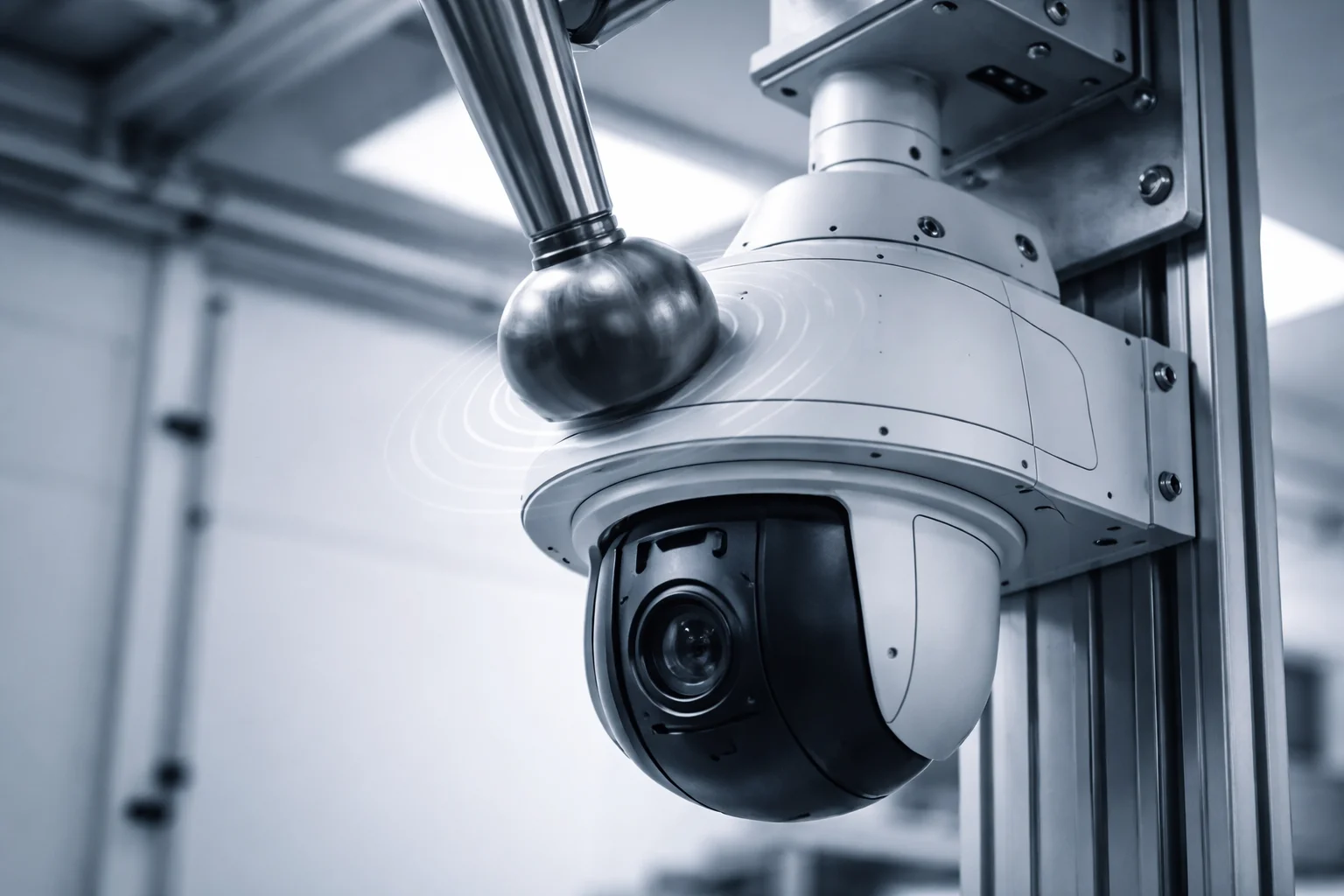
A true IK10 camera should survive a 20-joule hit from a defined test object and still keep working after the test. That said, the result depends on the complete product design, not just the outer shell.
Why I do not judge IK10 by the label alone
I have seen buyers focus on one line in a brochure and miss the real risk. IK101 is not a magic word. It is a test result. It means a lab used a fixed test method, a fixed impact energy, and a fixed number of strikes. For a PTZ camera2, that matters a lot because the camera has many weak points. The housing, the dome, the bracket, the cable entry, and even the internal gimbal3 all need to handle shock in a smart way. If one part fails, the whole unit can become useless.
I also think about the real scene. A camera may face a falling tool on a job site. It may face a hard hit from a person. It may face hail in a storm. These are not the same event, but they all test the same idea: can the product keep its shape and keep working? In my work, I always separate “passed lab test” from “safe in every case.” A lab test gives confidence. It does not replace good engineering. If the metal housing is strong but the dome cracks too easily, then the camera may still fail in the field. So I ask for the full test report, the test setup, and the exact sample that was tested.
How I read an IK10 claim in a real project
I look at three things first. The first thing is the test standard. The report should show IEC 622628 or an equal approved method. The second thing is the sample scope. I want to know if the housing, dome, and bracket were all part of the test. The third thing is the result after impact. The unit should still power on, keep sealing, and keep normal function if the standard requires it.
| What I check | Why it matters | My view |
|---|---|---|
| Test standard | Confirms the claim uses a real rule | I do not accept a vague “impact resistant” line |
| Test sample | Shows what part of the camera was tested | I want the full unit, not a weak part alone |
| Post-test function | Proves the camera still works after impact | A broken camera body with a dead lens is not enough |
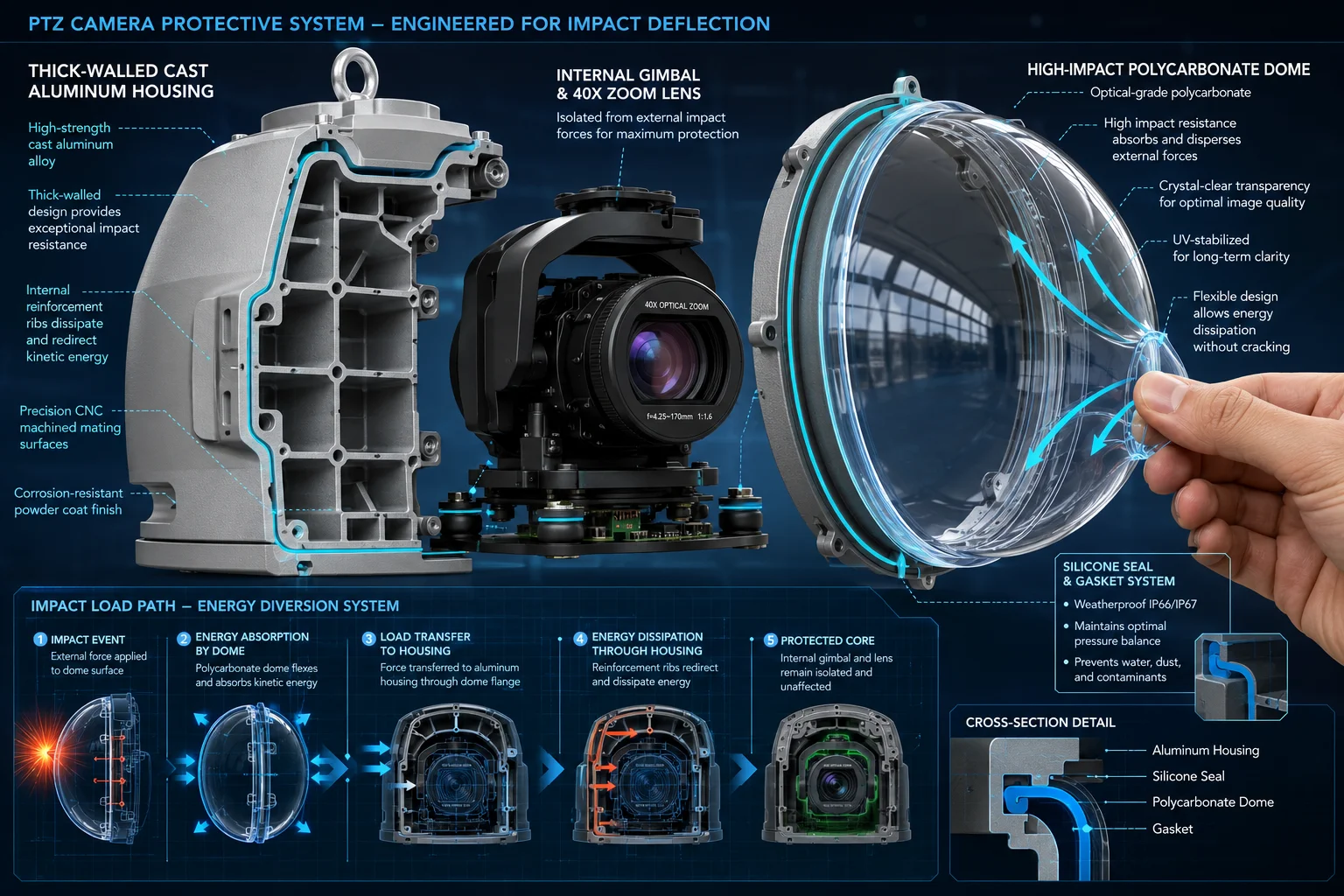
I also ask a simple question: if this camera gets hit in the field, what part will fail first? That question often shows the truth. A good design spreads force away from the weak points. A bad design puts too much stress into the dome edge or bracket. For a 40X PTZ, I want to see thick walls, good ribs, good seals, and a strong mount. I do not want a product that looks tough only from far away.
Is the IK10 rating verified for both the metal housing and the transparent dome?
I know many claims sound complete, but they often leave out the most fragile part. That makes me cautious, because the weakest point decides the real result.
The IK10 rating should be verified on the full assembled unit, not just on the metal housing alone. If the dome or window is not included in the test, the claim is incomplete and may be misleading.
Why the dome matters as much as the body
I do not treat the metal body and the dome as separate products. In a PTZ camera, they work as one system. The metal housing7 carries the load. The dome4 protects the optics. The mount holds the whole unit in place. If the housing is strong but the dome is weak, then a direct hit can still create cracks, leaks, or optical noise. That can damage image quality and can also break IP protection6.
I also pay attention to material choice. A cast aluminum body can give very good strength if the wall thickness and ribs are right. But the dome often uses polycarbonate, glass, or a hybrid structure. Each material behaves in a different way. Polycarbonate5 can resist impact well, but it may scratch more easily. Glass can look cleaner and feel more stable, but it needs careful thickness and good edge support. So I always ask where the test was done. Was the dome mounted as it is in the real camera? Was the gasket in place? Was the lens block inside? These details change the result.
What I expect to see in a real test report
I want the report to answer basic questions in plain language. I want the sample photo, the lab name, the test date, the impact level, and the pass or fail line. I also want to see if the report names each part of the camera. If the report only says “metal shell passed,” I do not count that as full IK10 proof for the whole unit.
| Component | Common risk | What I ask for |
|---|---|---|
| Metal housing | Denting, cracking at corners, loose screws | Wall thickness and impact photos |
| Transparent dome | Cracking, haze, edge split, seal loss | Material type and mounting method |
| Bracket and base | Bent arm, loose connection, vibration damage | Load path and fastener detail |
I also think about the long-term side of the claim. A camera can pass one lab test and still fail later if the dome yellows, the seal ages, or the bracket loosens. That is why I do not stop at IK10. I also ask about UV resistance, salt spray, thermal cycling, and vibration. A strong impact rating is good, but a project needs more than one number. If I plan to install cameras on highways, ports, farms, or schools, I need a design that stays stable for years, not weeks. So I see IK10 as one part of a bigger reliability picture.
Does the warranty cover the unit if it is hit by large hailstones in the U.S. Midwest?
I know hail can destroy a project in one storm. In the Midwest, that risk is real. If I ignore it, I can lose both the camera and the client’s trust.
A warranty may or may not cover hail damage, because hail is often treated as weather damage, not product defect. I always check the written warranty terms and the storm exposure level before I promise protection.
Why hail is not the same as a normal defect
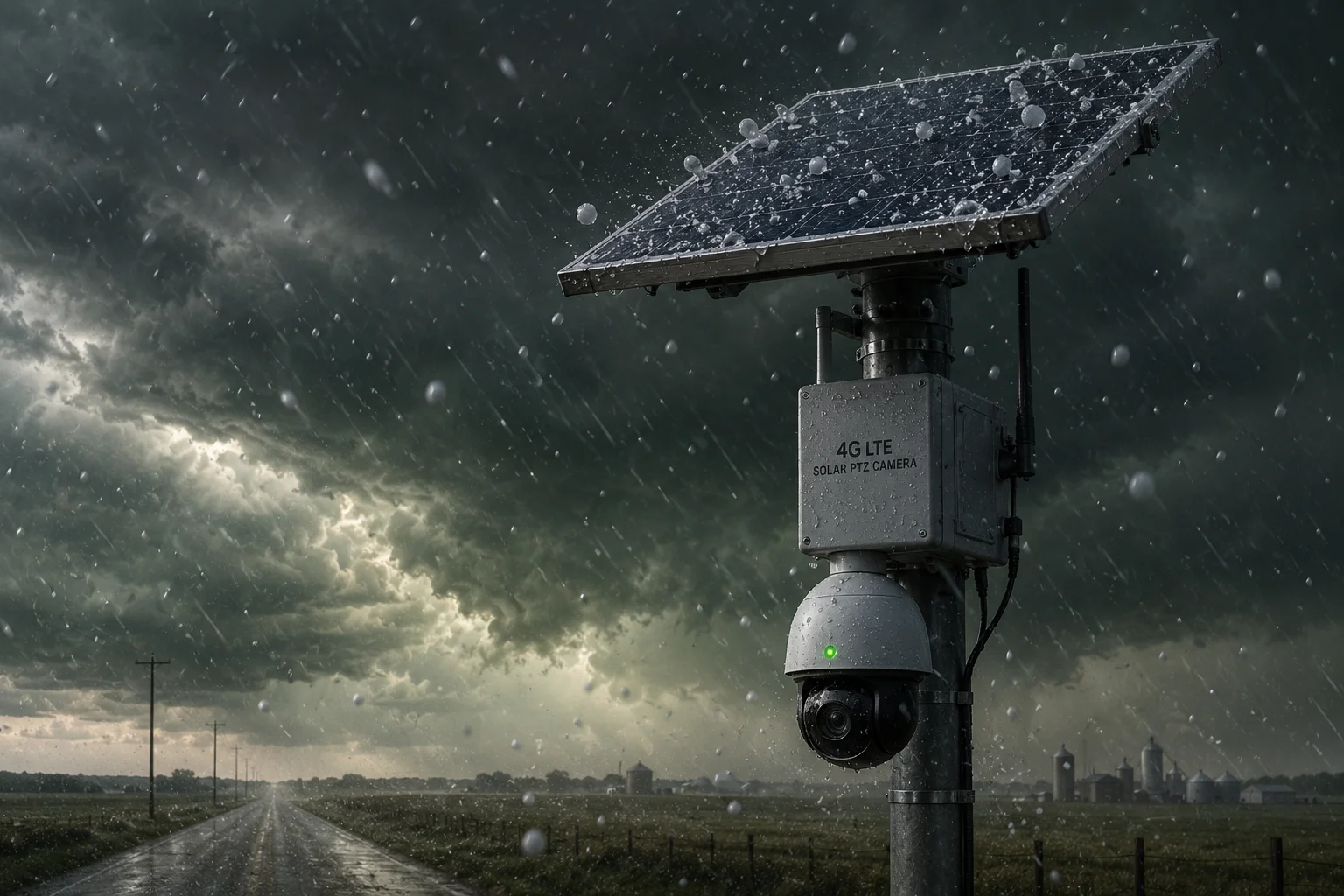
I do not mix product quality with weather risk. A defect means the unit failed because of a design or production problem. Hail damage often means the environment was too harsh for the design limits, even if the camera was well made. That difference matters in warranty work. If a vendor says “IK10” but the warranty does not mention hail, then the buyer may still carry the cost after a severe storm.
I also think about hail size and speed. Small hail may only leave marks. Large hail can crack a dome, bend a bracket, or break a lens cover. The same camera may survive a light storm and fail in a heavy one. So I ask clients to compare the product rating with the local weather data. I also ask them where the camera will sit. A unit under an eave has less exposure. A unit on a tall pole in open land takes the full hit. That changes the risk a lot.
How I write a better buying rule for storm-prone areas
I do not rely on one rating alone. I use a simple rule set. First, I want to know the exact hail clause in the warranty. Second, I want to know the IK rating and the dome material. Third, I want to know if the client needs a spare unit plan. In storm areas, replacement speed matters as much as toughness. If the camera goes down, the site may lose coverage fast.
| Risk item | What I ask | Why it matters |
|---|---|---|
| Hail clause | Is storm damage included or excluded? | It decides who pays after damage |
| Dome material | Is it glass, PC, or a mixed design? | Different materials fail in different ways |
| Site height | Is the camera on a pole, wall, or under cover? | Exposure changes the real impact risk |
I also like to remind buyers that warranty is not the same as insurance. A good supplier can offer strong support, but no honest supplier should promise that every weather event is fully covered unless the terms say so. If I sell a camera into the U.S. Midwest, I want to be direct. I want to say what the product can resist, what it cannot resist, and what the warranty will replace. That honesty helps me build long-term trust, and it helps the buyer avoid a costly surprise after the first big storm.
Can you provide the “Impact Test Report” from an accredited laboratory like TUV or SGS?
I know this is the question serious buyers ask last, but it should come first. If I cannot verify the report, I cannot fully trust the claim.
Yes, I should provide an impact test report from an accredited lab when I claim IK10. A real report should show the lab name, test method, sample photos, result, and the exact product model tested.
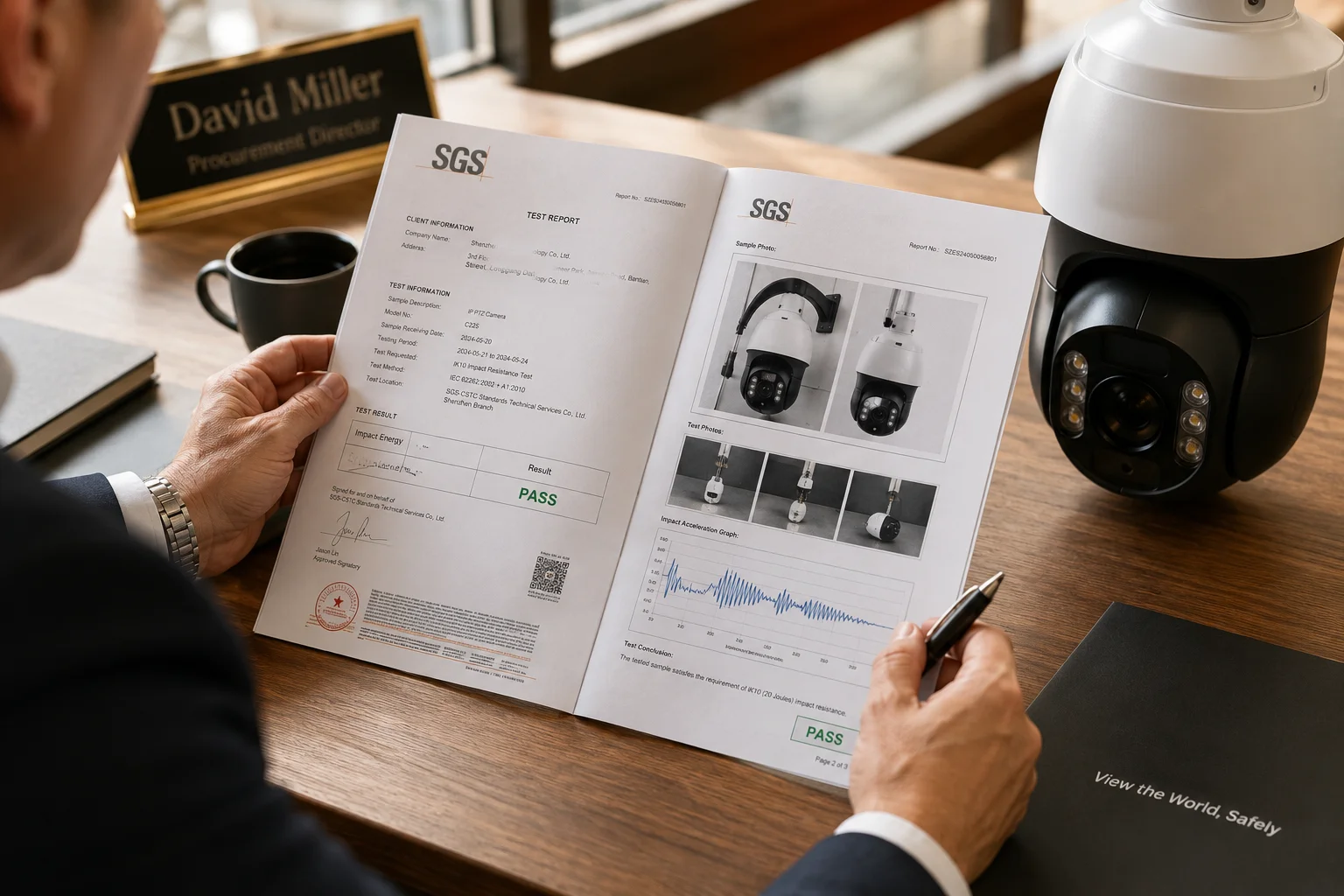
What I look for in a valid third-party report
I treat the report as proof, not decoration. A real report should have the lab logo, the report number, the test standard, the test date, the sample ID, and the result. I also want the report to match the model I am buying. A report for one shell shape does not always prove the same result for another model. Small changes in the bracket, dome, gasket, or lens size can change the outcome.
I also look at the lab status. TUV and SGS are well known, but the key point is not just the name. The key point is whether the lab is accredited for the test method and whether the report is traceable. If a seller gives me only a screenshot, I ask for the PDF. If they give me only a summary page, I ask for the full report. If they hesitate, I slow down the deal. That is not being difficult. That is good buying.
How I use the report in OEM and project work
For my kind of B2B work, the report does more than prove a spec. It helps me sell the project with confidence. I can show my client that the product passed a real test, not a marketing claim. I can also use the report to compare suppliers. Some factories may say “IK10-like” or “meets impact needs.” I do not accept that wording. I want the lab proof. I also want to know if the report covers the full unit or just one part. That matters even more when I do OEM or ODM work, because the final product may have new colors, new logos, or new cables.
| Report item | My minimum check | Why I care |
|---|---|---|
| Lab name | Accredited and traceable | I need proof, not a slogan |
| Exact model | Matches the ordered unit | A close match is not enough |
| Full report | Includes method and result | I need the full test story |
I also keep one more point in mind. A report can be real and still be old. If the factory changed the mold, the dome, or the bracket after the test, then the old report may no longer match the shipped unit. So I ask for a current link between the test sample and the production version. That is how I protect myself, my client, and the end user.
Conclusion
I trust IK10 only when the full unit, the lab report, and the warranty terms all match. A strong claim is useful, but real proof is better.
1. Learn about the IK rating system and what IK10 means for impact resistance. ↩︎ 2. Learn about PTZ camera construction and the unique impact challenges of moving parts. ↩︎ 3. Explore how gimbal design affects a PTZ camera’s ability to survive shocks. ↩︎ 4. Understand how dome design and material affect overall camera impact resistance. ↩︎ 5. Learn about polycarbonate’s impact resistance, scratch susceptibility, and use in camera domes. ↩︎ 6. Understand how impact resistance relates to IP protection (ingress of dust/water) after a strike. ↩︎ 7. Learn about cast aluminum properties for impact‑resistant enclosures. ↩︎ 8. Read the official international standard for degrees of protection provided by enclosures against external mechanical impacts (IK code). ↩︎