
I run into this problem a lot: one cow walks by, one horse turns its head, and my alarm starts acting like every movement is a threat. That wastes time and trust.
I can cut false alarms by using AI classification1, shape and gait analysis, size filters, and smart line-crossing rules5. A system should trigger on human features, not just motion.
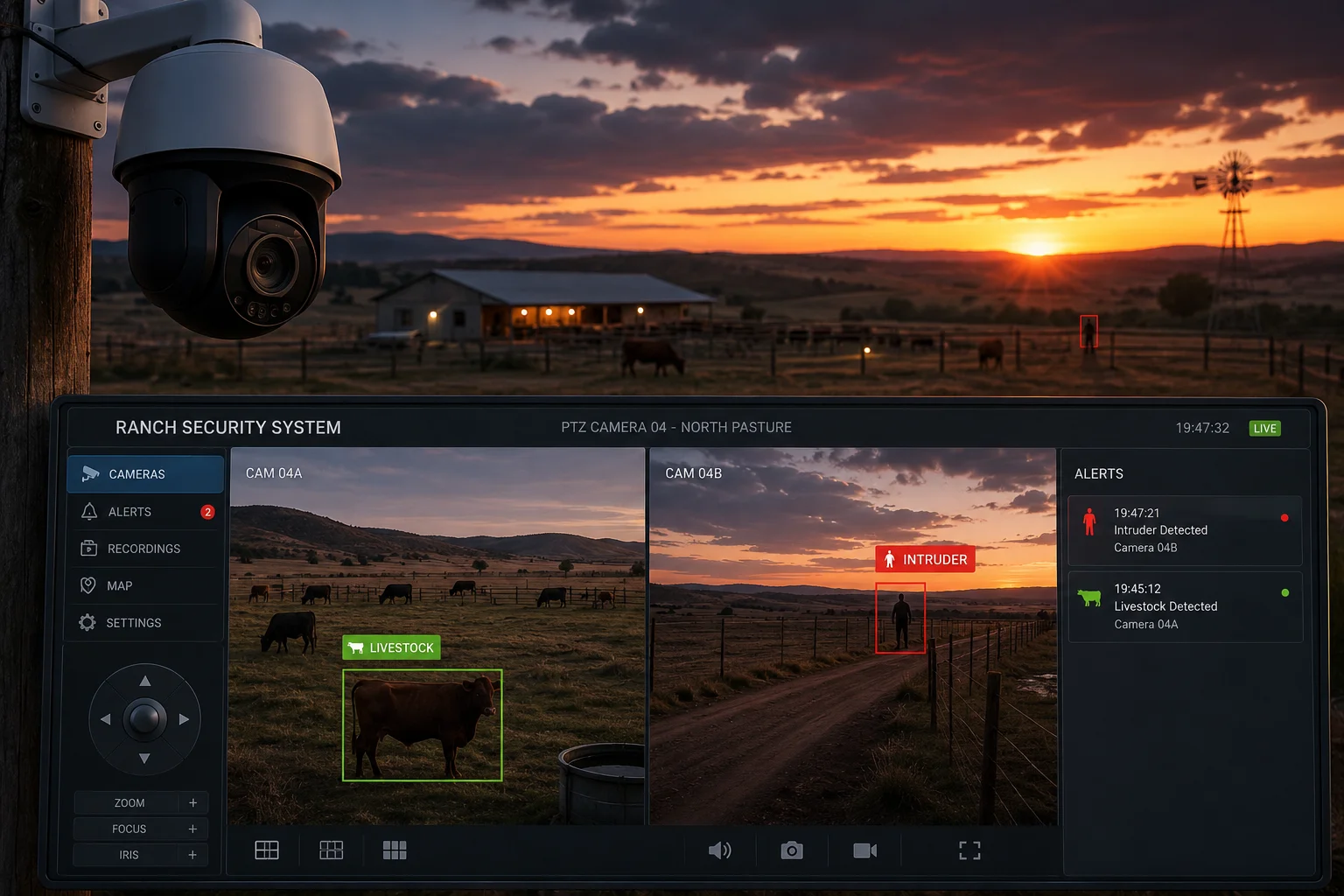
I do not want my camera to panic at every animal on the ranch. I want it to ignore livestock and still catch real people fast, even at night.
Table of Contents
Does the AI library include specific “Animal Classification” to ignore non-human movement?
I see this question all the time because simple motion detection is not enough on a ranch. If I only watch for pixel changes, I will get alarms from cows, horses, wind, rain, and shadows.
Yes, a good AI library should include animal classification, and that feature helps me ignore non-human movement before an alarm is sent.
Why I do not trust motion-only alerts
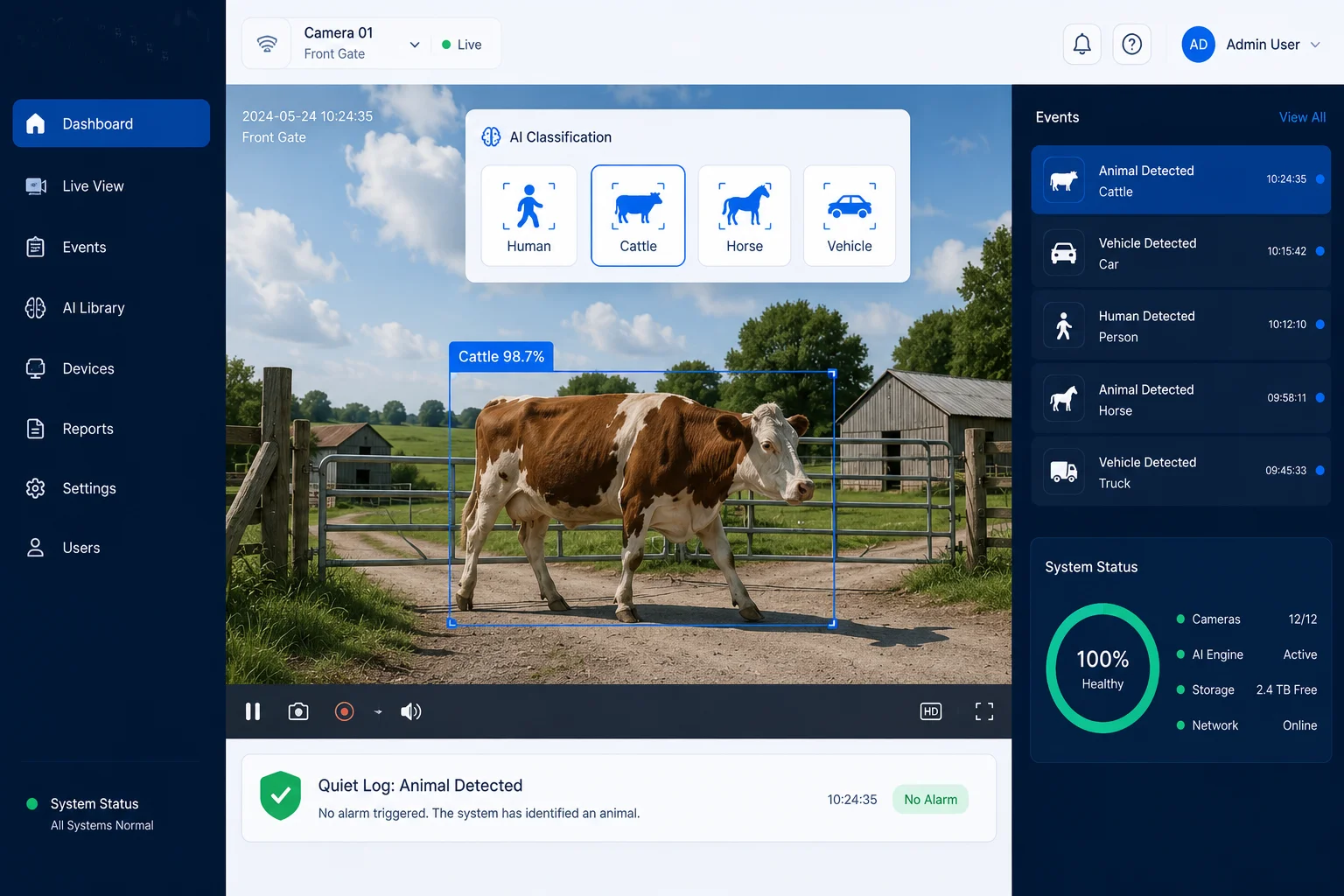
I learned that motion detection3 is very cheap, but it is also very noisy. A cow walking near a fence can create the same kind of motion pattern as a person walking in the same place. The camera does not know the reason for the motion. It only knows that something moved. That is why I need a model that can label the target first. If the target is a cow or horse, I want the system to log it quietly. If the target is a human, I want the system to send a real alarm. This is the main difference between basic detection and AI classification.
How I would set the alarm logic
I prefer a rule like this:
| Rule | Action |
|---|---|
| Human confidence above threshold | Send alarm |
| Animal detected | Record only |
| Unknown small motion | Ignore or low-priority log |
If I can set a confidence score4, I can make the system more stable. For example, I may choose 90% for human alerts. That means the camera should be very sure before it wakes me up. I also like separate labels for cattle, horse, dog, and bird if the platform supports them. This helps me build clean rules for each site. On a ranch, that matters because the scene changes all day. In the morning, animals may move in groups. At night, one animal may stand still near a gate. A strong AI library gives me a better first step, but I still need good rules on top of it.
What I check before I buy
I always ask if the library can do these things:
- It can detect human, animal, vehicle, and unknown objects.
- It can keep animal events in the log without sending an alarm.
- It can work with low light, IR, and thermal views9.
- It can handle crowded scenes with several targets at once.
If the vendor cannot explain these points clearly, I see a risk. A ranch customer does not want a camera that cries wolf all day. I want a camera that understands the scene and uses the right label at the right time. That is how I reduce false alarms and keep the alert system useful.
Can I train the camera to ignore my specific cattle while alerting for any bipedal movement2?
This is one of the most practical questions I get. I know the herd. I know which animals stay inside the pasture. I do not want the camera to alert every time my own cattle walk past the barn.
Yes, I can train the camera or adjust the rules so it ignores known cattle patterns while still alerting for bipedal movement, but the best method depends on the camera software and the AI model.
Why “my cattle” are hard to ignore
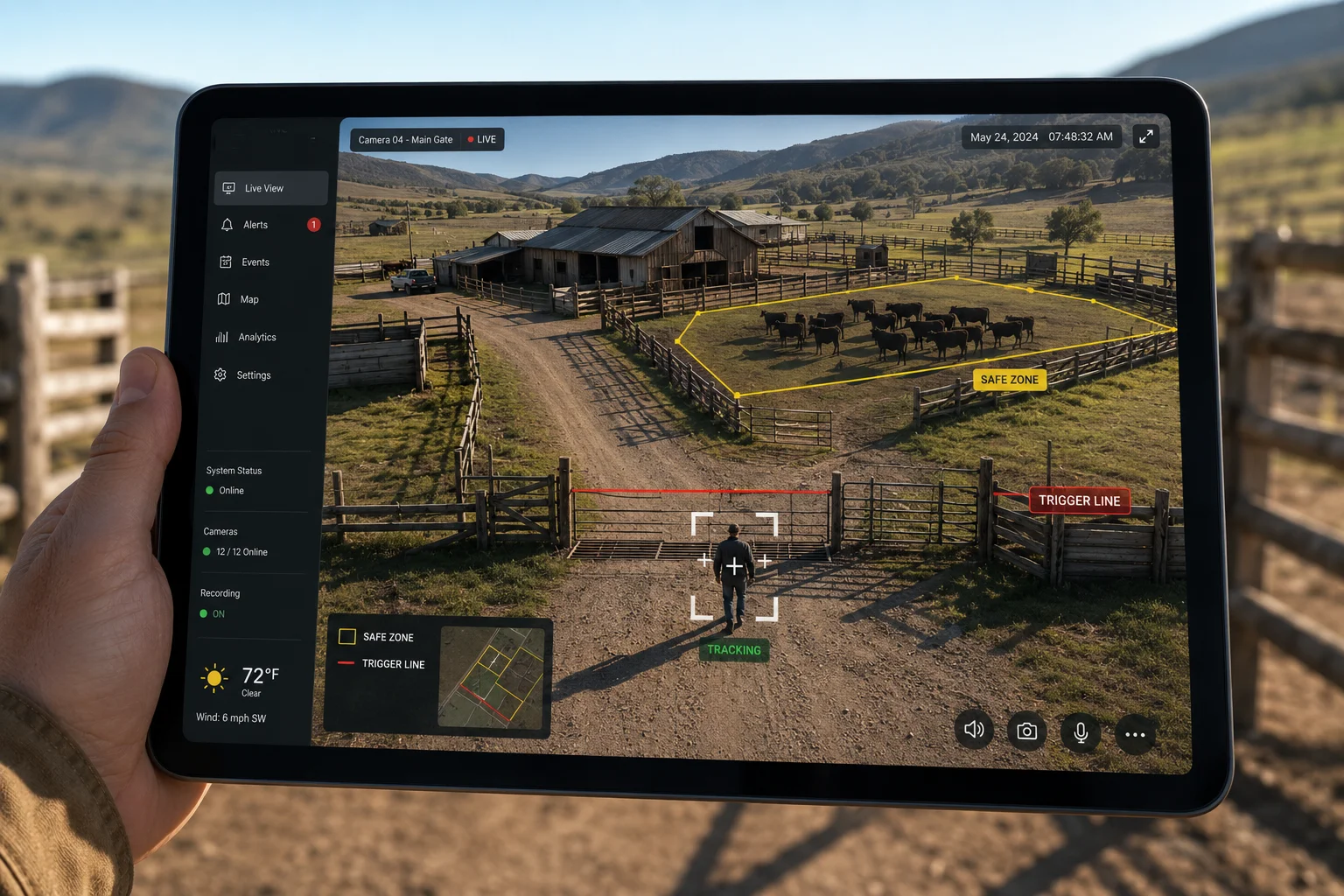
I need to be honest here. A camera does not know ownership the way I do. It sees shape, movement, and sometimes color or heat. If my cattle are large and close to the lens, they can dominate the frame. If the AI model is weak, it may still mark them as a human because the body fills a lot of space. That is why training or rule tuning matters. I need the system to learn the local scene. In some platforms, I can mark safe zones7 and say, “ignore this pen.” In other systems, I can only set object classes and confidence limits. The more advanced platforms let me teach the camera with samples from my own ranch. That usually gives better results than a generic model.
What works best in practice
I usually think in three layers:
| Layer | What I do | Why it helps |
|---|---|---|
| Scene setup | Draw zones for barn, pen, gate | Limits where alerts can happen |
| Object rules | Human only, animal mute | Stops livestock alarms |
| Behavior rules | Alert on entering, climbing, or crossing | Focuses on real threats |
Why bipedal movement is still useful
I like bipedal movement as a clue, but I do not use it alone. A person does not just stand on two legs. A person often has upright posture, arm swing, shoulder width, and a different walking path. A cow or horse has a very different body balance and gait. If the system looks only for “two legs,” I worry about false alerts from posts, shadows, or partial views. So I prefer a mix of features. The camera should look at body shape, motion path, and scene context. If the target is upright and also crosses a line near a gate, I trust the alert more. If the target is low, wide, and slow, I expect the system to treat it as livestock. That is the kind of logic that saves me time and keeps the alerts clean.
My advice for real ranch use
If I want to ignore my own cattle, I start with good footage from day and night. Then I test the camera with cows close to the lens, far from the lens, and moving in groups. I also test a human walking through the same area. This shows me where the model fails. If the system can learn from my site data, I use that option. If not, I rely more on zones, line crossing, and class filters. I do not expect perfect magic. I want a system that is stable, simple to manage, and honest about what it can do.
How does the algorithm handle “Four-legged” vs “Two-legged” gait analysis for accuracy?
This question matters because body shape alone is not always enough. I need the algorithm to know how an animal moves, not just how it looks in one frame.
The algorithm usually compares gait, posture, body ratio, and motion direction, so four-legged and two-legged targets can be separated more accurately than by shape alone.
Why gait matters more than a single frame
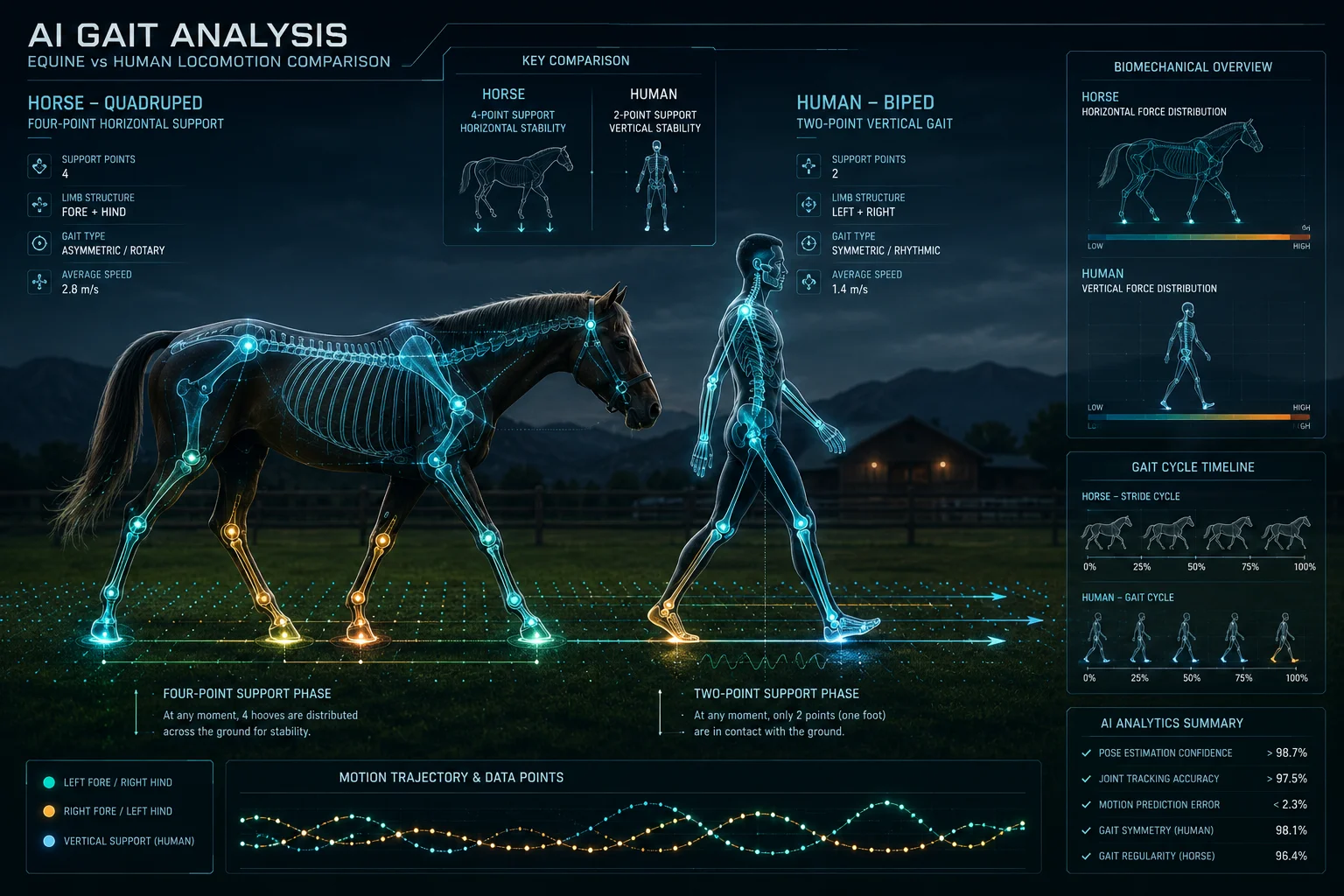
I trust gait analysis because living things move in patterns. A human and a horse can both create large motion, but the steps are not the same. A human has a vertical frame and a repeated left-right leg rhythm. A cow has a longer horizontal body and a different step cycle. A horse has a strong body line and faster stride changes. If the AI watches several frames, it can see these differences more clearly. That is much better than looking at one still image. A single frame can lie. A person bending down can look shorter. A horse behind a fence can look strange. But across time, the motion pattern becomes clearer. That is where the algorithm earns its value.
What the AI usually checks
I like to think of the system as checking these signals together:
- Body ratio10: tall and narrow, or long and low.
- Limb pattern: two main support points, or four.
- Motion path: direct walk, random drift, grazing, or pacing.
- Stability: upright torso versus horizontal body line.
- Speed changes: human steps often change with intent, while livestock may move in looser patterns.
Accuracy in real field conditions
Ranch conditions are not clean. Grass moves. Dust rises. A horse may turn sideways. A cow may rear or stand near a wall. These edge cases can confuse even a good model. So I do not expect 100% from gait analysis alone. I want the algorithm to use gait as one signal, not the only signal. If the camera also uses line crossing, object size, and zone rules, the whole system gets stronger. I also care about camera angle. A top-down view often helps because it shows the full body shape. A low angle can hide legs and make the target harder to classify. For that reason, I prefer a mount height that gives a clear view of the whole path.
A simple way I think about accuracy
| Signal | Human | Cow/Horse |
|---|---|---|
| Posture | Mostly vertical | Mostly horizontal |
| Gait | Two-leg rhythm | Four-leg support cycle |
| Motion goal | Direct path | Grazing, wandering, pacing |
| Best use | Alarm trigger | Quiet logging or ignore |
When I combine these signals, I get better accuracy. I do not need the model to be perfect. I need it to be consistently useful in a real ranch.
Will a large horse close to the camera trigger a “Human” alarm due to its size?
This is a real risk. I know that a large animal near the lens can fill the image and confuse a weak model. That is one of the main reasons false alarms happen in farm sites.
Yes, a large horse close to the camera can trigger a human alarm if the model relies too much on size alone, so I need shape, posture, and class confidence to prevent that mistake.
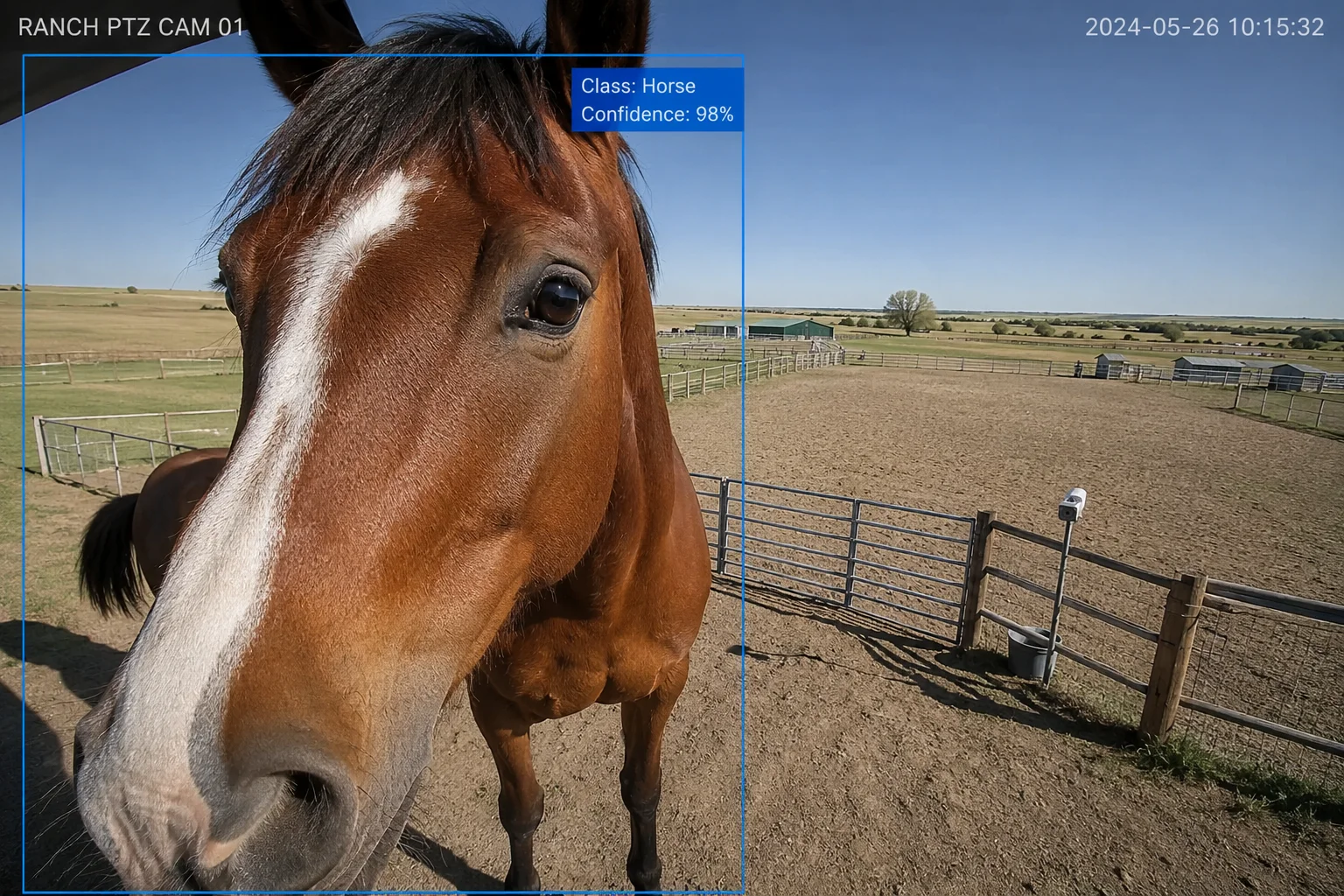
Why size can mislead a weak model
I have seen cameras that treat “big object” as “important object.” That is a bad habit in ranch use. A horse standing close to the camera can occupy a lot of pixels. If the model is undertrained, it may see a tall mass and decide that it is a person. This gets worse at night when IR light flattens details. It also gets worse when the lens is zoomed in or when the animal is partly blocked by a fence. The model then has fewer clues to use. That is why I do not want a system that uses size as the main rule. Size is only one clue. It cannot be the final answer.
What I want the camera to use instead
I want the camera to look at these things:
- body shape and balance
- shoulder and head position
- leg count and stride pattern
- movement path over several frames
- confidence score for the human class
If the camera sees a large object, it should not jump to a human alarm unless the class confidence8 is strong. I also like a minimum shape check and a maximum size check. That sounds simple, but it helps a lot. If the target is too wide and too low, I want the camera to doubt the human label. If the target is vertical, upright, and crossing a gate line, I want it to trust the alert more. That balance keeps the system useful.
Practical settings I would test
| Setting | Suggested use | Benefit |
|---|---|---|
| Human confidence threshold | 85% to 95% | Reduces weak matches |
| Max object size filter | Medium to large objects only if shape fits human | Avoids huge animal false alarms |
| Line crossing rule | Use at gates and fence lines | Focuses on real entry events |
| Camera height | Around 3.5 to 4 meters | Improves full-body view |
My final view on this problem
I do not fear large horses because of their size. I fear models that rely on size without context. A good ranch camera should understand that a big animal is still an animal. It should not turn every close target into a human alarm. When I choose a PTZ system for a ranch, I want strong AI logic, clear zone control, and stable performance in day and night scenes. That is how I keep alarms useful and avoid wasting time on livestock movement.
Conclusion
I can reduce ranch false alarms by combining animal classification, gait analysis, confidence thresholds, and line-crossing rules. I want the camera to judge context, not just motion or size.
1. Learn how AI classification works to distinguish between humans and animals. ↩︎ 2. Bipedal movement is a key clue for identifying human motion in surveillance. ↩︎ 3. Basic motion detection only triggers on pixel changes, causing false alarms from animals. ↩︎ 4. Setting a high confidence threshold ensures alarms only fire when the model is very sure. ↩︎ 5. Line-crossing rules trigger alerts only when a target crosses predefined virtual lines. ↩︎ 6. Safe zones limit alert areas to reduce nuisance alarms from known livestock pens. ↩︎ 7. Class confidence scores help decide whether a detected object is truly human or animal. ↩︎ 8. Thermal cameras detect heat signatures, useful for distinguishing humans from livestock at night. ↩︎ 9. Body ratio (height vs. width) helps differentiate upright humans from horizontal animals. ↩︎