
I know a clean lens looks simple, but water spots can ruin a clear view fast. I need a surface that sheds rain, dust, and mineral marks8 without constant wiping.
The hydrophobic effect1 is achieved by using a low-surface-energy nano coating2 that makes water bead up and roll off. In our case, this helps protect image clarity, reduce water spots, and keep long-range AI recognition stable in rain and dust.
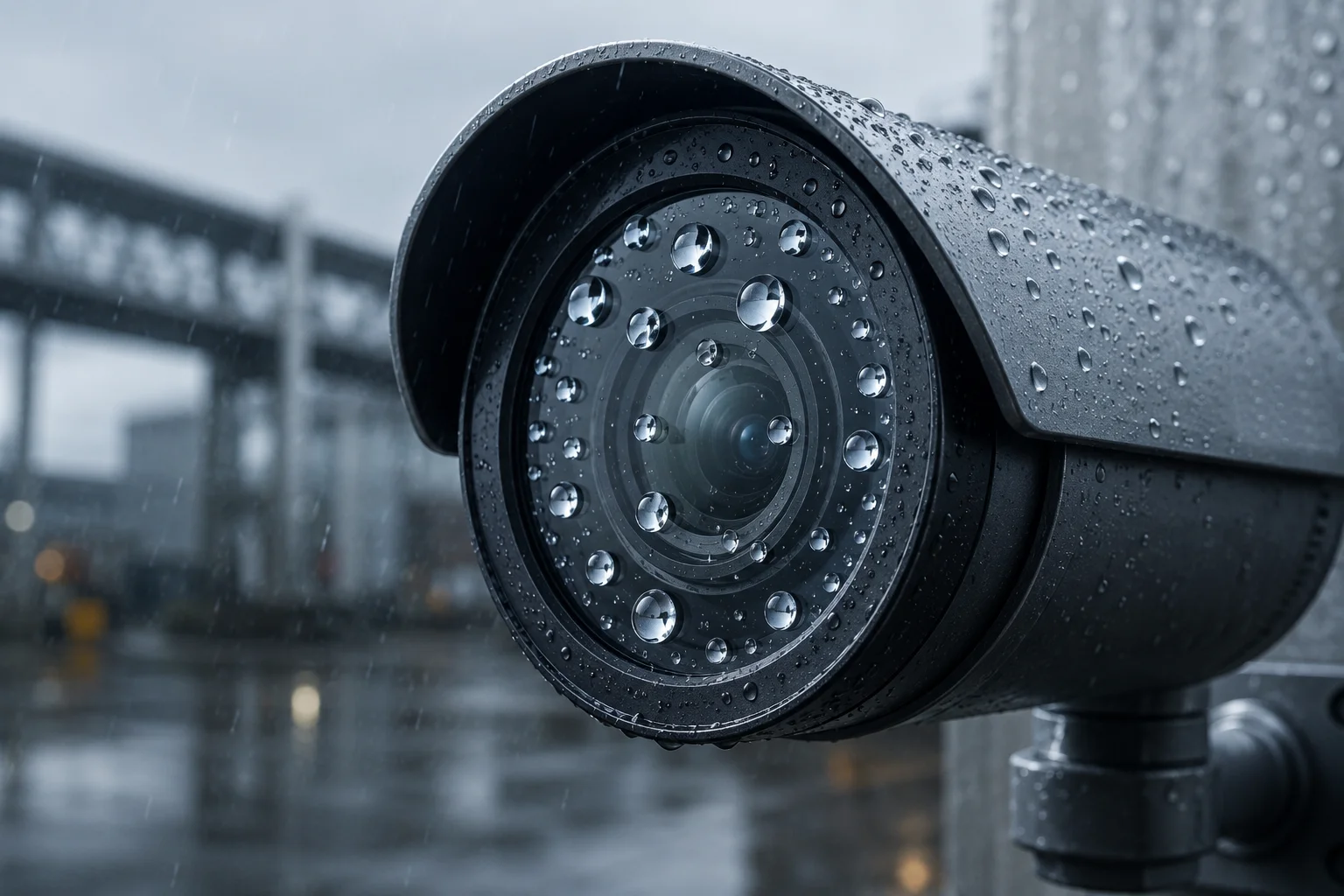
I think this matters even more on outdoor security hardware, because a small stain can become a big problem at long range. So I want to explain the real science, the coating structure, and the care rules in a simple way.
Table of Contents
Does the lens use a “Lotus Effect” nano-coating to repel heavy rain and road spray?
I often get this question because people want a coating that works in real weather, not just in a lab. Heavy rain and road spray can be brutal on outdoor cameras, so I need more than a surface that only looks good on paper.
Yes, the lens uses a lotus-effect style nano coating that lowers surface energy and helps water form beads that slide away fast. This reduces sticking water, limits dirt buildup, and helps the optical path stay clear during rain and splash.
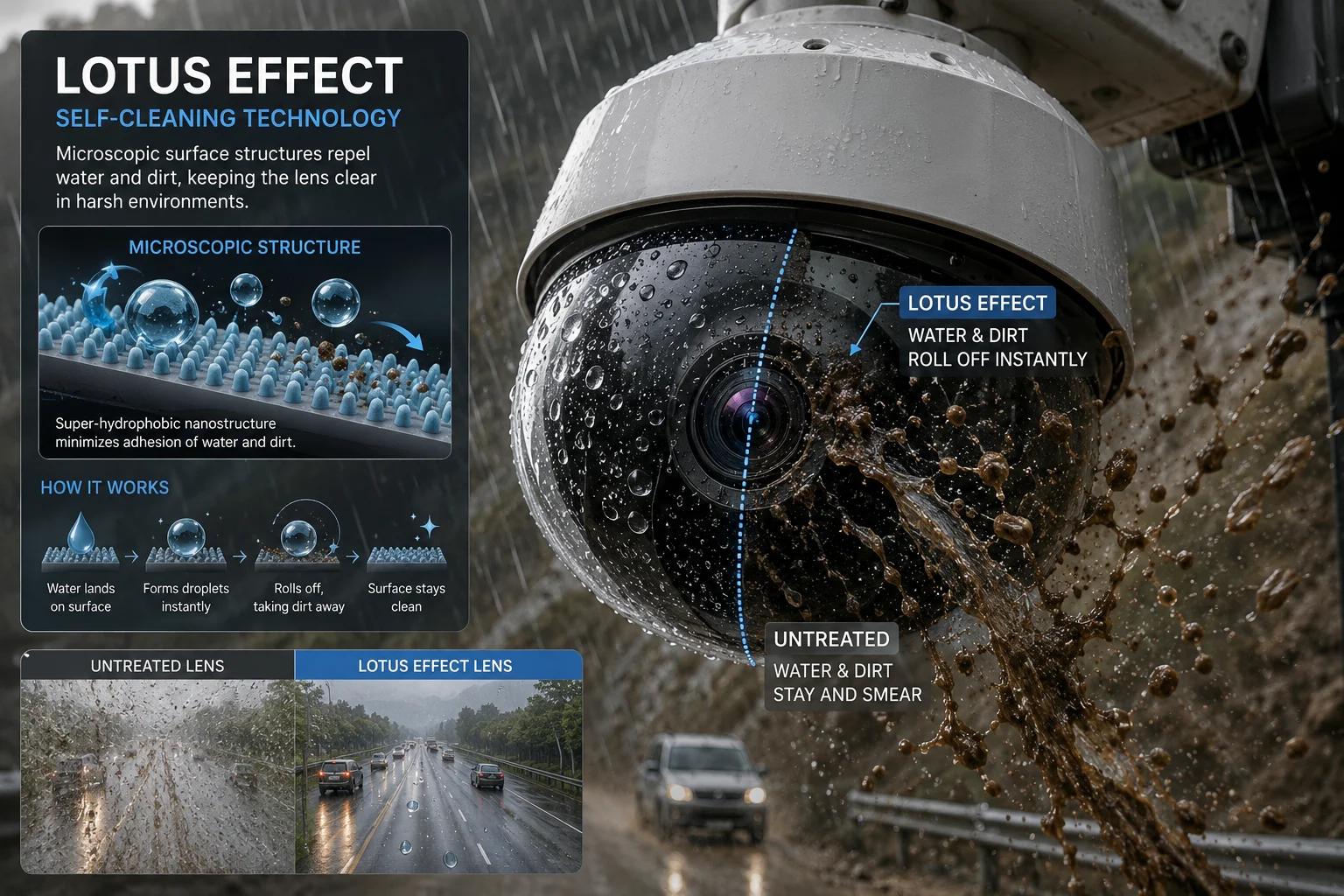
I think the key point is that the lotus effect is not magic. It works because the surface does not let water spread out. When water lands on the glass, it keeps a round shape instead of flattening into a wet film. That makes it easier for gravity and wind to move the drop away.
Why the lotus effect matters in field use
I design outdoor systems with real field conditions in mind. Rain is one issue. Road spray is another. Dust is also a problem. When all three hit the lens at the same time, a normal glass face can become dirty very fast.
| Surface Type | Water Behavior | Spot Risk | Maintenance Need |
|---|---|---|---|
| Plain glass | Water spreads out | High | Frequent wiping |
| Basic spray coating | Some beading | Medium | Regular care |
| Lotus-effect nano coating | Strong beading and roll-off | Low | Less frequent cleaning |
I also care about the way dirt moves with the water. A good hydrophobic layer does not only push water away. It also helps lift loose dust and small particles. That means the lens stays usable longer after a storm or a busy road day.
What I look for in a real coating
I do not trust labels alone. I look at three things.
- The contact angle3 should be high enough to form strong beads.
- The surface should keep its effect after sun, rain, and wind.
- The coating should not reduce the light path in a way that hurts image quality.
If a coating fails any of those points, I do not call it good enough for a serious outdoor camera. A camera for a farm, a site gate, or a long road needs a coating that works day after day.
Why road spray is a hard test
Road spray is nasty because it is not clean water. It often carries oil, fine dust, salt, and tiny grit. That means the coating must do more than repel water. It must also make it hard for grime to stick.
I have seen weak coatings fail in one storm. They look fine at first, but then the surface starts to hold dirt. Once that happens, the lens can lose contrast. Then AI tracking gets weaker, especially at long distance. That is why I treat the coating as part of the full imaging system, not as a cosmetic layer.
How long will the hydrophobic layer last before it needs to be re-applied in a high-UV climate?
I know UV exposure is a real concern in hot places. Sunlight can slowly age many surface treatments, and a camera on a pole or roof gets far more stress than a device indoors.
In a high-UV climate, a durable hydrophobic layer can last about 3 to 5 years when it is part of a properly made vacuum-deposited optical coating4 system. The exact life depends on sunlight, dust, washing method, and local weather.
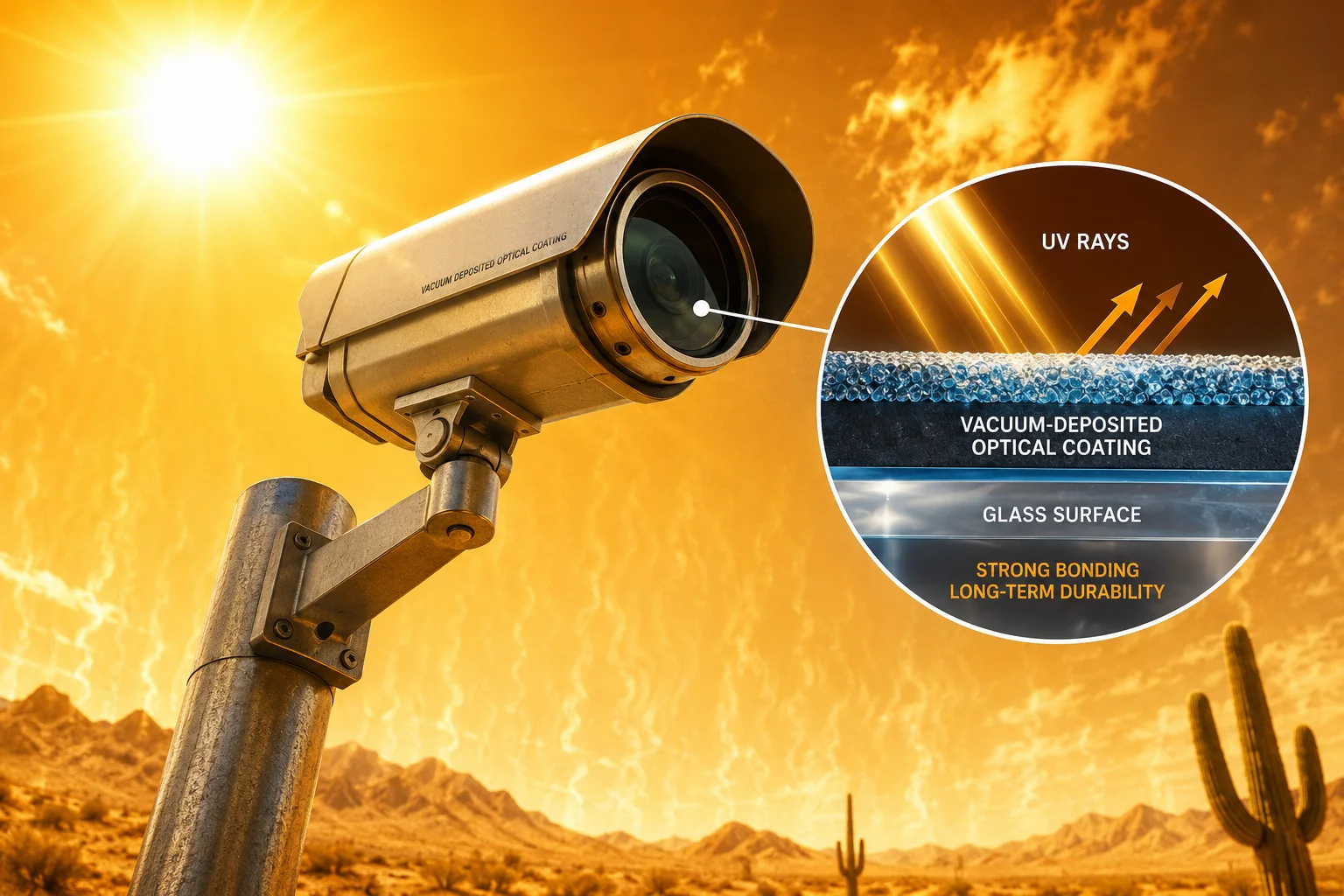
I want to be honest here. No coating lasts forever. But a good factory-applied layer is very different from a cheap wipe-on spray. A real optical coating bonds much better to the glass. That gives it a much longer service life and more stable performance.
Why UV shortens coating life
UV light breaks down weak chemical bonds over time. Heat also speeds up that process. If a coating sits in strong sun for years, it can slowly lose its water-repelling power.
| Factor | Effect on Coating | Risk Level |
|---|---|---|
| Strong UV | Slow aging of surface bonds | High |
| High heat | Faster wear and drying stress | High |
| Sand and dust | Micro-scratching | Medium to High |
| Harsh cleaning | Coating loss | High |
| Gentle rinsing | Lower stress | Low |
I think the real issue is not only UV. It is UV plus dust, heat, and bad cleaning habits. Many coatings fail early because someone scrubs them with the wrong cloth or strong chemicals. That is why I always tell customers to use simple cleaning methods.
What I use to extend service life
I focus on three things.
- I use factory-level coating methods instead of weak field sprays.
- I avoid rough surface textures that trap dirt.
- I tell users to clean with water or mild alcohol, not harsh chemicals.
If the camera is placed in a very hot region, I also suggest a regular inspection cycle. That does not mean re-coating every year. It means checking performance and spotting early wear before the coating becomes a problem.
When re-application becomes necessary
I usually think about re-application when I see one or more of these signs:
- Water no longer beads well
- Dirt stays on the surface after rain
- The lens needs cleaning too often
- Imaging looks dull after washing
In other words, I do not base the decision on time alone. I base it on real surface behavior. That is the best way to protect both the camera and the project budget.
Will the coating interfere with the light transmission of the 800m laser beam?
I understand why this question matters. At long range, even a small loss in light can hurt night performance. A customer may not notice a tiny coating issue at short range, but an 800m laser system can expose that weakness fast.
A proper hydrophobic layer should not block the 800m laser beam6 in any meaningful way. A well-made optical coating system is designed to keep high light transmission while adding water repellency, so the laser still passes through with very little loss.
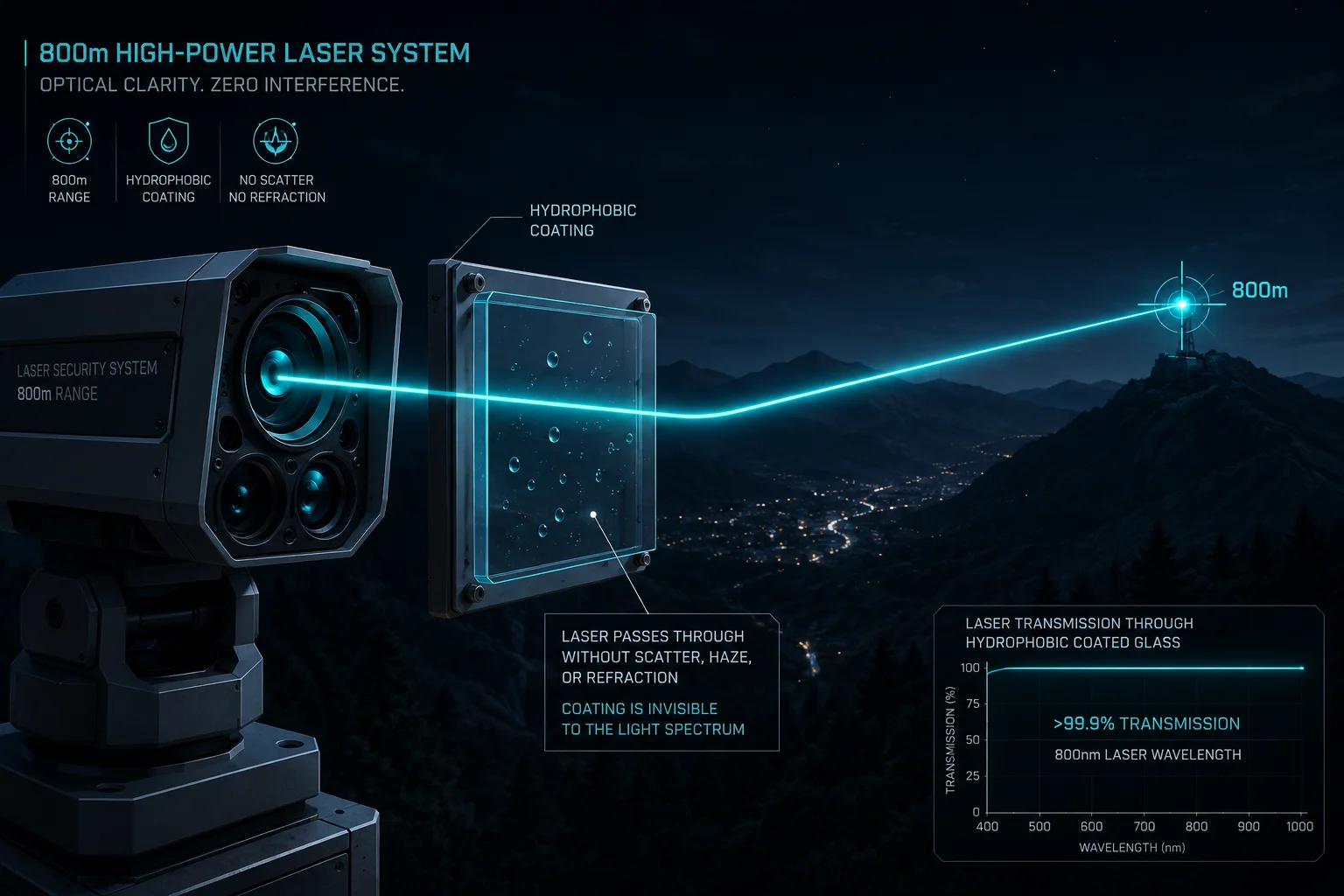
I think this is where product design matters most. The coating cannot be judged only by water behavior. It also has to fit the optical system. If the coating is too thick, too rough, or too cloudy, then night vision can suffer. That is not acceptable for a long-distance security camera.
Optical loss must stay low
I look at light transmission in a simple way. The camera must collect as much usable light as possible. If the coating causes haze, reflection, or color shift, the image may become weaker. That can reduce target detail at night.
| Optical Factor | Good Result | Bad Result |
|---|---|---|
| Transmission | High | Lower image brightness |
| Haze | Very low | Soft or foggy image |
| Reflection | Controlled | Glare and flare |
| Surface smoothness | Stable | Scattered light |
I also care about the difference between visible light and infrared or laser light. A coating can behave well in daylight and still cause trouble at night if it is not designed for the full optical range.
How I protect laser performance
I use coating stacks that are made for optical work, not just for water shedding. The hydrophobic surface layer sits on top of an AR system5 that already manages reflection. That way, the water behavior and the light path can work together.
Why cheap coatings fail here
Cheap coatings often use rough particles or uneven films. Those can scatter light. At 800m, that can become a real problem because the system depends on clean beam path and strong return detail.
I have seen cases where a low-cost lens looked fine in the day, but at night it lost edge sharpness or picked up extra glare. That is why I never treat the hydrophobic layer as a separate trick. It has to belong to the full optical design.
Can I use a high-pressure washer to clean the glass without stripping the hydrophobic layer?
I know this is a practical question. People want a fast way to clean outdoor glass, especially when dirt and bird marks build up. But too much force can damage even a strong surface.
I do not recommend a high-pressure washer7 if the spray is too strong or too close, because it can wear down the hydrophobic layer over time. A low-pressure rinse is safer and can clean the glass without stripping the coating.
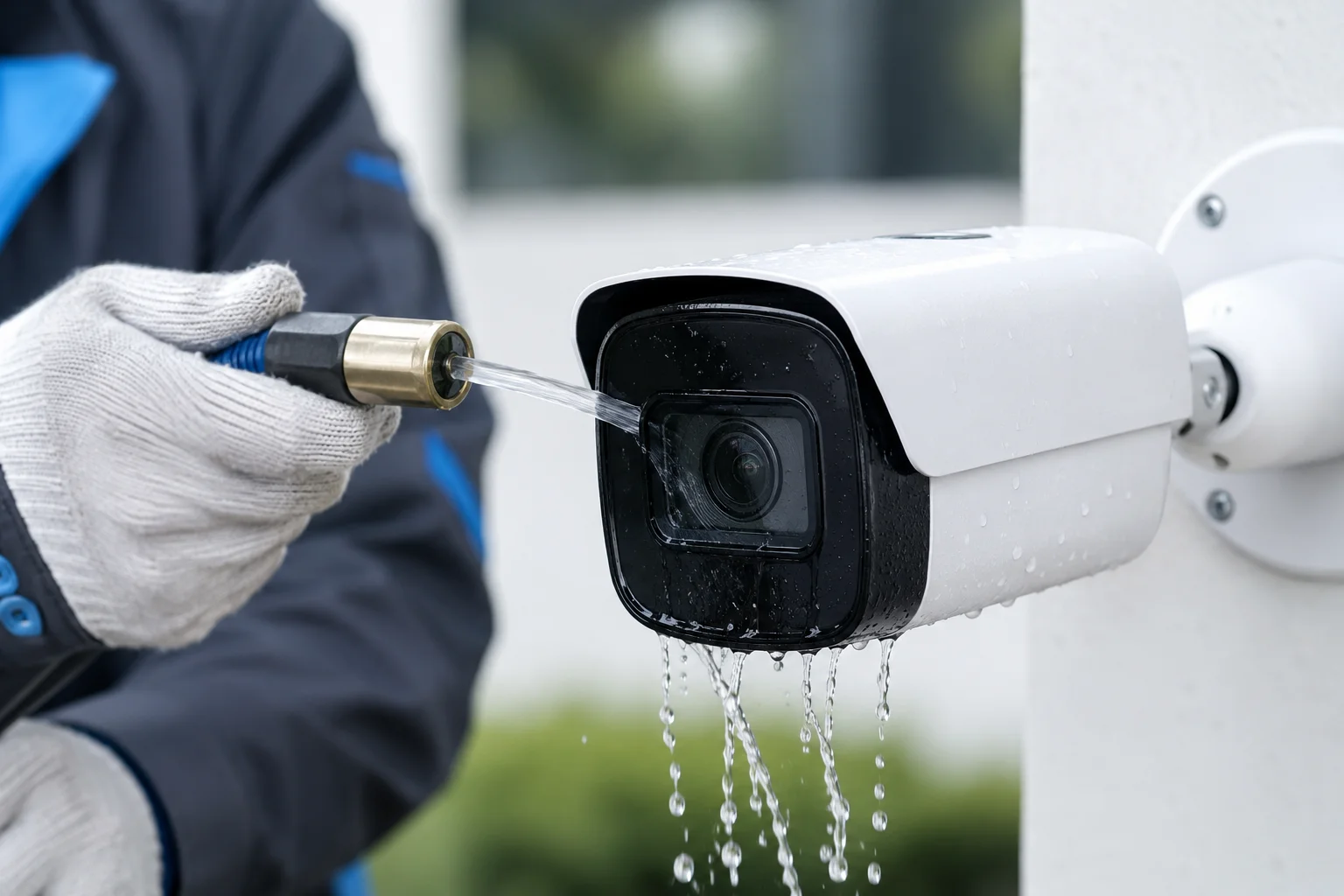
I think the right answer depends on pressure, distance, angle, and cleaning frequency. A gentle rinse from a safe distance is usually fine. A direct hard blast at close range is not a good idea. Even if the coating survives one wash, repeated abuse can shorten its life.
Cleaning rules I prefer
I keep the rules simple.
- Use clean water first.
- Use low pressure if you need spray cleaning.
- Do not aim a hard jet at one point for too long.
- Do not use strong acid, strong alkali, or abrasive powder.
- Do not wipe with dirty cloths that can scratch the surface.
A simple maintenance guide
| Cleaning Method | Risk to Coating | My View |
|---|---|---|
| Clean water rinse | Low | Best first choice |
| Low-pressure wash | Low to Medium | Usually acceptable |
| High-pressure close spray | High | Not recommended |
| Harsh chemical wipe | High | Avoid |
| Dry rough rubbing | High | Avoid |
I also think timing matters. If the glass is covered with dry mud, I would rinse it first and let the dirt soften. Then I would clean it gently. That reduces scratch risk. It also protects the coating from shock caused by a strong water jet hitting dry grime.
Why gentle cleaning gives better long-term results
A hydrophobic layer is part of the camera’s working surface. If I treat it like bare metal, I will damage it early. If I treat it like a precision optical finish, it can last much longer.
I always tell customers that the best cleaning method is the one that keeps the coating alive. A camera that stays clear for years is better than a camera that looks clean for one week after a rough wash.
Conclusion
I build hydrophobic protection to keep outdoor optics clear, protect laser performance, and reduce cleaning work. Good coating design gives long life, strong beading, and stable imaging.
1. A detailed overview of hydrophobic surfaces and how they repel water. ↩︎ 2. An introduction to nanoscale coatings and their applications. ↩︎ 3. Defines contact angle and its role in measuring hydrophobicity. ↩︎ 4. Explains vacuum deposition technology for optical coatings. ↩︎ 5. Describes anti-reflective coatings and how they reduce reflections. ↩︎ 6. Overview of long-range laser illuminators used in security systems. ↩︎ 7. Safety and best practices for using a pressure washer on delicate surfaces. ↩︎ 8. Explains the chemistry behind water spots and mineral deposits. ↩︎