
I’ve seen too many dome covers turn hazy after just one year in the field. Sand, rain, and oily dust slowly kill your image quality. And once the dome is scratched, no amount of software tuning can fix it.
Yes, our PTZ dome covers feature both AF (Anti-fingerprint) and Hard Coating protection. These two layers work together as a hybrid coating system. The Hard Coating resists scratches up to 3H–4H pencil hardness. The AF layer repels water, oil, and dust. Together, they keep your lens clear for years without frequent maintenance.
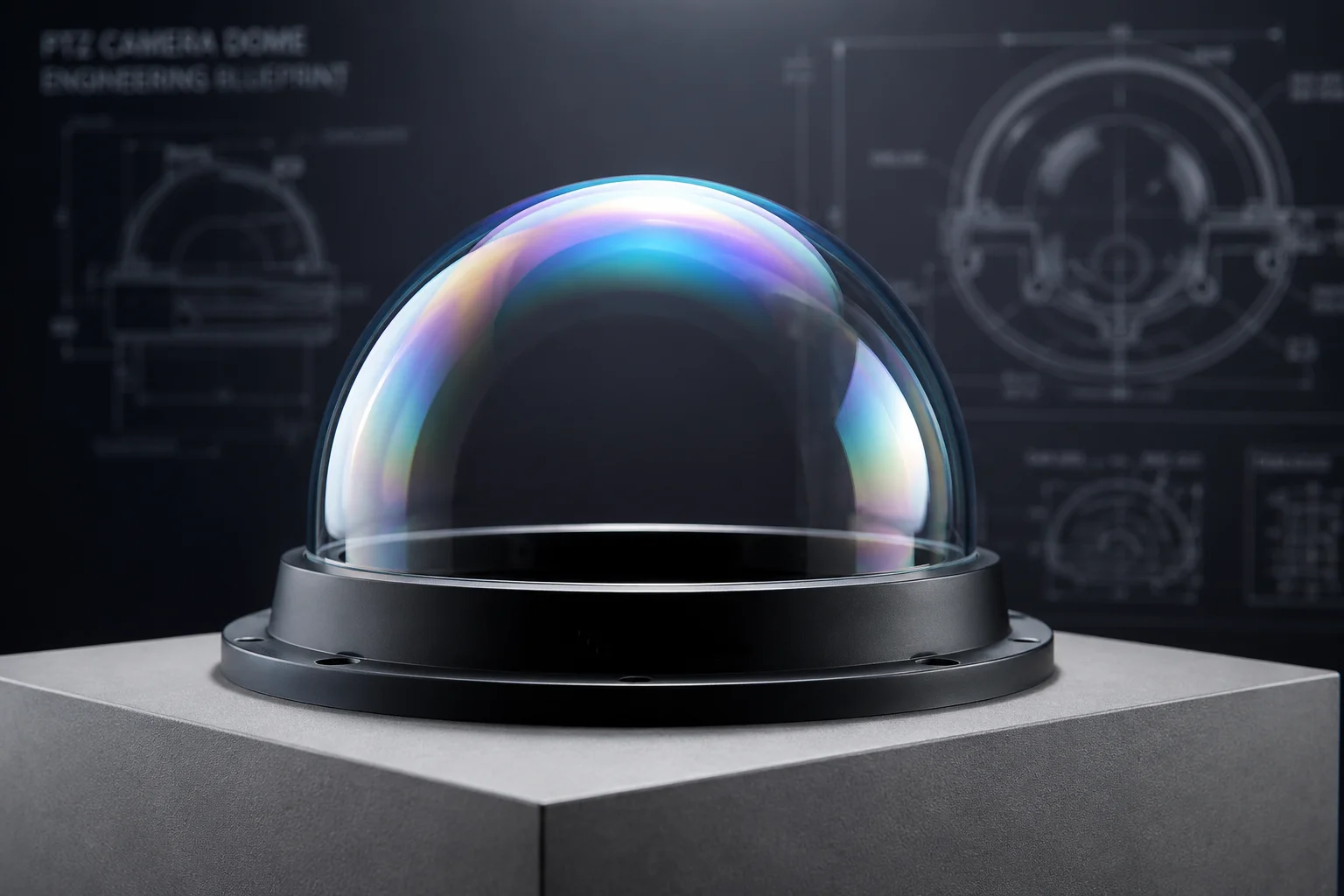 PTZ camera dome cover with AF and Hard Coating surface treatment
Below, I’ll break down exactly how each layer performs in real-world conditions — from desert sandstorms to heavy rain — and what this means for your long-term maintenance costs.
Table of Contents
How Does the Hard Coating (Typically >3H) Protect the Dome From Abrasive Sand and Dust Storms?
I’ve shipped cameras to sites in West Texas where sand hits the dome every single day. Without proper protection, those domes go blind in under 18 months.
The Hard Coating uses siloxane-based or polyurethane acrylate materials cured by UV or heat. It raises the pencil hardness of a standard polycarbonate dome from HB level to 3H–4H. This means fine sand particles bounce off instead of carving micro-scratches into the surface.
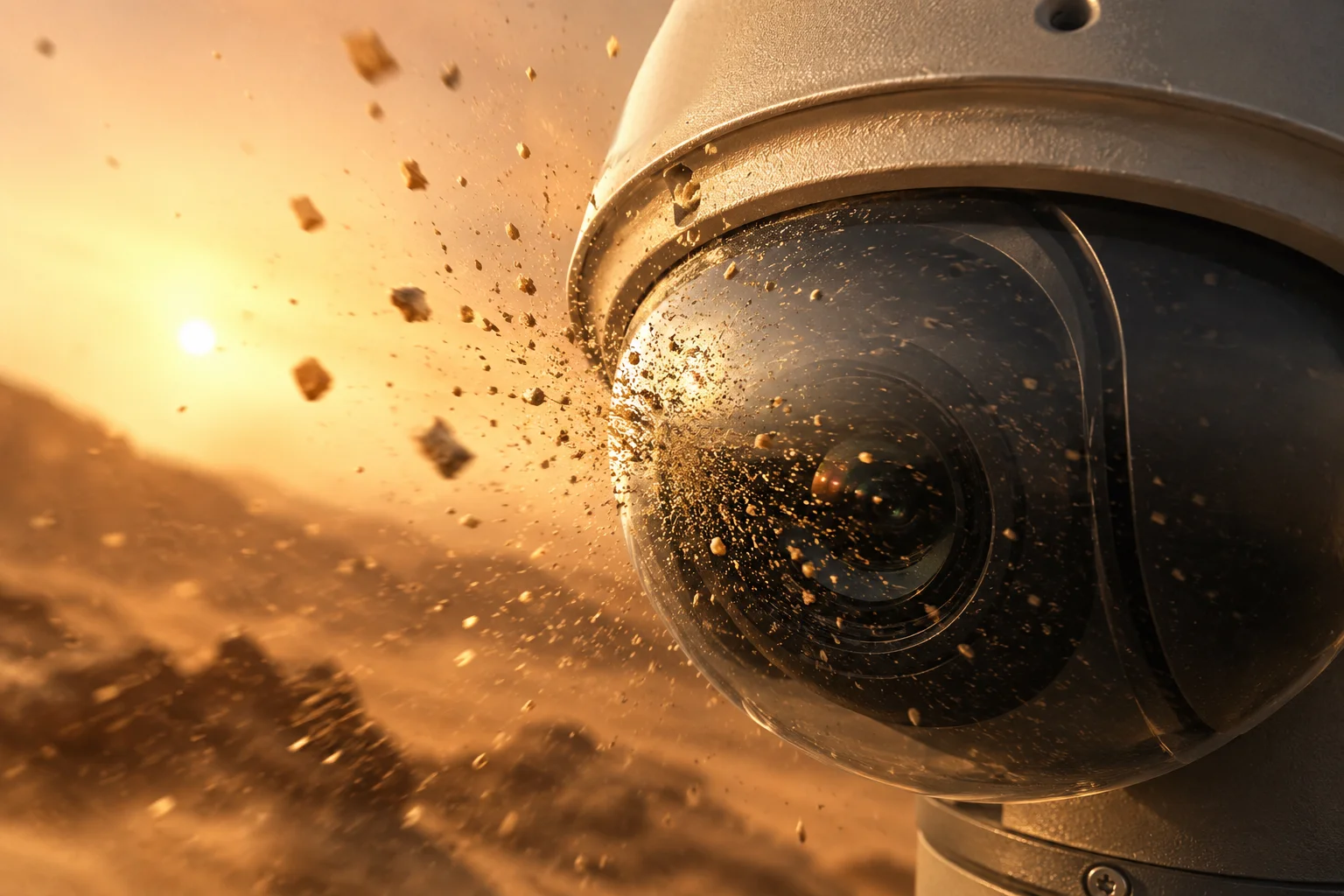 Hard Coating protection on PTZ dome against sand and dust
What Happens to an Uncoated Dome
A standard polycarbonate (PC) dome has a pencil hardness2 around HB to H. That’s soft. Wind-blown sand particles, even tiny ones at 0.1mm diameter, hit the surface at high speed. Each impact leaves a micro-scratch. One scratch is invisible. But after thousands of impacts per day over 12 months, the dome develops a frosted appearance. Light scatters instead of passing through cleanly. Your 40X optical zoom becomes useless because the image looks like you’re shooting through a dirty window.
How Hard Coating Solves This
**The Hard Coating forms a dense, cross-linked molecular layer on top of the PC dome. Think of it as a transparent armor. Here’s how the protection works step by step:
- The siloxane molecules bond tightly to the dome surface during curing.
- The cured layer reaches 3H to 4H on the pencil hardness scale.
- Sand particles (typically 5H–7H on Mohs scale) still have higher hardness, but the impact energy at normal wind speeds is not enough to penetrate the coating.
- Only direct, high-pressure contact with sharp objects can scratch through.**
Hardness Comparison Table
| Surface Type | Pencil Hardness | Sand Resistance (12 months) | Light Transmission Loss |
|---|---|---|---|
| Bare PC Dome | HB – H | Poor, visible hazing | ~15% drop |
| Hard Coated Dome | 3H – 4H | Strong, minimal wear | < 5% drop |
| Glass Dome | 5H – 6H | Excellent | < 2% drop |
Why Not Just Use Glass?
Glass is harder, yes. But glass domes are heavy, expensive, and fragile on impact. A rock thrown by a lawnmower can shatter glass. A Hard Coated PC dome absorbs that impact without cracking. For field deployments — especially solar-powered remote sites — the weight and durability trade-off makes Hard Coated PC the better choice.
Real-World Durability
We run QUV accelerated weathering tests3 on every batch of coated domes. This simulates years of UV exposure and thermal cycling. After the equivalent of 5 years of Texas sun, our coated domes show no yellowing and no coating delamination. The Hard Coating1 stays bonded to the PC substrate because we use a primer layer between them. This three-layer structure (PC + primer + Hard Coating) prevents peeling even under extreme temperature swings from -40°C to +60°C.
Will the AF (Anti-Fingerprint) Layer Help Keep the Lens Clear From Oil and Smudge Buildup?
I’ve visited job sites where the dome was covered in a greasy film after just a few weeks. Nearby factories, vehicle exhaust, even pollen — all of it sticks to an untreated surface.
The AF layer creates a low-surface-energy barrier that repels oil and grease. It raises the water contact angle above 110°, which means oily particles cannot bond firmly to the dome. A simple wipe or rain shower removes most contamination without chemicals or scrubbing.
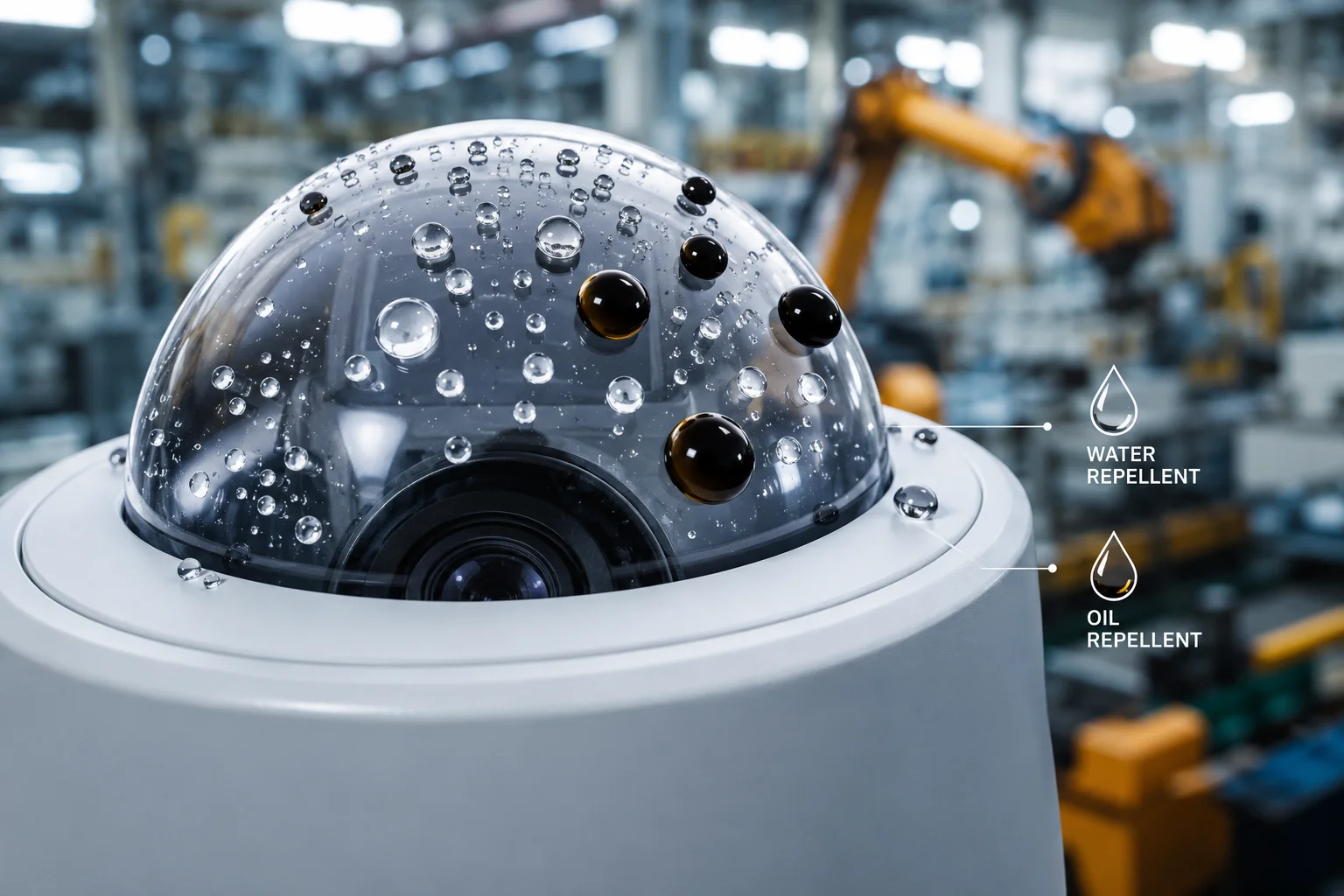 AF Anti-fingerprint coating repelling oil and smudge on dome surface
How Surface Energy Controls Contamination
Every surface has a property called surface energy. High surface energy attracts liquids and particles. Low surface energy repels them. A bare PC dome has relatively high surface energy — oil, fingerprints, and airborne grease stick easily. The AF coating drops the surface energy dramatically. Oil droplets sit on top of the coating instead of spreading into a thin, hard-to-remove film.
The Science in Simple Terms
The AF coating contains fluorinated compounds at the molecular level. These fluorine atoms create an extremely slippery surface. It’s the same basic chemistry used in non-stick cookware, but applied as a nanometer-thin transparent layer. The result:
- Oil beads up instead of spreading flat
- Fingerprints leave almost no residue
- Airborne grease from industrial areas doesn’t bond to the surface
- Cleaning requires only a soft cloth with water
Performance in Industrial Environments
For projects near highways, factories, or agricultural operations, airborne oil is a constant problem. Without AF coating, you’d need to clean the dome every 2–4 weeks. With AF coating, the cleaning interval extends to 3–6 months in most environments. That’s a huge cost saving when your camera sits on a 10-meter pole in a remote location.
AF Coating Performance Metrics
| Metric | Without AF Coating | With AF Coating |
|---|---|---|
| Water Contact Angle | ~70° | > 110° |
| Oil Adhesion Force | High | Very Low |
| Cleaning Frequency (industrial area) | Every 2–4 weeks | Every 3–6 months |
| Cleaning Method Required | Solvent + scrubbing | Water + soft cloth |
Anti-Static Bonus
Our 2026-generation domes also include anti-static treatment in the AF layer. Static electricity from wind friction attracts dust like a magnet. By adding conductive ions into the coating formula, we reduce static charge buildup by about 70%. Less static means less dust sticking to the dome between cleanings. For solar-powered 4G sites where nobody visits for months, this is critical.
Is the Coating Durable Enough to Survive Regular Manual Cleaning With Standard Security Tools?
I’ve heard horror stories from installers who ruined a brand-new dome on the first cleaning. They used a dry shop rag and ground sand particles right into the surface. Proper coating helps, but technique still matters.
The hybrid coating withstands regular cleaning with microfiber cloths and water. It resists mild detergents and standard security maintenance tools. However, dry wiping with coarse materials or abrasive cleaners will damage any coating over time. The key is to rinse loose particles off first, then wipe gently.
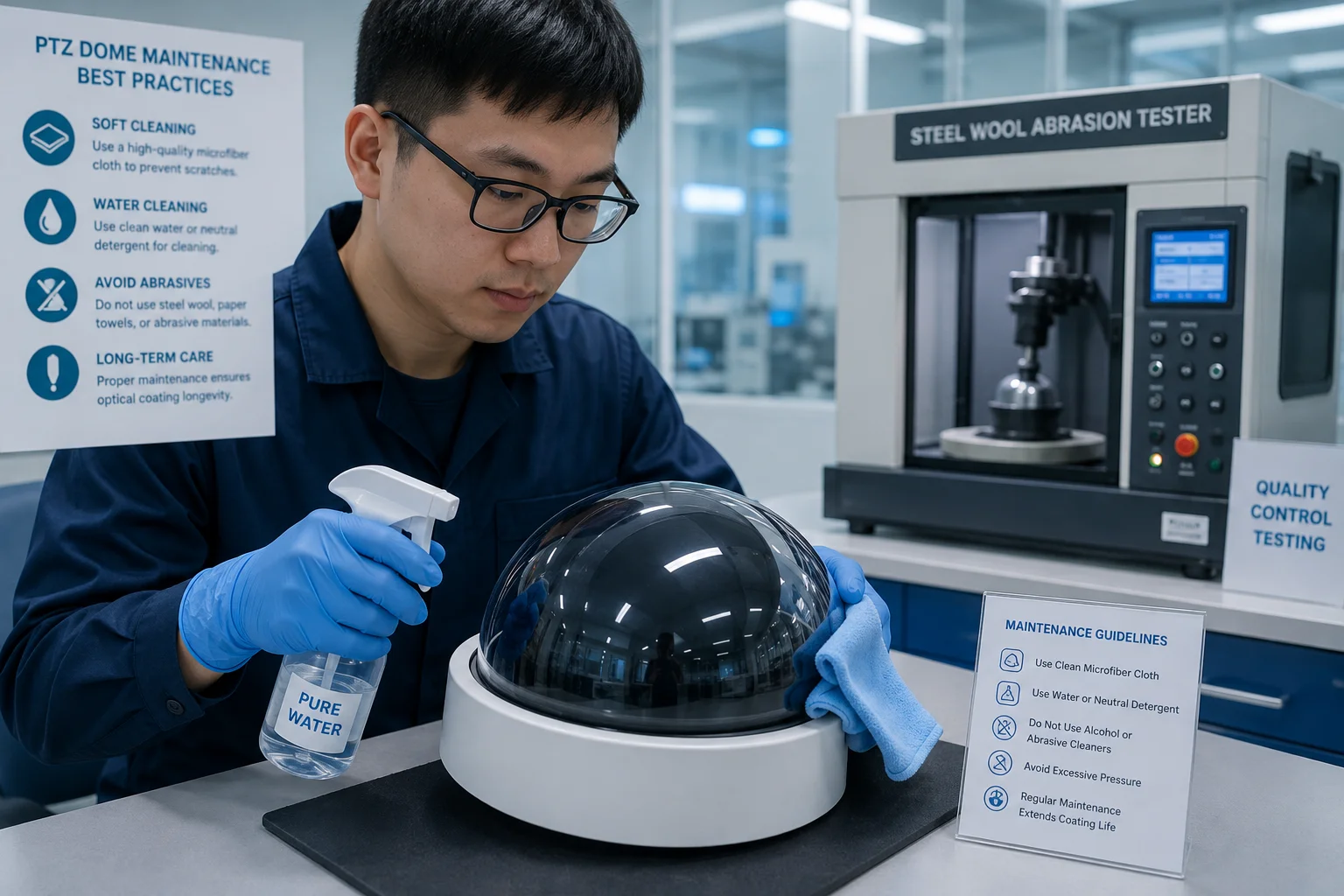 Proper cleaning technique for coated PTZ dome cover
What “Durable” Actually Means
Coating durability is measured by abrasion cycles. We test using the steel wool abrasion method5 (0000-grade steel wool, 500g load, 500 cycles). After testing, our hybrid coating retains over 95% of its hydrophobic performance. The Hard Coating underneath shows no visible scratches. This simulates roughly 5 years of proper manual cleaning at monthly intervals.
The Right Way to Clean
Here’s what I always tell field teams:
- First: Spray the dome with clean water or use a squeeze bottle. This rinses away loose sand and grit.
- Wait 10 seconds. Let the water carry particles down and off the dome.
- Then: Use a clean microfiber cloth dampened with water. Wipe gently in one direction.
- Never: Use paper towels, shop rags, or dry cloths directly on a dusty dome.
Why Dry Wiping Is Dangerous
Even with 4H hardness, the coating cannot survive trapped abrasive particles under pressure. A single grain of sand (hardness 7 on Mohs scale6) pressed between a dry cloth and the dome surface acts like sandpaper. The pressure concentrates on that tiny point and exceeds the coating’s resistance. The result is a visible scratch. Multiply that by dozens of sand grains in a dusty rag, and you’ve ruined the dome in one cleaning session.
Cleaning Products Compatibility
- Safe: Water, isopropyl alcohol (IPA) diluted to 50%, mild dish soap
- Avoid: Acetone, ammonia-based cleaners, abrasive powders, magic erasers
- Tools: Microfiber cloth, lens cleaning tissue, soft sponge
- Never use: Paper towels, cotton rags, squeegees with hard rubber edges
Nano Self-Repair Feature
Our latest coating formula includes a mild thermal self-healing property7. When the dome sits in direct sunlight and reaches 50–60°C, the molecular chains in the top layer can slowly reorganize. Very fine micro-scratches (those invisible to the naked eye) partially fill in over time. This doesn’t fix deep scratches, but it maintains the hydrophobic performance of the AF layer even after months of light wear.
Does the Hydrophobic Nature of the AF Coating Improve Visibility During a Heavy Rainstorm?
I’ve watched live feeds from cameras during tropical storms. Uncoated domes turn into a blurry mess within seconds. You can’t see anything useful. Coated domes tell a completely different story.
Yes, the hydrophobic AF coating significantly improves rain visibility. Water forms tight beads instead of spreading into a flat film. These beads roll off quickly under gravity or wind. The dome stays mostly clear even during heavy downpours, so your camera keeps capturing usable footage.
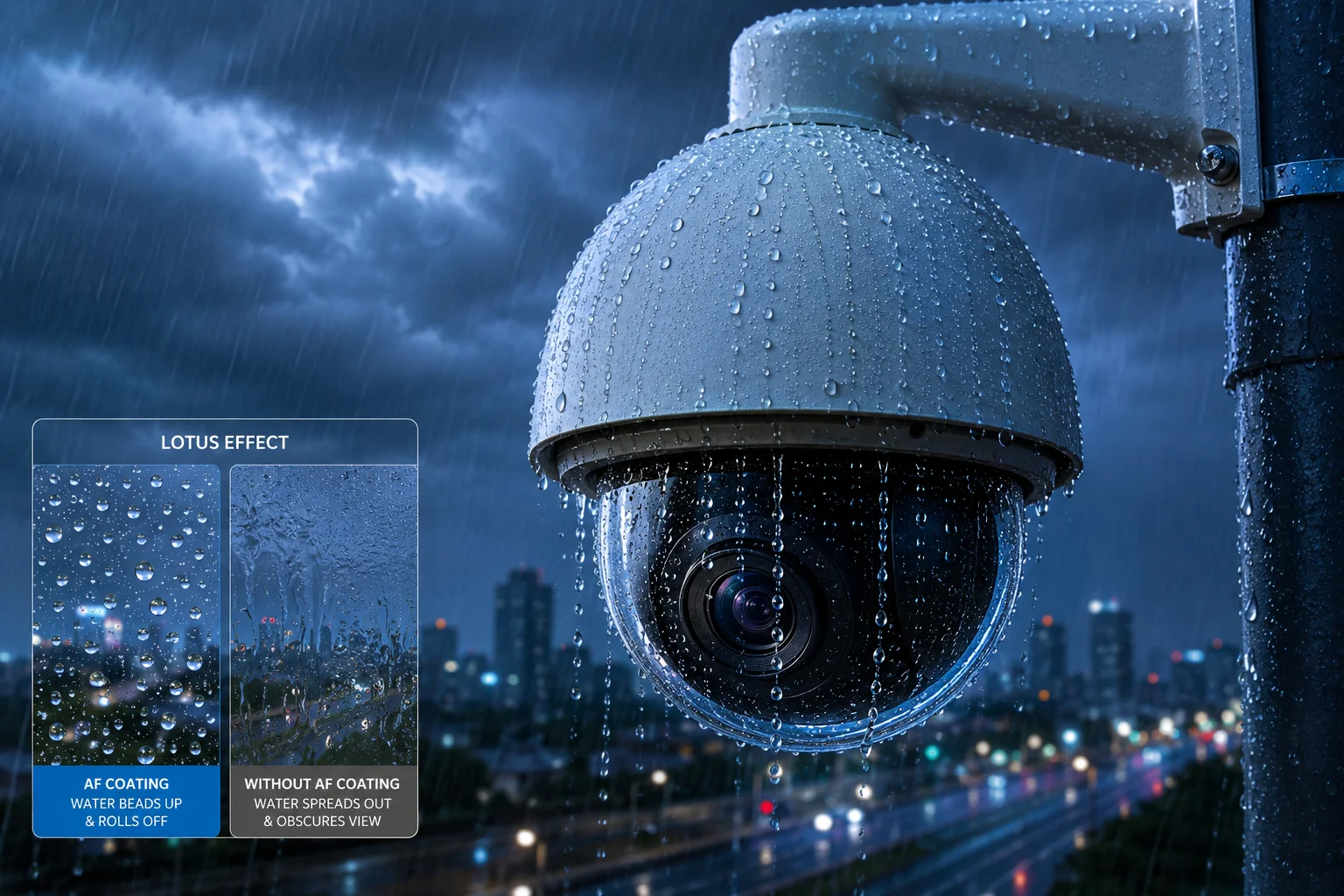 Hydrophobic AF coating causing water beads to roll off PTZ dome
The “Water Curtain” Problem
On an uncoated dome, rain spreads into a thin, continuous water film. This film acts like a distortion lens. Light passing through it bends unevenly. Your camera image becomes blurry and washed out. Even a light drizzle creates this effect. During heavy rain, the entire dome surface becomes one big water sheet, and the camera is essentially blind.
How Hydrophobic Coating Fixes This
With a contact angle above 110°, water cannot spread flat. Each raindrop stays as a round bead. These beads have minimal contact area with the dome surface. Between the beads, the dome surface remains dry and clear. Light passes through these dry areas without distortion. The camera can still capture sharp images through the gaps between water beads.
The Lotus Effect in Action
This behavior is called the ‘Lotus Effect4‘ — named after lotus leaves that always stay clean and dry. On our coated domes:
- Rain hits the surface and forms round droplets
- Gravity pulls the droplets downward
- As droplets roll, they pick up dust and pollen from the surface
- The dome self-cleans with every rain event
- After the rain stops, the surface dries almost instantly because so little water remains
Rain Performance Comparison
| Condition | Uncoated Dome | AF Coated Dome |
|---|---|---|
| Light rain (2mm/hr) | Thin water film, mild blur | Scattered beads, 90% clear |
| Moderate rain (10mm/hr) | Full water curtain, heavy blur | Rolling beads, 70% clear |
| Heavy rain (50mm/hr) | Complete image loss | Partial clarity maintained, 50%+ usable |
| After rain stops | Slow drying, water spots remain | Dries in seconds, no spots |
Wind-Assisted Clearing
PTZ cameras are usually mounted high — on poles, rooftops, or towers. At height, wind speed is higher than at ground level. Wind pushes water beads off the hydrophobic surface even faster than gravity alone. In our field tests, a 15 km/h breeze clears 90% of water beads from the dome within 3 seconds. This means even during rain, brief wind gusts create clear viewing windows.
Long-Term Hydrophobic Durability
The AF coating’s hydrophobic performance does degrade slowly over time. UV exposure and mechanical wear reduce the contact angle8 gradually. Our testing shows:
- Year 1: Contact angle > 110°
- Year 3: Contact angle ~100°
- Year 5: Contact angle ~90°
Even at 90°, the dome still performs significantly better than an uncoated surface (70°). The self-cleaning effect weakens but doesn’t disappear. For maximum performance, we recommend reapplying a spray-on hydrophobic booster every 3 years on high-priority installations.
Conclusion
The AF + Hard Coating hybrid system protects your PTZ dome from scratches, oil, dust, and rain. It extends dome life to 5+ years and cuts maintenance visits dramatically. For remote solar 4G sites, this coating isn’t optional — it’s essential for reliable long-term image quality.
1. Learn about the technology and materials used in hard coatings for optical surfaces. ↩︎ 2. Explanation of the pencil hardness test and how it measures coating scratch resistance. ↩︎ 3. Overview of QUV testing standards that simulate long-term UV and moisture exposure. ↩︎ 4. Explanation of the self-cleaning phenomenon inspired by lotus leaves. ↩︎ 5. Description of abrasion resistance testing using steel wool to simulate cleaning wear. ↩︎ 6. Reference for mineral hardness comparison, used to illustrate sand particle hardness. ↩︎ 7. Insight into self-healing polymers that can repair micro-scratches under heat. ↩︎ 8. Further reading on how contact angle degrades over time and affects performance. ↩︎