
I have watched too many PTZ cameras1 swing to a preset and then sit there with a blurry image for two full seconds. In critical surveillance, those two seconds can cost you the shot.
Yes, a well-designed PTZ can achieve sub-second clarity2 after high-speed rotation3. The key is not just the autofocus algorithm4 itself. It is a combination of focus position mapping5, synchronous focus6 motor movement during rotation, and phase-detection autofocus that removes the slow back-and-forth searching most cameras rely on.
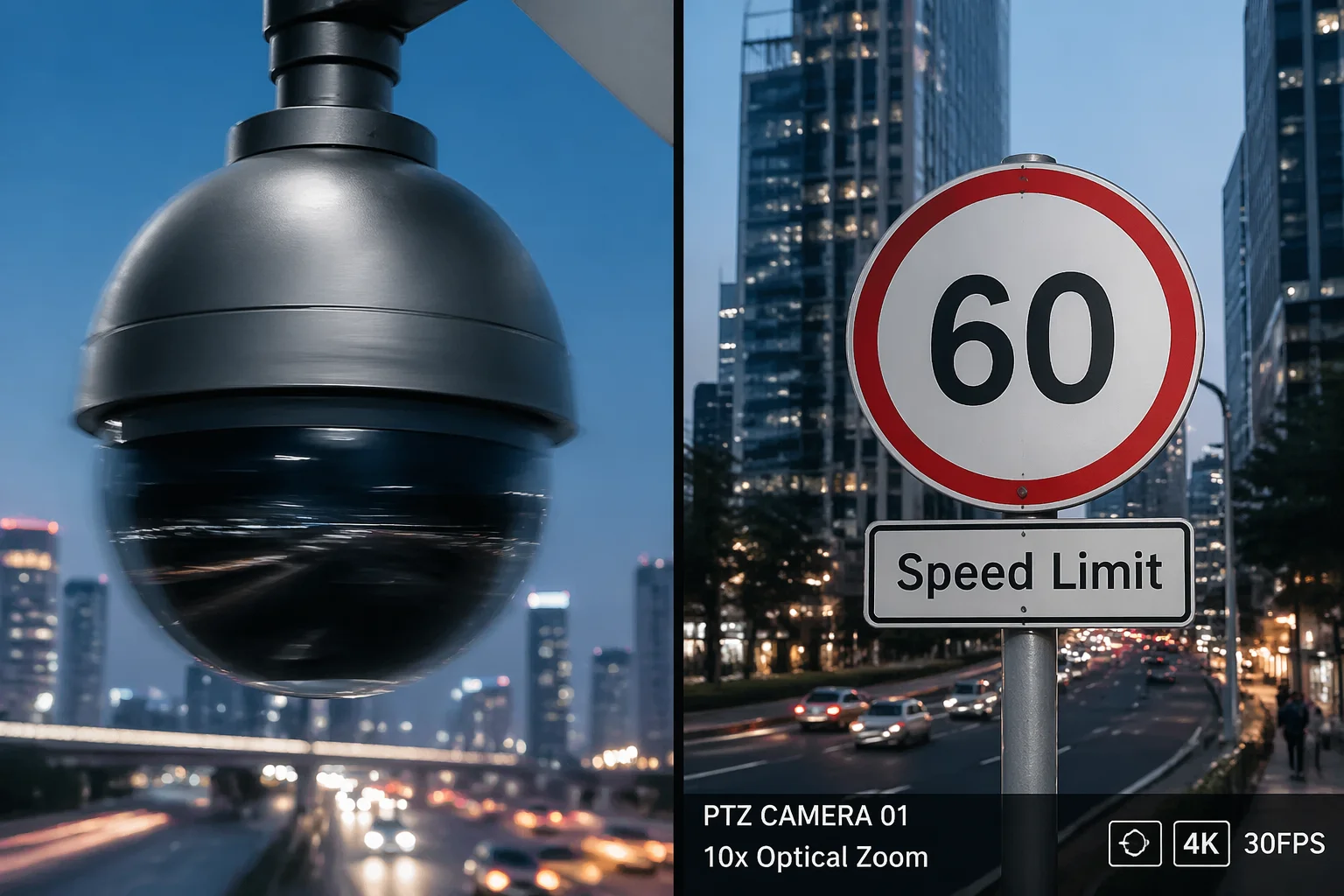
Below, I break down the four most common questions I hear from integrators and engineers about PTZ focus performance. Each answer comes from real field experience and the engineering work we do at Loyalty-Secu every day.
Table of Contents
How do I minimize the “hunting” effect of my camera’s auto-focus?
You minimize hunting by using Phase Detection Auto Focus (PDAF)7 instead of pure contrast-detection AF8. PDAF calculates the exact direction and distance the lens needs to move in one step, cutting focus lock time by more than half.
PDAF vs. Contrast Detection Comparison
| AF Method | How It Works | Typical Lock Time | Hunting Risk |
|---|---|---|---|
| Contrast Detection AF | Scans back and forth to find peak sharpness | 1.0–3.0 seconds | High |
| Phase Detection AF (PDAF) | Calculates exact focus distance from phase difference | 0.1–0.5 seconds | Very Low |
| Hybrid AF (PDAF + Contrast) | PDAF for rough lock, contrast for fine tuning | 0.2–0.6 seconds | Low |
In our 40X optical zoom PTZ modules, we combine PDAF with a stored zoom-focus curve9. This curve is a map that links every zoom level to the correct focus motor position, allowing the camera to hold focus even during rapid zoom changes.
Is the focus speed consistent even when zooming into a distant target?
Focus speed drops on most cameras as zoom increases because the depth of field gets extremely narrow. To keep focus speed consistent, the camera needs a calibrated zoom-focus curve and a focus motor fast enough to track the curve in real time.
At Loyalty-Secu, our 40X cameras store a detailed curve calibrated during production. When zooming from 1X to 40X, the focus motor follows this curve step by step. We use a high-speed stepper motor with closed-loop feedback10 to ensure the motor knows its exact position at all times, correcting errors within milliseconds.
For traffic monitoring11 or perimeter security12, this means locking focus on a target hundreds of meters away in under 0.5 seconds.
Will my camera stay in focus if I set it to a high-speed patrol pattern13?
Yes, but only if the camera uses synchronous focus. Cameras that wait until the rotation stops before starting to focus will always show a brief blur at each patrol point.
The Advantage of Synchronous Focus
| Patrol Feature | Standard PTZ | Loyalty-Secu PTZ |
|---|---|---|
| Focus Trigger | After rotation stops | During rotation (synchronous) |
| Focus Data Stored | Zoom only | Pan + Tilt + Zoom + Focus position |
| Typical Recovery Time | 1.0–3.0 seconds | < 0.3 seconds |
Our PTZ cameras also handle mechanical backlash14—the small gap in gears that causes positioning errors—using closed-loop drives. This keeps preset accuracy within ±0.1° even at speeds up to 400°/s.
Why does my image look soft for a few seconds after a preset call?
The soft image15 after a preset call is caused by mechanical vibration, focus searching, and exposure adjustment. Fixing this requires pre-stored focus values, fast motor braking, and exposure pre-calculation.
Breaking Down the Recovery Delay
- Mechanical settle time: Hard stops create vibrations. Quality systems settle within 100–200ms.
- Focus acquisition: Contrast AF takes up to 2s; PDAF with pre-stored values takes 100–300ms.
- Exposure adaptation: Shifting from a dark area to a sunlit zone requires the ISP to re-calculate gain and shutter speed, typically taking 200–500ms.
Our “preset-ready” architecture handles all three problems simultaneously. By the time the camera stops, the focus is set and exposure is nearly correct, ensuring a sharp image in under 0.5 seconds in most conditions.
Conclusion
Sub-second focus after high-speed PTZ rotation is achieved through synchronous focus, stored focus mapping, PDAF, and closed-loop motor control—all working together before the camera stops moving.
-
Explore the latest PTZ cameras that offer advanced features for optimal surveillance performance. ↩
-
Learn about the technology behind achieving quick focus in PTZ cameras for critical surveillance. ↩
-
Understand the challenges of maintaining focus during high-speed camera movements. ↩
-
Discover the most effective autofocus algorithms that enhance camera performance. ↩
-
Understand how focus position mapping improves focus accuracy in cameras. ↩
-
Find out how synchronous focus technology enhances image clarity during camera movement. ↩
-
Explore the benefits of PDAF technology in improving camera autofocus speed. ↩
-
Learn why contrast-detection AF can be less effective compared to other autofocus methods. ↩
-
Discover how a zoom-focus curve helps maintain focus accuracy during zooming. ↩
-
Discover how closed-loop feedback enhances the precision of camera motors. ↩
-
Find out effective strategies for using cameras in traffic monitoring applications. ↩
-
Learn how to effectively use PTZ cameras for securing perimeters. ↩
-
Get insights on improving the efficiency of high-speed patrol patterns. ↩
-
Learn about mechanical backlash and its impact on camera positioning accuracy. ↩
-
Understand the reasons behind soft images and how to fix them. ↩