
I have seen many outdoor cameras fail for simple reasons. The sun is strong, the heat shifts fast, and weak coatings break first.
A 60-100μm powder coating1 gives the camera body a strong defense against UV fade2, chalking3, and cracking. It is thick enough to shield the surface, hold pigment well, and stay flexible under heat stress, while still keeping good adhesion and smooth finish.
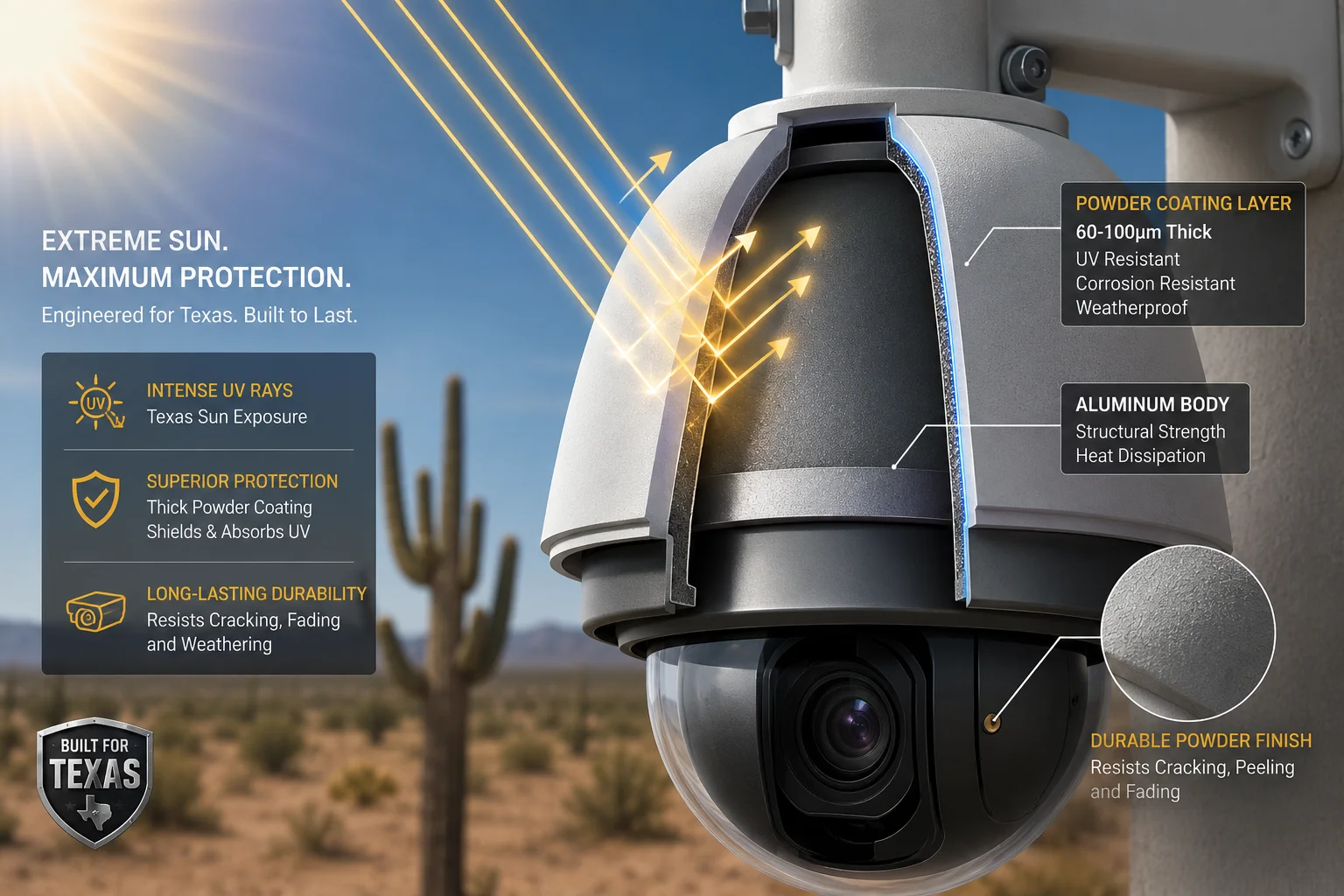
I keep coming back to one point: outdoor protection is never only about thickness. I also need the right resin, the right cure, and the right surface prep. That is where real durability starts.
Table of Contents
Is the coating thickness uniform across complex curves to prevent localized UV degradation?
I have seen curved housings create trouble when the coating looks fine on flat areas but turns thin on edges and corners. That is where UV damage starts first.
Yes, the coating must stay uniform across curves, corners, and edges. A 60-100μm target only works well when the spray process, grounding, and curing are controlled, because thin spots on complex shapes can age faster and fail earlier under UV.
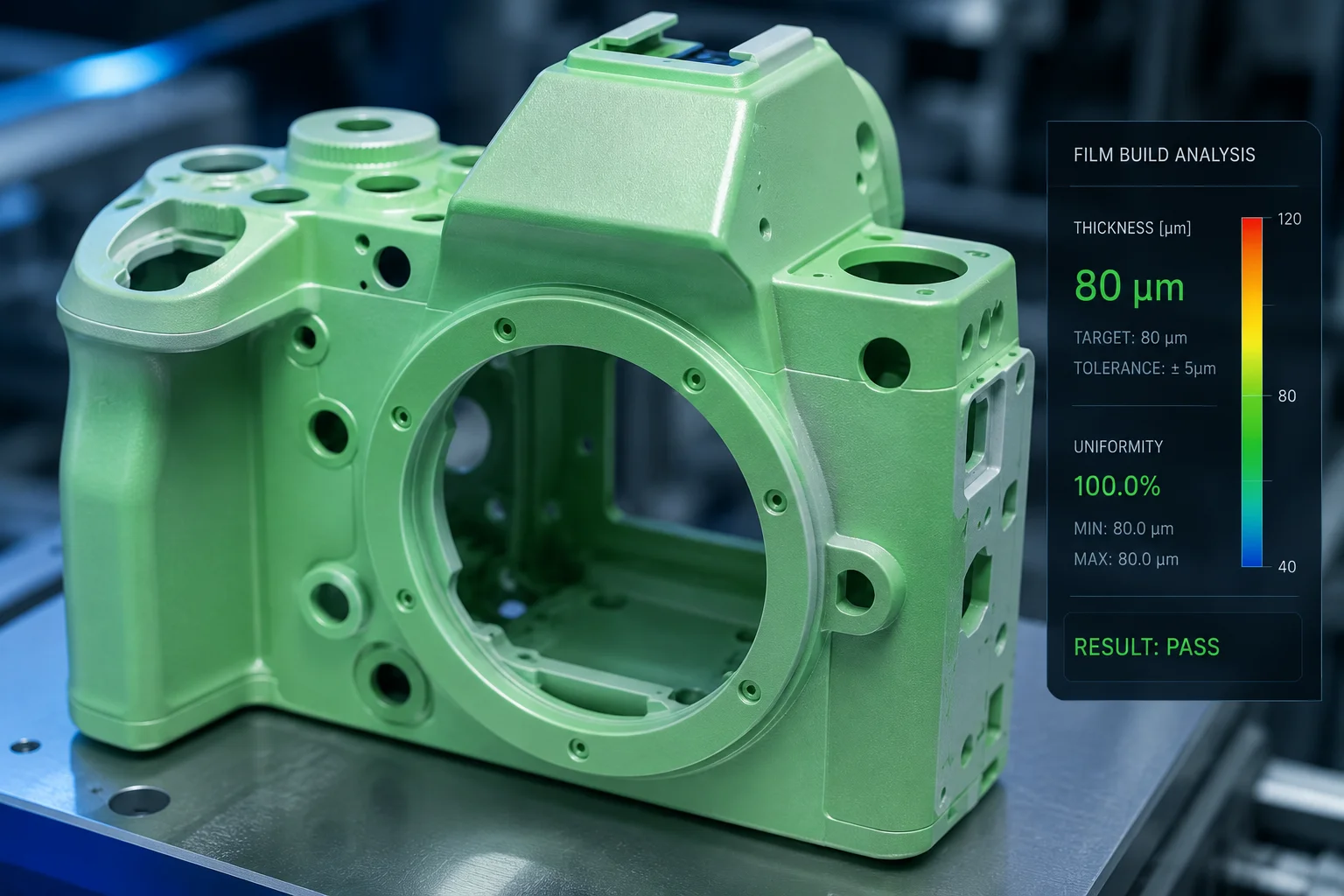
When I design for outdoor PTZ cameras, I do not treat shape as a small detail. Shape changes how powder moves, sticks, and melts. A round dome, a deep recess, or a sharp edge can all change the local film build. If I let one area drop too low in thickness, that spot becomes the first weak point in the field. UV does not need a big gap to start damage. It only needs a thin spot.
Why curved parts are harder to coat
I know curved parts create a real process problem. Powder particles follow electric force, but they do not always land in the same way on every surface. Outer curves often get more powder. Inner curves and hidden corners often get less. This is why a camera can pass a quick visual check and still fail after months in Texas sun or Arizona heat. The surface looks good at first, but the film build is uneven.
What I check in production
I use a few simple checks to reduce this risk. I measure film thickness at many points, not just one. I test the edges, the lower shell, the bracket zone, and any deep pocket. I also look at electrostatic spray8 settings, gun distance, and line speed. These small controls matter because they help powder reach the full body in a more even way.
| Area of the camera body | Common risk | What I watch |
|---|---|---|
| Flat panel | Usually stable | Keep thickness within target range |
| Sharp edge | Thin film and fast wear | Add coverage and check build |
| Deep curve | Poor powder reach | Adjust gun angle and spray pass |
| Hidden corner | UV weak point | Measure more than once |
Why local thin spots matter
I think many buyers underestimate this part. A coating does not fail all at once. It often fails in one small place first. That place then spreads. If a curved camera cover has only 35μm in one area while the main body sits near 80μm, the weak area will age faster. The surface can chalk there first. The color can fade there first. Small cracks can start there first. So a “good average thickness” is not enough. I need a good thickness map.
How I think about the real target
For outdoor security products, I want the thickness to be both strong and even. Too thin is weak. Too thick can hurt flow and flexibility. So I prefer a controlled window, not a random heavy coat. That is why the 60-100μm range works so well. It gives me enough material for UV shielding, but it still lets the film move with the metal shell. If the curve coverage is even, the coating can age in a balanced way instead of failing at one spot.
What type of outdoor-grade polyester resin is used to maintain color stability in the Texas sun?
I have seen strong sunlight turn cheap housings dull and yellow fast. That kind of change hurts trust, and it often means the resin choice was wrong from the start.
I use outdoor-grade polyester resin4, usually super durable polyester, because it holds color better under UV, keeps gloss longer, and resists breakdown in hot sun. In Texas weather, the resin must also keep the film stable enough to slow fading and chalking over time.
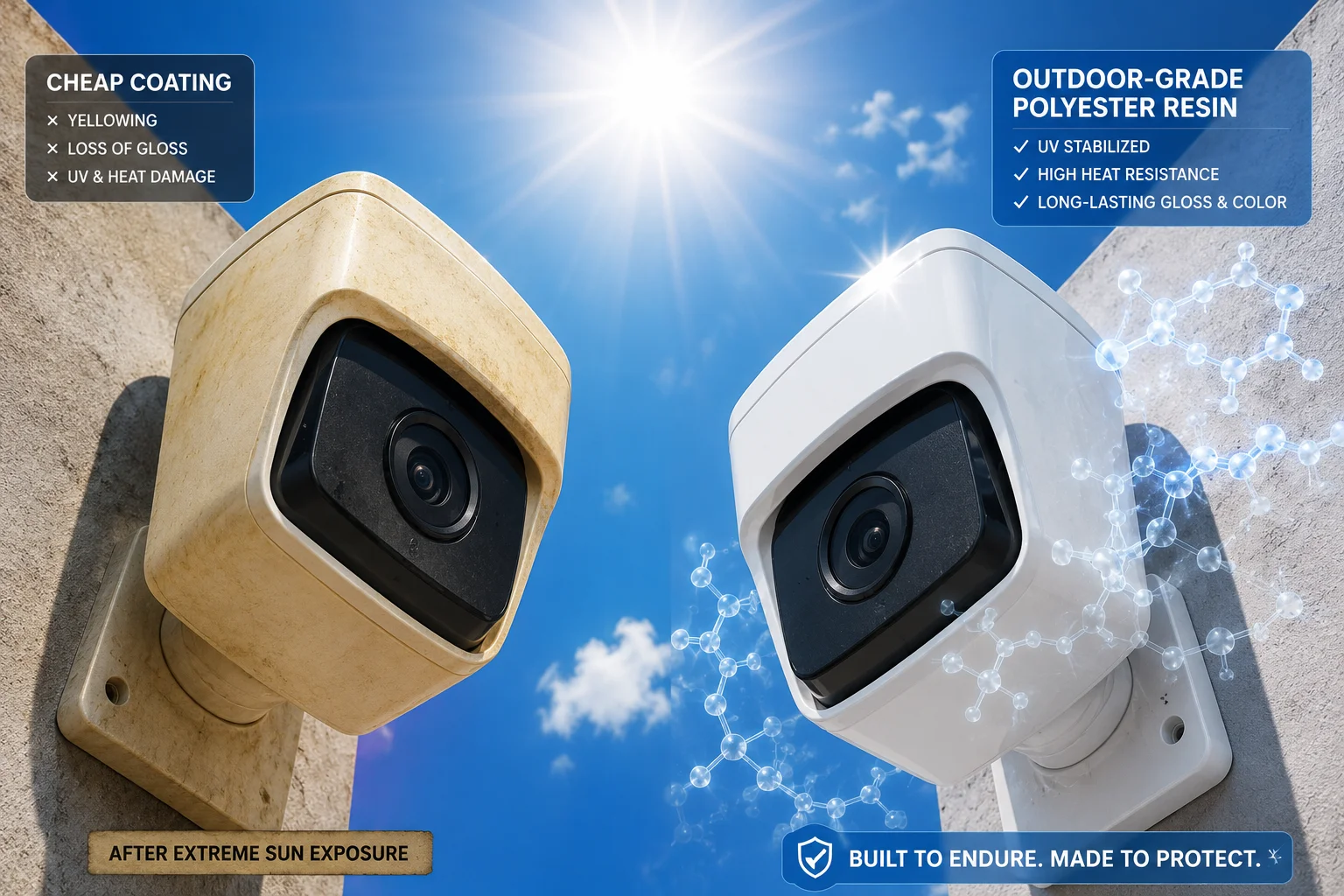
For me, resin choice is the heart of the coating system. Thickness alone cannot save a weak formula. If the resin chain breaks too easily under UV, the surface will lose gloss, then lose color, then begin to chalk. That is why outdoor-grade polyester is the normal base for high-end camera shells. It gives a better balance of cost, strength, and weather life than many low-end options.
Why resin matters as much as thickness
I often tell customers that a thick weak coating is still weak. The resin is the binder that holds pigment, filler, and protection together. If the binder fails, the rest of the film loses support. In a hot place like Texas, the surface sees strong sun, high surface heat, and long exposure hours. The resin must resist photo-oxidation. It also must keep the gloss from dropping too fast, because gloss loss is usually one of the first signs of aging.
What “super durable” means in practice
Super durable polyester is made for outdoor use. It is not the same as a normal interior powder. It is built to stand up to more UV and more weather cycles. It works well for camera bodies because the shell needs both looks and function. The finish must stay clean and professional. It also must protect the metal under it. This matters to me because my customers sell into projects where the camera may stay on a pole, wall, or tower for years. Nobody wants to revisit a site just because the housing turned dull and weak.
The main resin factors I care about
| Resin factor | Why it matters | Field result |
|---|---|---|
| UV resistance | Slows chain breakage | Less fading |
| Gloss retention5 | Keeps the surface stable | Better long-term look |
| Flexibility | Helps the film move with heat | Less cracking |
| Pigment hold | Supports color life | Less chalking |
Why Texas is a hard test
I think Texas is a good real-world test because the sun is harsh, and the heat swings are big. Daytime heat can push the shell surface very high, then the night cools it down. That cycle repeats again and again. A resin with poor outdoor stability will show problems fast. A good super durable polyester does not make the coating magic, but it gives the film a much better base. It lets the pigment stay locked in place longer, so the surface keeps its original color and gloss for more years.
What I tell buyers
I usually tell buyers not to ask only for a thickness number. I ask them to ask what resin is inside the powder. If the answer is a true outdoor-grade polyester, that is a good start. If the supplier cannot explain the resin type, the UV rating, or the test method, I become careful. For me, real outdoor performance comes from the full recipe, not one number on paper.
Will a thicker coating (e.g., >80μm) prevent the “Chalking” effect common in low-end Chinese cameras?
I know why many buyers ask this. They have seen cheap camera housings turn white and dusty after a short time, and they want a simple fix.
A thicker coating can help, but thickness alone will not stop chalking. Chalking3 happens when UV breaks down the resin surface and leaves pigment or filler on top. A proper outdoor resin, good cure, and even film build matter more than just making the layer thicker.
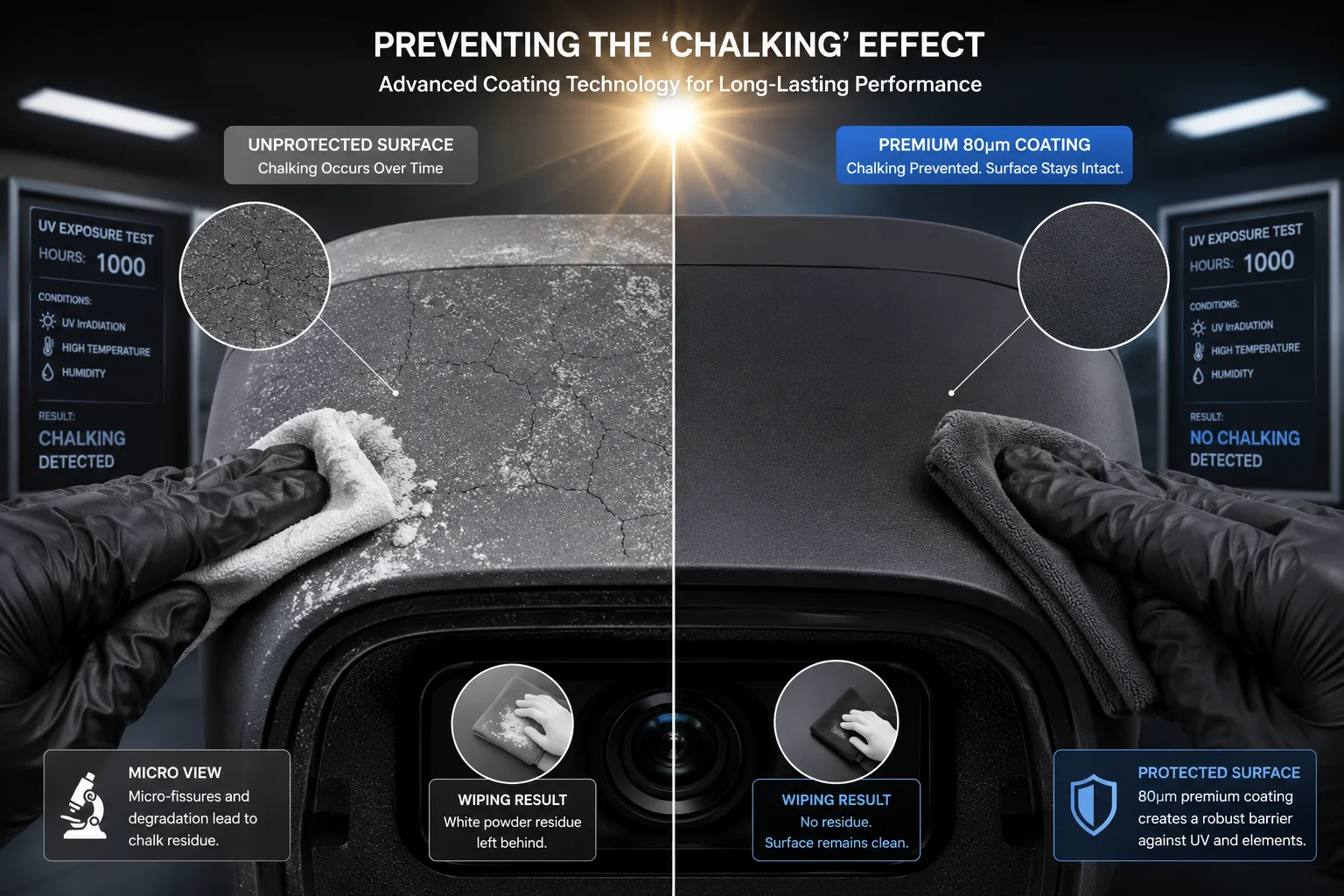
I want to be clear here, because this is where many people make a mistake. They think more thickness always means more life. That is not fully true. If the coating formula is weak, extra thickness may only delay failure a little. It may even create new problems if the film gets too stiff or cures unevenly. So I treat 80μm as part of the answer, not the whole answer.
What chalking really is
Chalking3 is the dusty, faded surface that appears after the outer layer has broken down. The binder on top turns weak. The pigment becomes visible. Then a white or dull powder rubs off on the hand. It often starts with gloss loss. Then the color changes. Then the surface gets rough. This is very common in low-end camera products because the powder formula is built for price, not for long outdoor life.
Why thicker can help, but only to a point
A coating above 80μm can give more material for UV attack to consume. That is useful. It can also improve coverage over corners and small shape changes. But if the film is too thick, internal stress can rise. If the cure is not even, the inside and outside of the film can behave differently. That can make cracks or edge lift. So I do not chase thickness for its own sake. I chase balance.
The real anti-chalking controls
| Control point | Good practice | Bad practice |
|---|---|---|
| Resin choice | Outdoor-grade polyester | Cheap interior powder |
| Film build | Even 60-100μm range | Random heavy spray |
| Cure cycle | Full and stable cure | Under-cure or over-cure |
| Surface prep | Clean and well treated | Poor adhesion base |
Why cheap cameras fail early
I have seen low-end products fail because the maker used a weak powder, a fast line, and poor pre-treatment. The film may look nice on day one. After some sun, it starts to lose gloss. After more time, it begins to chalk. Once chalking starts, the surface looks old even if the camera still works. That hurts brand value and project trust. For a professional installer, that is a real problem.
What I recommend instead
I recommend a coating system that matches the environment. If the camera will sit in full sun, I want a true outdoor powder. I want good pretreatment. I want controlled film build. I want a proper bake. And I want the final product to pass UV tests, not just a short visual check. That is how I think we move from “it looks fine” to “it stays fine.”
How do you test the flexibility of the coating to ensure it doesn’t crack during extreme thermal expansion?
I have learned that metal and coating do not move the same way. When the sun heats the shell and then night cools it down, both layers expand and shrink in different ways.
I test flexibility with bend tests, impact tests, thermal cycling, and adhesion checks after heat and cold stress. These tests show whether the coating can move with the metal body without cracking when the camera faces repeated day-night temperature swings.

Flexibility7 testing matters because outdoor cameras do not live in a stable room. They live on roofs, poles, walls, farms, highways, and yards. In those places, the shell can get hot fast. Then it can cool fast. That movement creates stress in the coating. If the film is too brittle, small cracks appear first. Later, water enters. Then rust or corrosion starts under the film. So I want to prove that the coating can stretch a little, bend a little, and still keep its grip.
The tests I care about most
I usually focus on a few tests. First, I check bend resistance. This shows if the film can follow the metal without splitting. Second, I check impact resistance. This helps me see if the coating chips when hit. Third, I check thermal cycling6. This is the big one for outdoor use because it shows how the coating behaves after many heat and cold changes. Fourth, I check adhesion before and after the stress tests. If the coating still sticks well after all that, I know the system is much safer for real use.
Why thermal cycling is so important
Thermal cycling is close to real life. A camera shell on a hot afternoon may expand. A cold evening may shrink it back. The coating must survive this repeated motion. A thick but brittle film may pass day one but fail after many cycles. That is why I do not judge flexibility only by appearance. I want test data. I want a coating that keeps its shape and grip after repeated stress.
| Test type | What it checks | Pass sign |
|---|---|---|
| Bend test | Film stretching ability | No visible crack |
| Impact test | Chip resistance | No flake or split |
| Thermal cycling | Heat and cold movement | No edge crack |
| Adhesion test | Bond to metal | Strong hold after stress |
How I read the results
I do not only look for total failure. I also look for small warning signs. Tiny edge lines matter. Tiny gloss shifts matter. Early loss of adhesion matters. If a sample starts to show cracks at the bend or around screw holes, I know the design needs work. I may adjust film thickness, resin type, cure time, or pretreatment. For me, testing is not just a lab step. It is the way I protect project life in the field.
What this means for outdoor PTZ cameras
For a professional PTZ camera, the shell is part of the product value. A cracked shell can lead to water entry, rust, and service calls. That is costly for installers and system integrators. So I always want the coating to do more than look nice. I want it to move, protect, and last. When I test flexibility well, I reduce the chance that thermal stress turns into a field failure later.
Conclusion
I choose 60-100μm with outdoor-grade polyester because it gives the best balance of UV defense, color stability, and crack resistance for real outdoor camera use.
1. Learn the industry standards for powder coating thickness and how the 60-100μm range provides UV protection. ↩︎ 2. Understand the mechanism of UV degradation in powder coatings and how to prevent fading. ↩︎ 3. Definition and causes of chalking in powder coatings, with prevention methods. ↩︎ 4. Information on super durable polyester resins designed for long-term outdoor UV stability. ↩︎ 5. Standard test method for specular gloss, key to assessing UV resistance. ↩︎ 6. Procedure and importance of thermal cycling to simulate day-night temperature swings. ↩︎ 7. Overview of bend and impact tests used to evaluate coating flexibility. ↩︎ 8. Explanation of electrostatic powder spray process and its effect on film uniformity. ↩︎